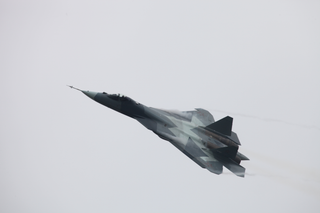
Footage of an amazing alliance has gone viral on the Web - the Soviet 23-mm GSh-23 aircraft cannon and the American Humvee all-terrain armored car. These guns were installed on Soviet combat aircraft of the MiG and "Sukhoi" series.
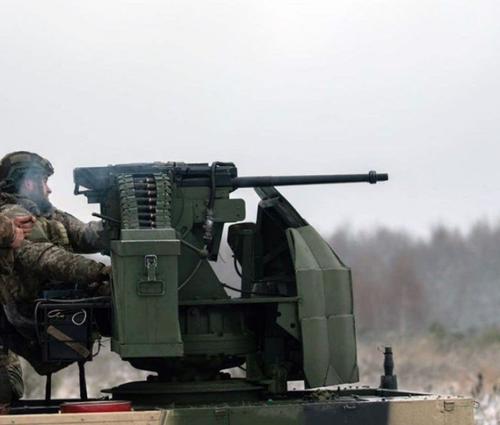
The gun has a rate of fire of 3000-4000 rounds/min. Projectile weight - 174 gr, initial velocity - 680-890 m/s. The installation was placed openly in the back of the vehicle. An armored shield was used to protect against shrapnel and bullets.
The GSh-23 cannon is designed for firing from various types of helicopters and airplanes at ground and air targets with armor-piercing high-explosive, fragmentation-high-explosive and armor-piercing incendiary projectiles. The operation of the automation is based on the use of the energy of powder gases.
Earlier www1.ru reported that a new strategic missile system will appear in Russia.
Read materials on the topic:
Now on home
The vehicle is designed for 24 convicts and 6 employees, inside there are single and general cells
The Ministry of Education and Science will coordinate the creation of unified requirements for supercomputer centers and access to them for science and industry
The complex will produce products for 5G, aviation, and electric transport
By 2028, the company plans to assemble up to 40,000 devices annually
Gagarin Cosmonaut Training Center has expanded access to selection and for the first time began using AI to analyze candidates' documents
The vehicle is equipped with a computerized fire control system and is capable of firing 10 rounds per minute
The defendant in the criminal case deliberately concealed the sending of technical documentation to a foreign customer
A joint group of developers, commissioned by the state, is making a replacement for Keysight and AWR
Moscow Combined Arms Command School has developed a modular tracked platform for reconnaissance, mining, and fire support in all conditions
State Duma Deputy Anton Nemkin: VPNs can collect personal data and transfer it to third parties
Krasnoyarsk scientists have combined satellites, stratospheric platforms, and ground towers into a single network with algorithms three times faster than global standards