In the southern part of Yakutia, residents of Olekminsky, Lensky, and Suntarsky districts observed the fall of the C0WEPC5 asteroid thanks to clear weather and a transparent atmosphere. This was reported by Igor Koltovskoy, Candidate of Physical and Mathematical Sciences, Head of the Atmospheric Optics Laboratory at the Institute of Cosmophysical Research and Aeronomy (IKFIA) SB RAS.
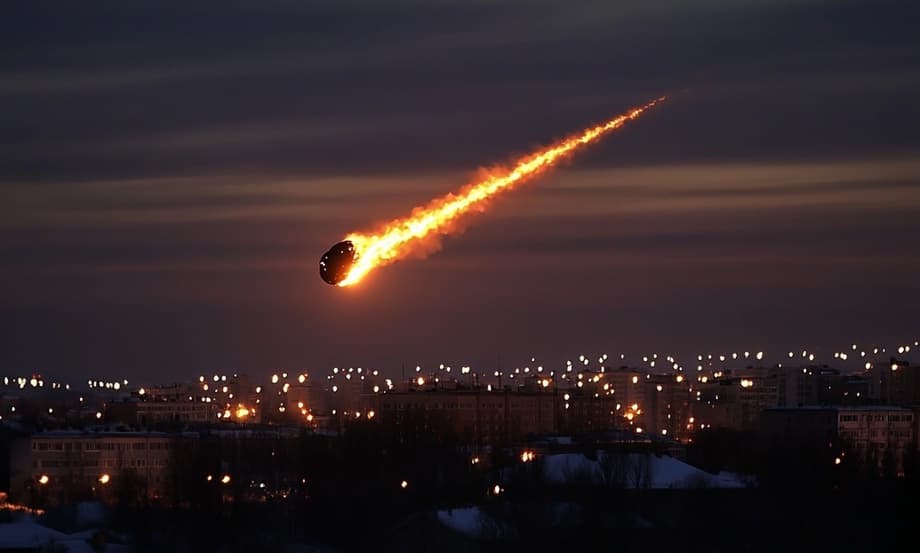
The asteroid entered the atmosphere on December 4, 2024, at 01:15 Moscow time, exploded at an altitude of about 100 km from Earth, and completely burned up, causing no damage or casualties.
The best viewing conditions were for residents of Olekminsk, where the asteroid flew almost at its zenith. In Yakutsk, its fall was also recorded, but only flashes could be seen due to thin clouds. IKFIA SB RAS devices recorded brightness and a double flash, which confirms the destruction of the asteroid in the upper atmosphere.
As Koltovskoy noted, such celestial bodies usually consist of ice and are not comparable in size to larger meteorites, such as Chelyabinsk or Tunguska. The uniqueness of the event is that the C0WEPC5 asteroid was discovered and its trajectory was accurately calculated before the fall. This is only the eleventh case in the world when an asteroid was observed before it entered the atmosphere.
According to Semyon Nikolashkin, Deputy Director of IKFIA SB RAS, a similar event was last recorded in March 2014 in the Vilyuysky district of Yakutia.
Now on home

Start of deliveries scheduled for 2027

Over 51,000 new motorcycles were sold in Russia in 2025

The car will take at least a year to assemble

The application's audience has reached 20 million users

The model will be included in the list of cars for taxis, price - from 2.25 million rubles

All parking lots of the "Administrator of the Moscow Parking Space" are connected to the service

The cars will be supplied to the Moscow Transport Service Directorate
Deliveries to India may begin in 2028
The technology provides automated search for all types of defects in power units
The plane flew 500 km, accelerating to 425 km/h

The plant stated that the information about the termination of purchases for models 6 and 8 is not true
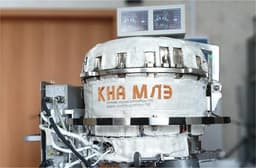
Scientists are using the "Ekran-M" installation