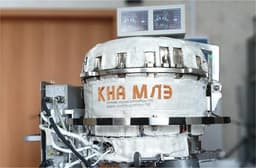
Specialists from Ogarev Mordovia State University have developed a self-compacting, non-shrink, fine-grained concrete that surpasses traditional heavy concretes in its useful characteristics by two to four times. This concrete was created using artificial intelligence, specifically machine learning methods for designing and optimizing the composition. To achieve this, a database was collected and analyzed, including over a thousand experimental compositions of cement materials.

The developed concrete is a dry construction mix consisting of Portland cement, quartz sand, and a complex organic-mineral additive that includes metallurgical waste and sedimentary rocks. The mix has the ability to self-compact and compensate for shrinkage deformations when water is added.
Due to its low permeability, high strength, and corrosion resistance, the service life of this concrete under normal operating conditions can range from 150 to 200 years. Its production cost is 10-15% lower than that of its counterparts, thanks to the reduced cement content of the composition and the use of local raw materials and industrial waste.
In addition, the machine learning methods used in the development allow for monitoring and analyzing the influence of various parameters on the characteristics of the concrete, with the possibility of adjusting the composition and improving its properties based on new data. Industries and industrial partners have shown interest in the new concrete and intelligent design systems.
Read related materials:
Concrete Made from Coffee Grounds Created in Rostov
Wallpaper, Tire Rubber, Bags, and Pipes: High-Molecular Polymers Complex Launched in Tula Region