Russian cosmonauts, members of the 72nd long-term expedition-Alexey Ovchinin, Ivan Wagner, Alexander Grebenkin, and Alexander Gorbunov-continue their work on the International Space Station (ISS). On October 2, they conducted several scientific experiments and technical tasks aimed at studying Earth and supporting the station's operation.
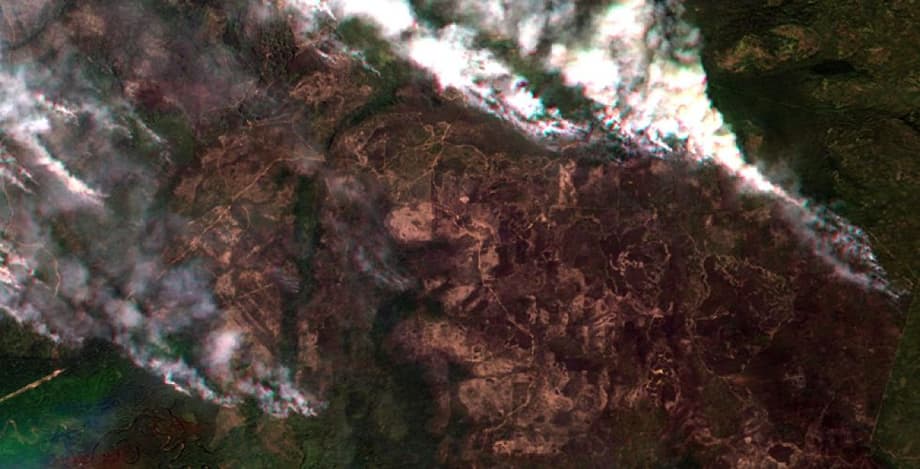
The following experiments were carried out as part of the flight program:
- "Ураган" - During this experiment, hyperspectral images of the Earth's surface were obtained in the visible and near-infrared ranges. This data will help in the study of various ecosystems, including forests.
- "УФ-атмосфера" - Cosmonauts mapped the night atmosphere in the near-ultraviolet range using a wide-angle detector. This allows for obtaining data on the distribution of atmospheric components at night.
- "Идентификация" - Studying the dynamics of the ISS structure under various external forces, taking into account changes in the station's modular composition. This experiment is important for ensuring the safety and functionality of the ISS.
- "Дубрава" - Monitoring forest ecosystems, which allows tracking changes in vegetation cover and the condition of forests on Earth.
- "Экон-М" - Photographing the Earth to assess the environmental situation, which includes studying the impact of human activities on the environment.
The cosmonauts also performed technical maintenance, including replacing the air purification unit in the Zvezda service module and working with the sanitation device.
Read materials on the topic:
Russian cosmonauts conducted a series of experiments on the ISS before returning home
Russian cosmonauts on the ISS engaged in research on the heart, plasma crystals, and Earth's ecology
Now on home

Start of deliveries scheduled for 2027

Over 51,000 new motorcycles were sold in Russia in 2025

The car will take at least a year to assemble

The application's audience has reached 20 million users

The model will be included in the list of cars for taxis, price - from 2.25 million rubles

All parking lots of the "Administrator of the Moscow Parking Space" are connected to the service

The cars will be supplied to the Moscow Transport Service Directorate

Deliveries to India may begin in 2028

The technology provides automated search for all types of defects in power units

The plane flew 500 km, accelerating to 425 km/h

The plant stated that the information about the termination of purchases for models 6 and 8 is not true

Scientists are using the "Ekran-M" installation