The Russian complex with Forpost reconnaissance and strike unmanned aerial vehicles is constantly being improved based on the experience of use at the front, the combat capabilities of the complex are being expanded by installing new payloads and improving its design. This was announced by an official representative of the Ural Civil Aviation Plant (UZGA).
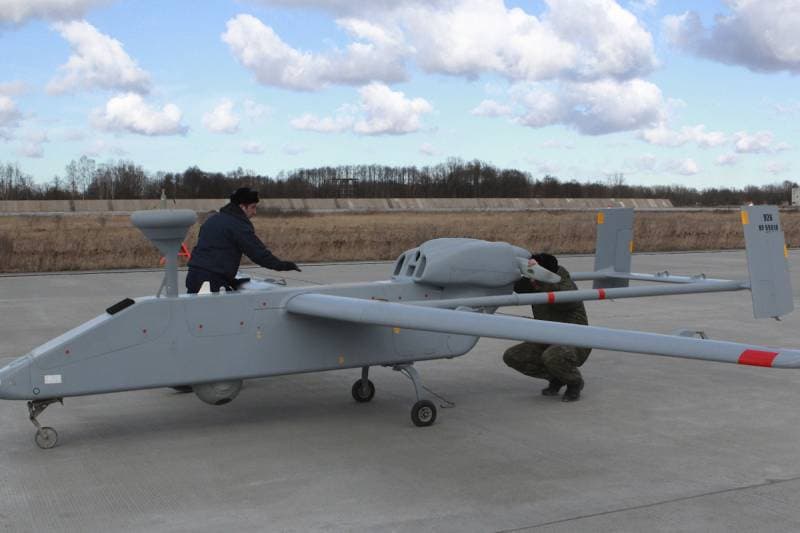
According to the developer, the Forpost was developed to solve reconnaissance and strike missions in conditions where the enemy does not have a highly organized air defense system.
At the same time, it is currently being refined with other target loads that allow solving tasks that are not in the zone of destruction of medium and long-range air defense systems. We are constantly expanding the combat capabilities of the Forpost complex by improving its design and installing new payloads.
Earlier, footage of the destruction of the M270 MLRS MLRS by a strike from the Iskander-M appeared on the Web appeared. The circular probable deviation of the 9M723-1 missile did not exceed 17 meters, which was quite enough to hit the MLRS with a fragmentation field.
Read the materials on the topic:
Russian Satan missile: why it is considered the most powerful in the world
Now on home

Start of deliveries scheduled for 2027

Over 51,000 new motorcycles were sold in Russia in 2025

The car will take at least a year to assemble

The application's audience has reached 20 million users

The model will be included in the list of cars for taxis, price - from 2.25 million rubles

All parking lots of the "Administrator of the Moscow Parking Space" are connected to the service

The cars will be supplied to the Moscow Transport Service Directorate

Deliveries to India may begin in 2028

The technology provides automated search for all types of defects in power units

The plane flew 500 km, accelerating to 425 km/h

The plant stated that the information about the termination of purchases for models 6 and 8 is not true

Scientists are using the "Ekran-M" installation