In St. Petersburg Federal Research Center of the Russian Academy of Sciences (SPC RAS), in collaboration with scientists from the National Medical Research Center (NMIC) named after Almazov, software was developed to detect hematomas in the brain using computed tomography (CT) scans, SPC RAS reported.

The research center explained that the software is an application that helps doctors quickly identify chronic subdural hematomas.
The program supports the doctor's decision-making and allows monitoring changes in the volume of chronic hematoma.
Diagnosing a hematoma takes a lot of time for doctors, because due to its characteristics, it requires careful analysis and accuracy. The neural network, trained on 4,000 CT scans of patients, does this many times faster. Based on the information received, the doctor can prescribe treatment.
Clinical trials have shown that the developed application allows analyzing brain CT scans on average 7 times faster.
The project was implemented as part of a cooperation agreement between SPC RAS and NMIC named after Almazov. In the future, the use of a neural network for assessing CT scans will be introduced into medical practice.
Earlier www1.ru reported that Russia is planning to detect strokes using AI.
Read materials on the topic:
AI helped doctors in Moscow make 14 million preliminary diagnoses
Russian scientists have created a neural network to improve the diagnosis and removal of tumors
Now on home

Start of deliveries scheduled for 2027

Over 51,000 new motorcycles were sold in Russia in 2025

The car will take at least a year to assemble

The application's audience has reached 20 million users

The model will be included in the list of cars for taxis, price - from 2.25 million rubles

All parking lots of the "Administrator of the Moscow Parking Space" are connected to the service

The cars will be supplied to the Moscow Transport Service Directorate
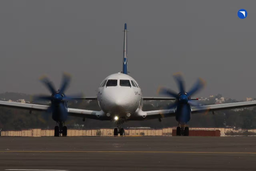
Deliveries to India may begin in 2028
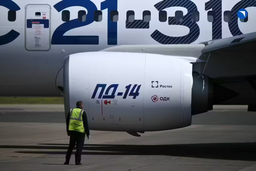
The technology provides automated search for all types of defects in power units
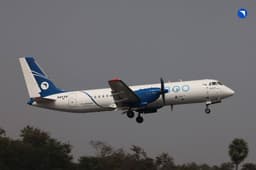
The plane flew 500 km, accelerating to 425 km/h

The plant stated that the information about the termination of purchases for models 6 and 8 is not true
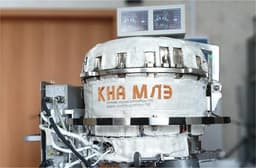
Scientists are using the "Ekran-M" installation