Translated with AI from the Russian original.
The Space Research Institute of the Russian Academy of Sciences (IKI RAS) shared details about the magnetic storms of recent days on Earth, which have become the strongest of the twenty-first century as a whole.
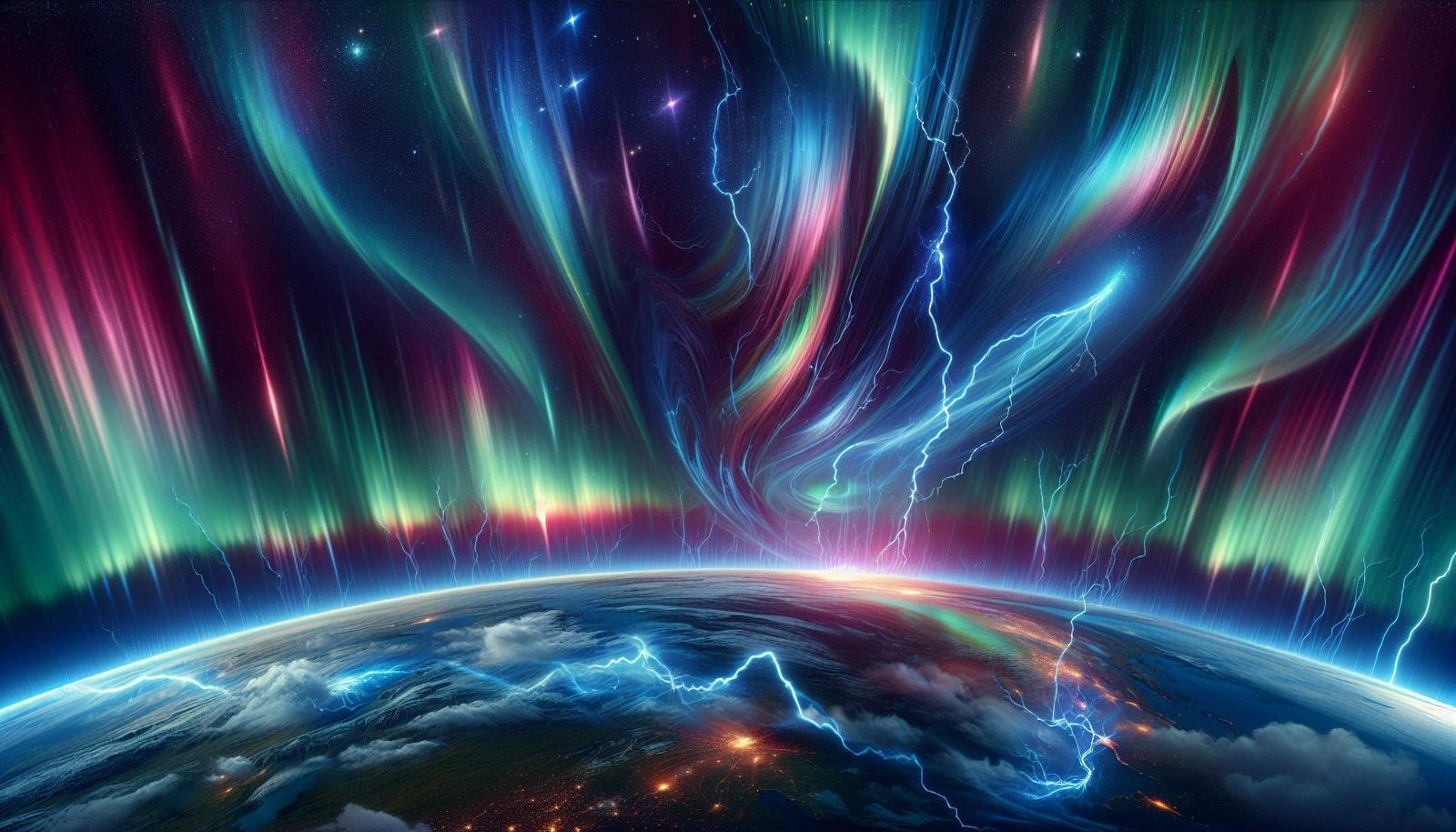
Increased solar activity and its coronal mass ejections led to geomagnetic storms of the maximum level G5. This causes problems with power grids, radio communications, and satellite communications. They were observed in different parts of the Earth.
Earlier, on May 8, employees of the Moscow Institute of Applied Geophysics recorded two flares of the highest class X on the Sun. Scientists emphasized that in the last two weeks before this recording, there were four flares of the same high class. The IKI RAS noted that these flares are related to what is happening.
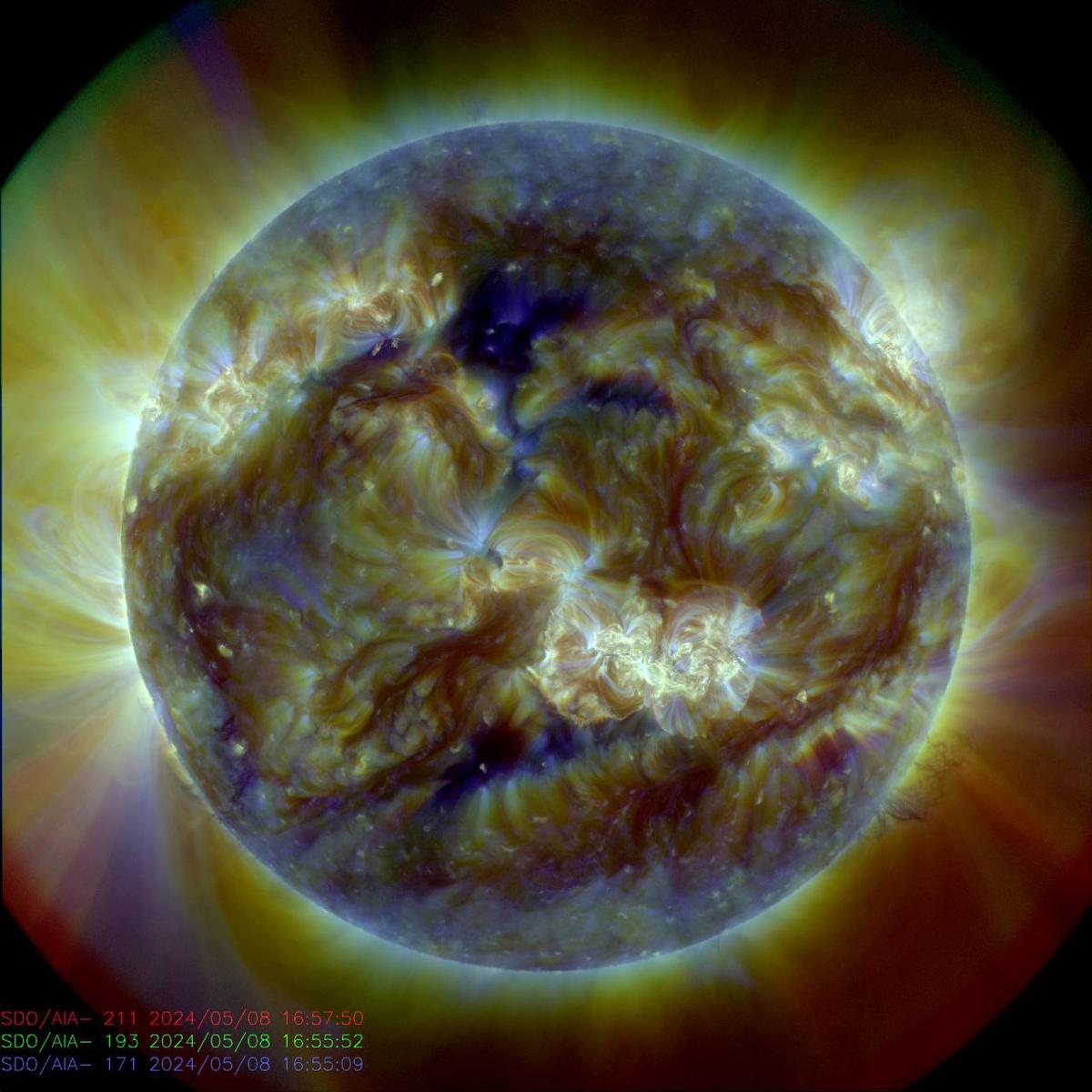
It usually takes 3-4 days for solar matter to travel the 150 million kilometers that separate the Sun from the Earth, but the speed of coronal mass ejections is greater (in this case, it turned out to be almost twice as high), so the first "strike" on the Earth's magnetosphere occurred already on the evening of May 10.
The first to register the arrival of solar masses on the evening of May 10 were satellites located on the line between the Sun and the Earth at 1.5 million kilometers from the planet. The plasma ejection approached in the most geoeffective configuration: the solar wind speed was almost twice as high as usual, the magnitude of the magnetic field was six times higher, and the direction of the magnetic field of the ejection was also "suitable" for the start of a magnetic storm.
The first magnetic storm began on the evening of May 10 and immediately exceeded the G4 level. After midnight on May 11, it intensified to the maximum level G5. During the day on May 11, the level did not drop below the G4 mark, with periodic "peaks" to the G5 level. The area of auroras around the world due to this spread to 40 degrees north latitude.
Later, on May 12, geomagnetic activity began to decline, but flares continued on the Sun, the largest of which occurred on May 10 and 11. But the mass ejections that occurred during them deviated during movement and "affected" the Earth tangentially. It is noted that the level of geomagnetic disturbances on May 12-13 did not exceed G2-G3, and this repeated geomagnetic storm had already ended by noon on May 13.
The IKI RAS says that "scientific analysis of the events is still ongoing, and a detailed picture of what is happening can only be assessed after some time."
Read materials on the topic:
Magnetic anomalies, coronal mass ejections: it became known how space weather affects satellites
Flares on the Sun, magnetic storms, solar corona — what is studied by the world's only radioheliograph in Russia
Never miss our newsAdd this site to your preferred sources to see us more oftenAdd on Google

















