The ISS orbit will not be adjusted due to powerful solar flares and the strongest geomagnetic storm. The Roscosmos press service notes that these phenomena did not affect the operation of the ISS, and such an operation is not required.

Since May 10, the Earth has been covered by a magnetic storm with a maximum power level of G5. This level means that earthlings may experience problems with power grids, problems with radio communications and satellite communications, but critical infrastructure related to electronics should survive. The US National Weather Service announced its arrival. The last time such "gifts" from the Sun were recorded was in 2003. Both then and now, residents of the Earth can see the northern lights in the most unexpected regions: it will not only cover a number of regions of Russia, but will also reach Moscow tonight.
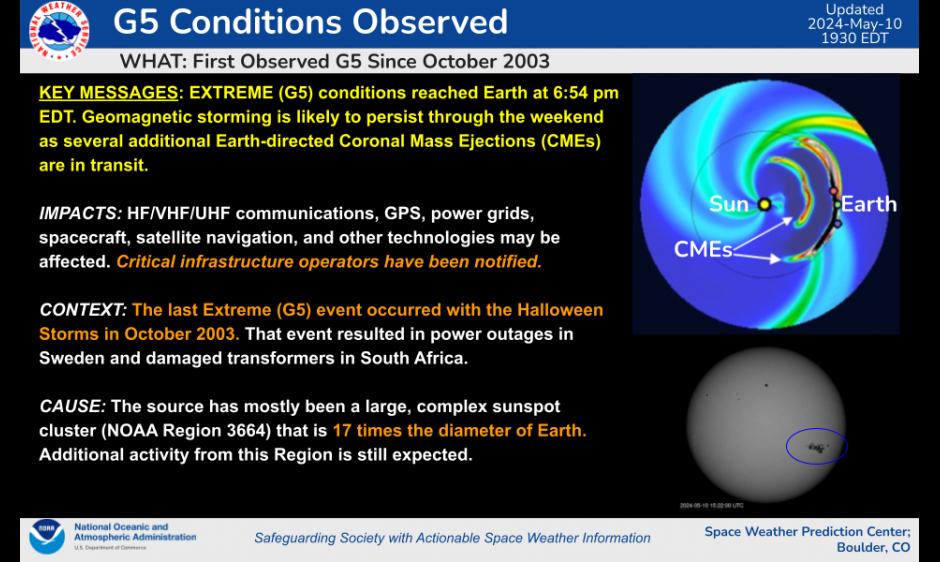
Earlier, on May 8, employees of the Moscow Institute of Applied Geophysicsrecorded two flares of the highest class X on the Sun. Scientists emphasized that four flares of the same high class had occurred in the last two weeks before this fixation.
To study such phenomena, the only multi-wave radioheliograph in the world waslaunched in Russia at the end of 2023. It consists of three radio telescopes and includes 528 antennas. The radioheliograph studies the Sun, its coronal activity, and predicts the consequences of magnetic storms in one part of the Earth or another based on three-dimensional data.
Read materials on the topic:
Magnetic anomalies, coronal mass ejections: it became known how space weather affects satellites
Solar flares, magnetic storms, solar corona - what is studied by the only radioheliograph in Russia
Never miss our newsAdd this site to your preferred sources to see us more oftenAdd on Google

















