The Roscosmos State Corporation intends to send two spacecraft to the Moon as part of the exploration of Earth's satellite. The landing site for them will be determined by "Luna-26", its launch is in 2027.
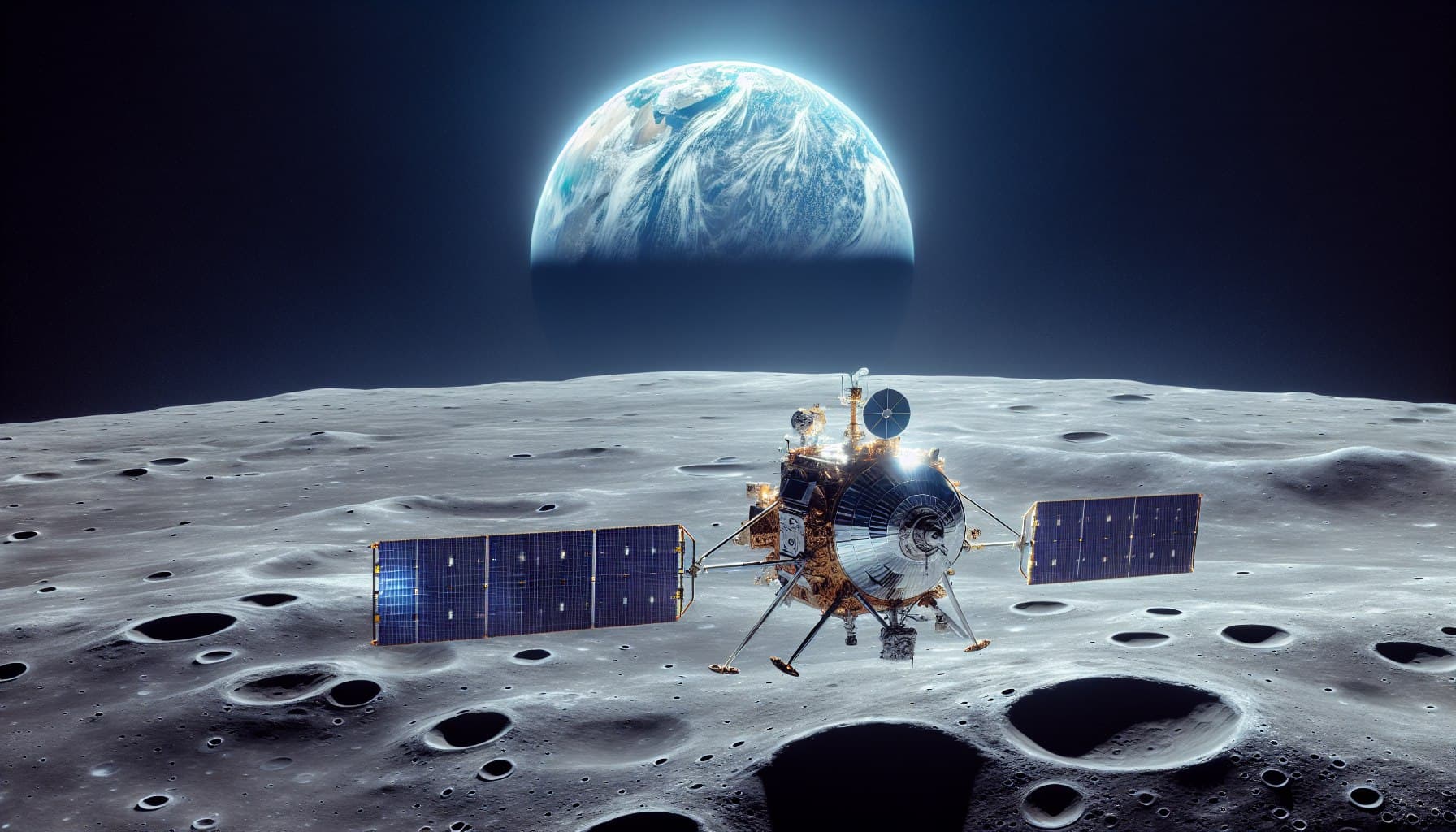
Plans for backup spacecraft, which were already announced in December 2023, were confirmed for implementation by the head of Roscosmos. In a behind-the-scenes conversation with a representative of the TASS news agency, he replied that there is progress on the issue of creating and launching two spacecraft instead of one.
Everything is moving as I said in December. As I said in December, those are the plans - we will launch.
"Luna-27a" and "Luna-27b" will have to avoid the disaster that happened with "Luna-25". If one of the spacecraft does not land, the second one will perform the scientific tasks of the mission, and the work of scientists will not stop, as happened now, when there was only one spacecraft.
If the first of the twin spacecraft lands successfully, the second one can be sent to the Moon's North Pole or to its far side.
"Luna-25"
In 2023, for the first time in almost fifty years, a domestic spacecraft was sent from Russia to the Moon to study Earth's satellite: "Luna-25".
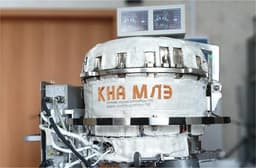
The automatic station "Luna-25" crashed without ever landing. A special commission investigated the incident. According to the results of its work, it became known that the accident was caused by the new domestic angular velocity measurement unit "Bius-L", which is part of the station's onboard control system.
The device was designed at the Scientific and Production Center for Automation and Instrument Engineering named after Academician N. A. Pilyugin (NPCAP) from completely Russian parts. It was responsible for determining the station's orientation in space and its speed. Shortly before landing, the "Bius-L" accelerometer units failed due to a possible "entry into one data array of commands with different priorities for their execution by the device".
But "Luna-25" still managed to contribute to science. It took pictures from space and took measurements of the radiation background. Also, after entering the orbit of an artificial satellite of the Moon, the station photographed the southern polar crater Zeeman on the far side of the Moon, measured the потоки gamma rays and neutrons from the surface of the Moon, and obtained parameters of the near-lunar space plasma and gas-dust exosphere in near-lunar orbit.
Read materials on the topic:
For temperatures from – 140 to + 140°C: Reshetnev employees are working on a new space technology
Russia is transferring rocket and space technology to the domestic T-FLEX system
A Russian super-heavy rocket for the Moon and Mars will fly from the Vostochny Cosmodrome