The General Director of Roscosmos, Yuri Borisov, announced that Luna-25 crashed due to a malfunction of the accelerometers. They did not turn on and did not transmit the necessary information to adjust the engine, which led to the disaster. Mr. Borisov emphasized that there is no absolute guarantee in missions of this scale, and no one is immune from abnormal situations. After the failure with Luna-25, Borisov was one of the first to receive support from his American colleague, NASA Director Bill Nelson.
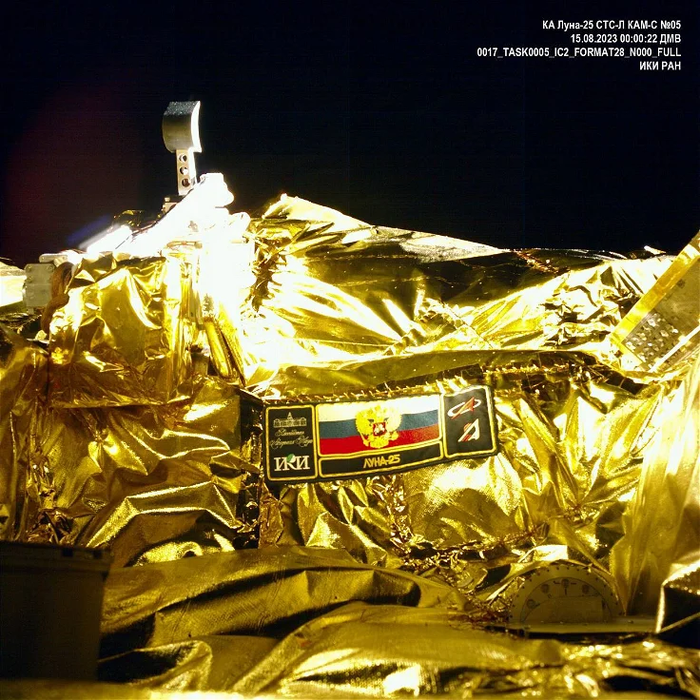
Earlier, a source who wished to remain anonymousnamed among the possible causes of the incident a malfunction of the "Bius-L" device, which had not previously undergone space testing. The "Bius-L" inertial unit is designed to determine orientation and acceleration using fiber optic gyroscopes and an accelerometer.
Work to determine the causes of the accident continues. The emergency commission plans to come out with a final conclusion by the end of September. Roscosmos intends to take into account all the findings in the following missions Luna-26 and Luna-27.
The Luna-25 mission was the first Russian launch of a lunar station in almost half a century. Despite thefailure, plans to repeat the mission as early as 2026 remain in force. According to experts,sending a new Luna-25 station will cost Russia 5 billion rubles
Now on home

Start of deliveries scheduled for 2027

Over 51,000 new motorcycles were sold in Russia in 2025

The car will take at least a year to assemble

The application's audience has reached 20 million users

The model will be included in the list of cars for taxis, price - from 2.25 million rubles

All parking lots of the "Administrator of the Moscow Parking Space" are connected to the service

The cars will be supplied to the Moscow Transport Service Directorate
Deliveries to India may begin in 2028
The technology provides automated search for all types of defects in power units
The plane flew 500 km, accelerating to 425 km/h

The plant stated that the information about the termination of purchases for models 6 and 8 is not true
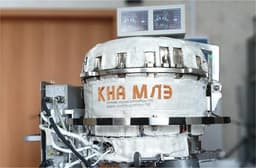
Scientists are using the "Ekran-M" installation