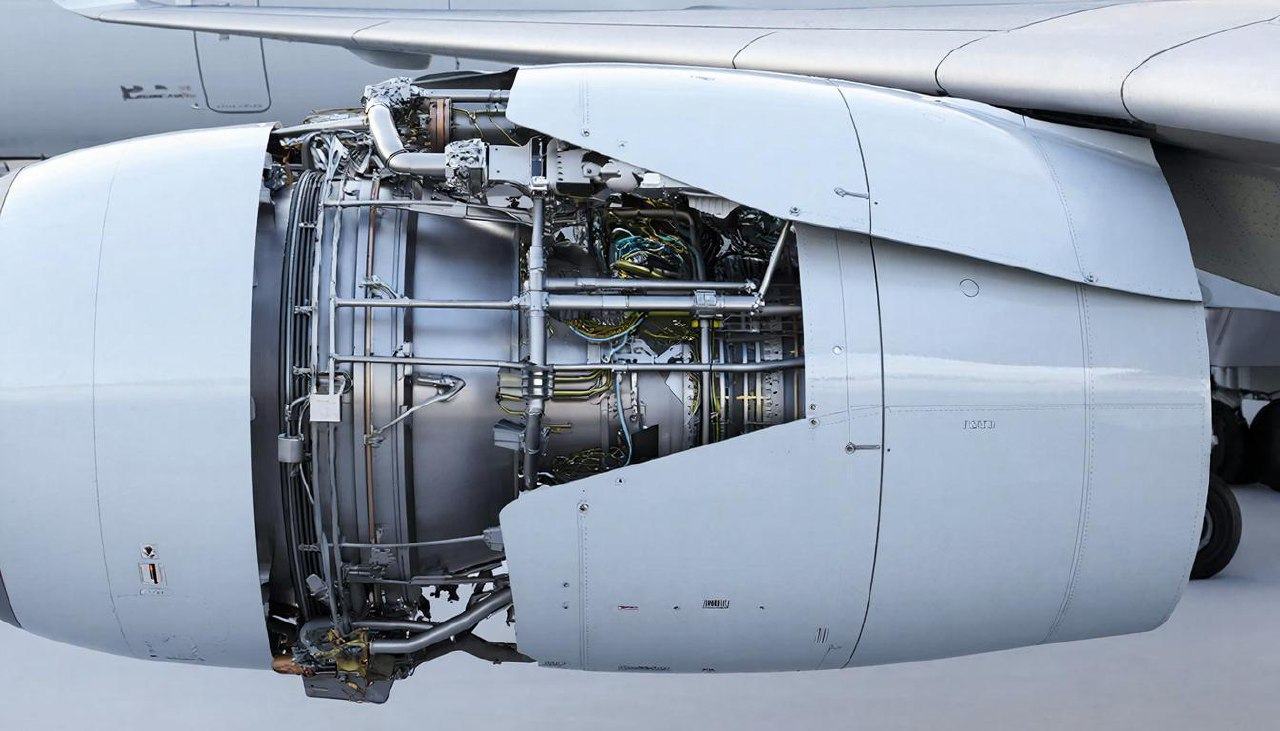
Hybrid power plants remain the main direction of civil aviation development. This type of engine can provide the necessary balance between environmental safety, economy and operational qualities, which meets modern requirements for reducing emissions and increasing transportation efficiency, says Andrey Dutov, General Director of the Zhukovsky National Research Center and Doctor of Technical Sciences.

Can you imagine? You take off on an electric motor, start a gas turbine engine where possible, charge the battery at the permitted altitude, continue the flight on electricity again, and land on propellers.
According to him, this approach allows not only to increase fuel efficiency and reduce environmental impact, but also to maintain high flight speed - this is exactly what the modern consumer expects.
The Research Center has already created a flying demonstrator - a hybrid biplane capable of taking off and landing on a section of only 50 meters. This technology opens up fundamentally new opportunities for air communication in remote regions of the country.
According to experts at the center, the Russian development is 2-3 years ahead of foreign counterparts, which creates a strategic advantage in the formation of a new ecosystem for regional aviation.
According to the Ministry of Science and Higher Education of the Russian Federation, more than 2.3 billion rubles have been allocated for the development of hybrid and electric aviation technologies under the national project "Science and Universities" for 2024-2026. The main executor - the Zhukovsky National Research Center - has already completed ground tests of a 300 kW hybrid power plant and has begun flight tests of a prototype.
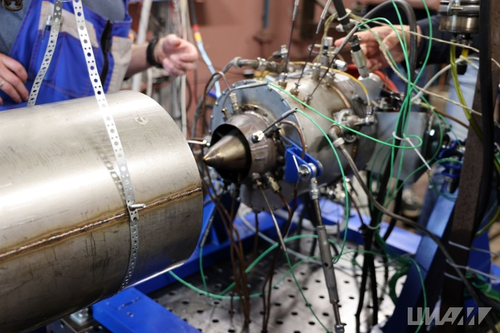
As noted in the report at the meeting of the Scientific and Technical Council of Rosaviation in March 2025, this unit is capable of reducing fuel consumption by 35-40% compared to traditional piston engines of a similar category.
Experts from the Central Aerohydrodynamic Institute (TsAGI), which is part of the National Research Center, emphasize that the key advantage of the hybrid approach is not only in fuel economy, but also in simplifying infrastructure.
It is also noted that the Zhukovsky National Research Center continues todevelop the Strizh supersonic aircraft, which is preparing for its first flight in 2029.
Read more materials:
- Future aviation will change the challenge to traditional approaches
- Light aircraft for the regions: Russia will create domestic analogues of Cessna
- Aviation expert Roman Gusarov: PD-8 engines for Be-200 will have to be "sea-modified"
Never miss our newsAdd this site to your preferred sources to see us more oftenAdd on Google

















