The Russian heavy reconnaissance and strike unmanned aerial vehicle S-70 "Okhotnik-B" has become one of the key projects of the domestic aircraft industry in recent years. Its development began in 2011 by order of the Ministry of Defense, when it became obvious that future wars would require a different concept from aviation - networked, autonomous, high-precision and maximally protected from enemy influence. Created in Sukhoi and manufactured at the Chkalov Novosibirsk Aviation Plant, the Okhotnik became the first UAV in Russia that can rightfully be classified as a new generation of heavy strike drones.
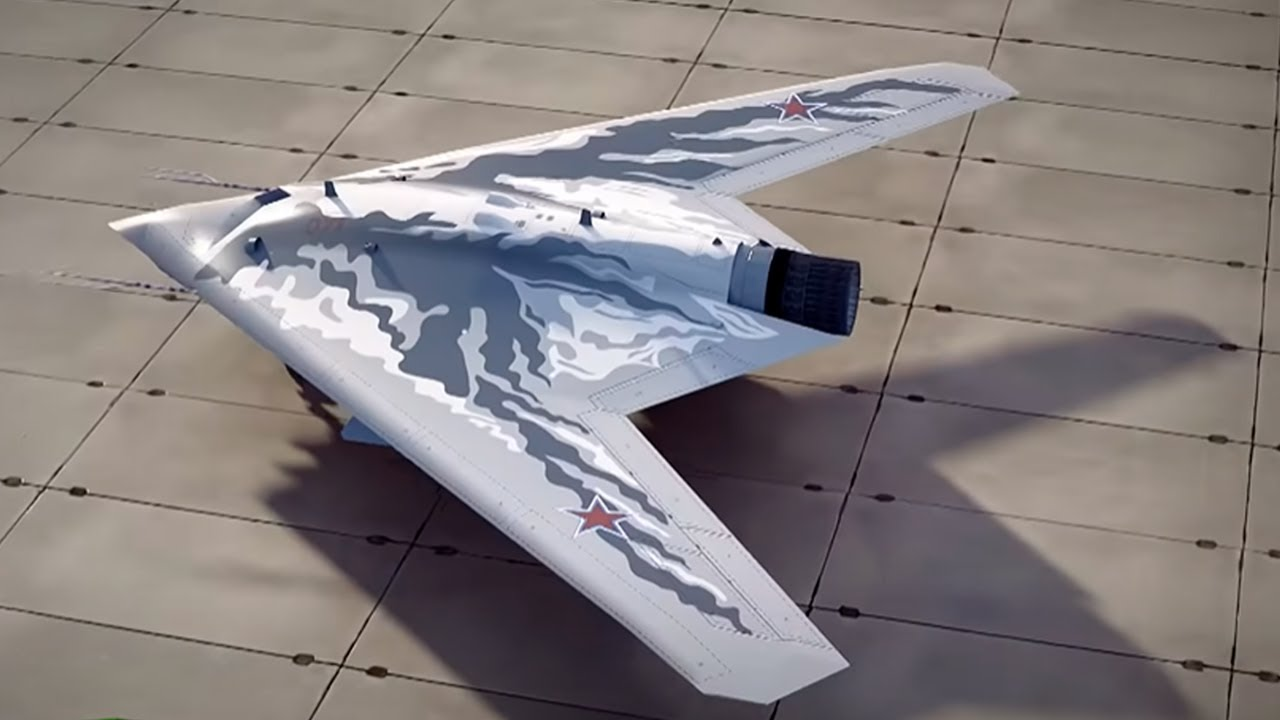
In terms of its architecture, the S-70 is a "flying wing." This scheme was chosen for a reason: the absence of protruding elements, the wide wing plane and the use of composite materials create low radar signature - critically important for penetrating zones covered by modern air defense systems. The surface of the aircraft is made with a minimum number of joints, radio-absorbing coatings and technological solutions characteristic of low-observable fifth-generation aircraft are used.
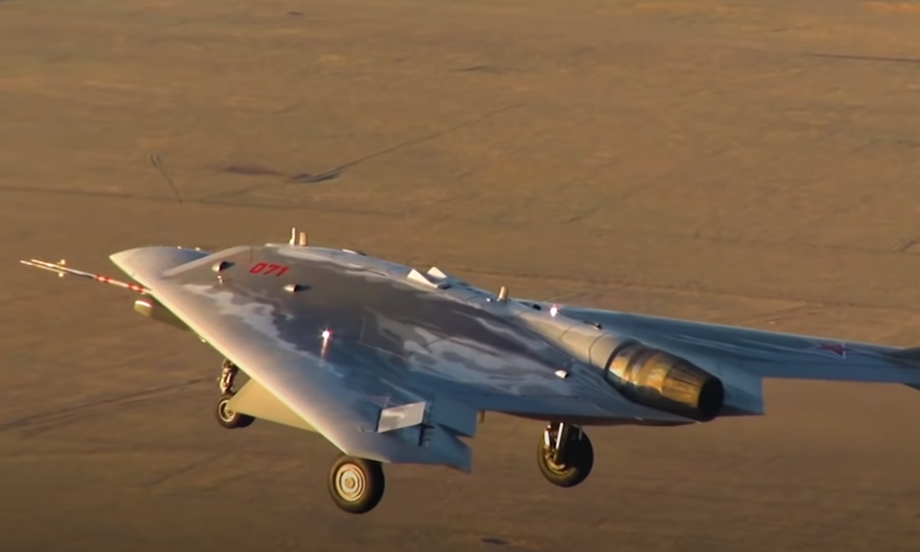
The dimensions of the "Okhotnik" bring it closer to a light bomber than to a conventional drone. This is a large machine about fourteen meters long and a wingspan of about nineteen meters. The take-off weight reaches twenty-five tons, and the combat load, according to various estimates, ranges from 2.8 to almost eight tons. The maximum speed at low altitude can approach supersonic, and the practical ceiling reaches eighteen kilometers. The flight range reaches 6 thousand kilometers, which allows the device to be used for both operational and strategic use.
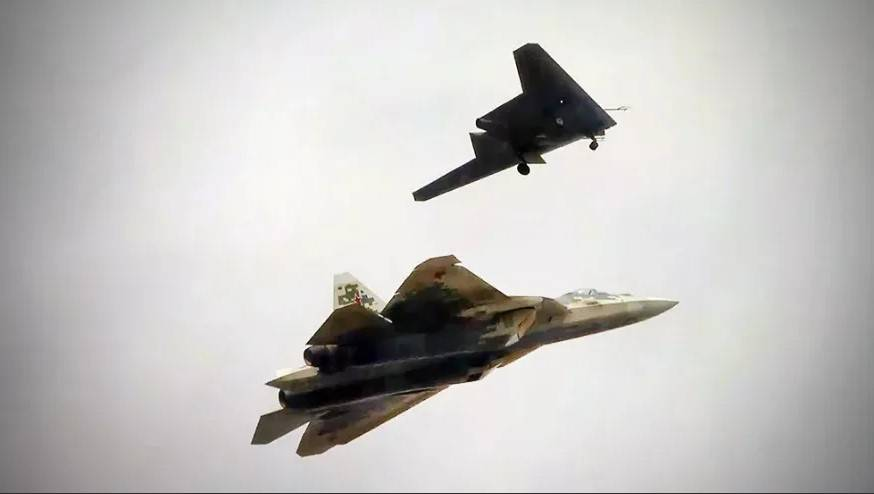
But the main purpose of the "Okhotnik" is not only autonomous strikes. From the moment the task was set, the concept of working in tandem with the Su-57 fighter, where the manned aircraft acts as a command post, and the drone becomes a "loyal wingman," was laid down. During the tests, the transfer of target designation from the onboard radar "Belka" of the Su-57 to the drone was practiced, which performed launches of simulators of guided missiles according to the data of the leading aircraft. A unified link is created, where the Su-57 provides overview and coordination, and the S-70 provides reconnaissance on the front line, suppression of air defense and strikes on complex targets. This architecture significantly reduces risks: dangerous directions can be worked out by an unmanned aircraft, and the fighter remains outside the affected area.

The armament of the "Okhotnik" includes a nomenclature characteristic of multi-purpose strike aircraft. These are anti-radar missiles, means of destroying sea targets, and guided aerial bombs. The presence of internal compartments allows you to maintain stealth even with a full combat load. In addition, the possibility of using the S-70 as a carrier of small reconnaissance drones is being considered, which opens up the prospect of creating a multi-level surveillance and target designation system.
Modernization of the power plant is also planned. The UAV should receive a new generation AL-51F1 engine, which is also being created for promising fighters. This engine will provide higher thrust, improve fuel efficiency and reduce the thermal signature of the aircraft, which is especially important for low-observable aircraft.
The strategic importance of the S-70 is that it opens a new era for Russian aviation. For the first time, a heavy UAV appears that is capable of operating at long ranges, fitting into a network-centric architecture and performing tasks that previously could only be assigned to manned vehicles. In conjunction with the Su-57, the Okhotnik forms the basis of future strike aviation complexes, where the person is responsible for making decisions, and unmanned platforms are responsible for performing the most risky elements of the operation.
Read more materials on the topic:
- Unique shots of the cockpit of the export Algerian Su-34ME were shown for the first time on the Web
- Rosoboronexport is targeting the Su-30SME for foreign orders from Asia and Africa
- UZGA modernized the Forpost-R drone, increasing payload capacity and flight range
Now on home

The service contains data on 45,000 fraudulent sites

The state has accelerated the introduction of unmanned solutions, integrating them into the real sector of the economy

Modernized engines may equip the Lada Azimut crossover

The price is 132 billion 265.8 million rubles

The manufacturer plans to strengthen its lineup of light commercial vehicles

The production of carbon fiber was organized in the shortest possible time

Electric vans will speed up the repair of urban transport infrastructure

Countries are working to synchronize regulations in the field of AI

The service's average daily audience is 55 million people

Stable Isomaterial Based on Metakaolin Has a Density Below 300 kg/m³

Re-identification quality improved twofold with new DynaMix method

Russians will be able to find out about debts online
Articles
-
National Project UAS: How Russia Created Its Own Drone Market
14 Jan 2026
-
No Spare Airfield: Sanctions and Aging Aircraft Fleet May Lead to Crisis
13 Jan 2026
-
ODK Engines Powered 13 Successful Soyuz Launches in 2025
13 Jan 2026
-
Why Russian Authorities Changed Their Mind About Introducing GOST for Video Games: Reasons Given
12 Jan 2026