American military analyst Pierre Sprey, who was part of a group of Pentagon experts in the 1970s, criticized the Soviet supersonic front-line fighter MiG-21, stating that the aircraft had too many shortcomings. Former US Navy F-4 Phantom II pilot John Cheshire disagreed with him.
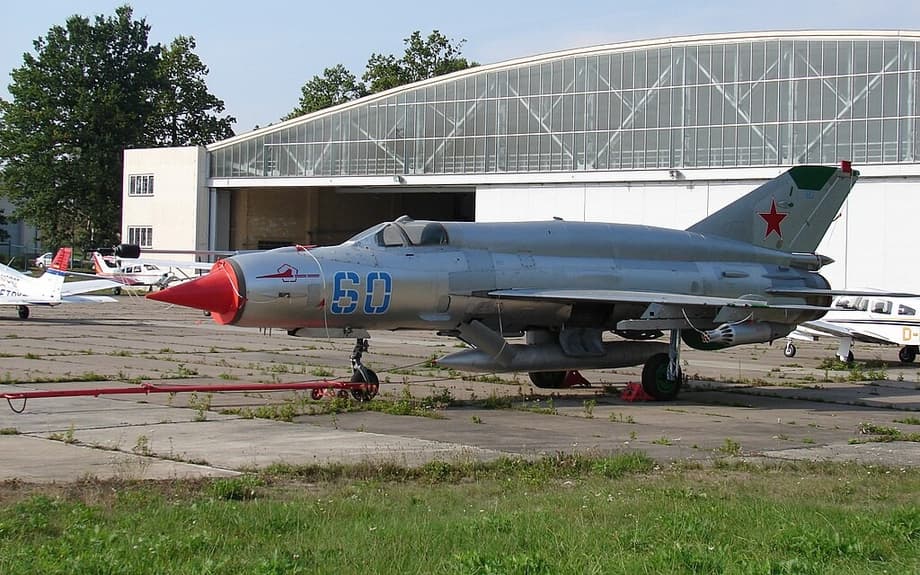
I haven't flown the MiG-21, but I've encountered it. I remember chasing a Soviet fighter in my F-4 Phantom II at top speed for a long time. And it was surprisingly faster.
Cheshire acknowledged that the MiG-21 had limitations: short flight range, weak weapons systems. However, at one time the Soviet fighter was considered"simple, cheap and effective, like the AK-47 in aviation", he emphasized.
The USSR achieved its goal by creating a durable, reliable, and easy-to-maintain fighter with exceptional climb rate and maneuverability. It surpassed any aircraft in service in the early 1960s.
The MiG-21 is still good, if you don't consider its flight range and payload, Cheshire summarized.
About the MiG-21 fighter
The aircraft was developed in the 1950s at the Mikoyan and Gurevich Design Bureau. The first flight of the MiG-21 took place in June 1955. Four years later, the fighter was adopted into service. Current operators are China, India, North Korea, Russia, Cuba, and a number of African countries.
General characteristics of all MiG-21 modifications:
- Number of engines - 1
- Crew - 1 (combat version), 2 (training version)
- Length - 14.1 m Height - 4.7 m
- Wingspan - 7.1 m
- Wing area - 22.95 sq. m
The fighter was produced in several countries until 1985. In total, more than 11,000 units of various modifications were produced (excluding production in China). In the USSR alone, over 10,600 MiG-21s were assembled.
Read more materials on the topic:
Now on home

Start of deliveries scheduled for 2027

Over 51,000 new motorcycles were sold in Russia in 2025

The car will take at least a year to assemble

The application's audience has reached 20 million users

The model will be included in the list of cars for taxis, price - from 2.25 million rubles

All parking lots of the "Administrator of the Moscow Parking Space" are connected to the service

The cars will be supplied to the Moscow Transport Service Directorate

Deliveries to India may begin in 2028

The technology provides automated search for all types of defects in power units

The plane flew 500 km, accelerating to 425 km/h

The plant stated that the information about the termination of purchases for models 6 and 8 is not true

Scientists are using the "Ekran-M" installation