September 20, 2025, marked the 77th anniversary of the first flight of the GM-1 (Mil Helicopter), better known as the Mi-1 helicopter. The test pilot who lifted the machine into the air was Matvey Karlovich Baykalov. It was with this rotorcraft that the large-scale production of helicopters in the Soviet Union and their widespread practical use began.
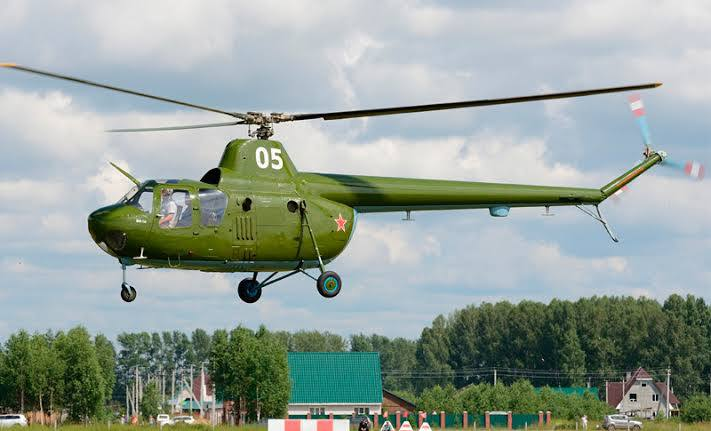
The Mi-1 helicopter became the starting point for the creation of an experimental design bureau, which today bears the name of the outstanding aircraft designer Mikhail Mil. The bureau was founded on December 12, 1947. During its work, the Mil Design Bureau has developed 13 basic helicopter models and over 200 of their modifications, covering various classes - from light to super-heavy. Among them is the legendary multi-purpose Mi-8 helicopter, which has become the most popular in world history.
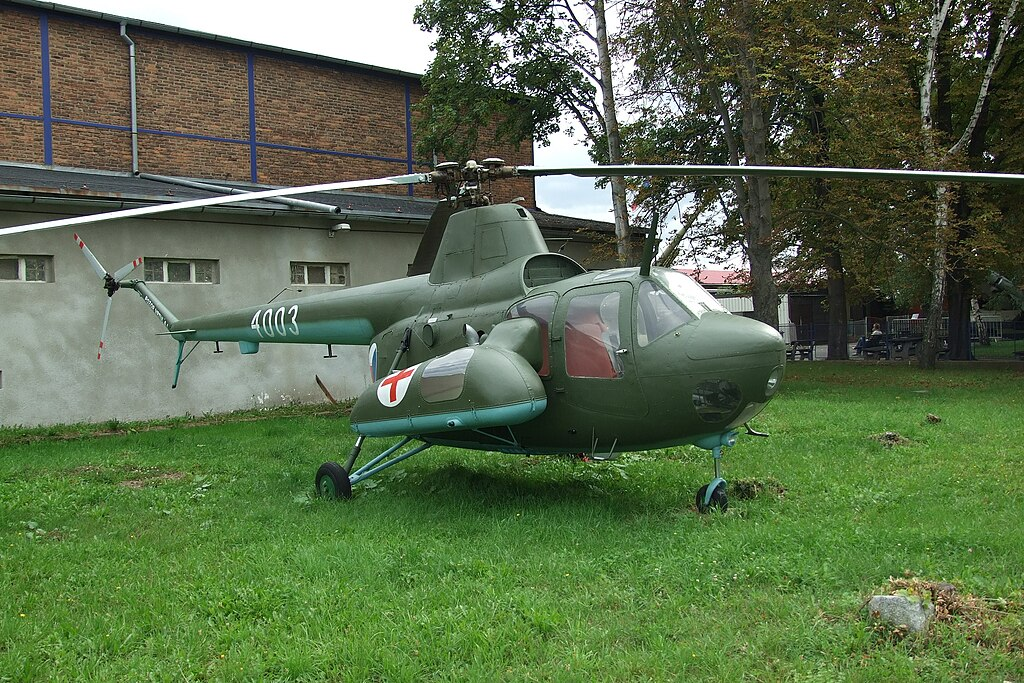
The excellent flight and technical characteristics of the rotorcraft "hare" are best evidenced by the 27 world records that were set on the helicopter between 1958 and 1968.
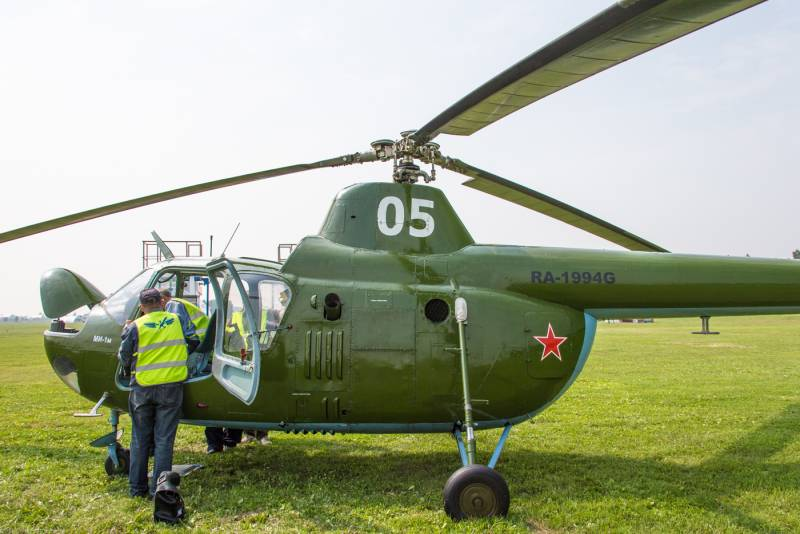
Mil's First Helicopter (GP-1)
In 1946, a helicopter laboratory was formed at TsAGI, headed by Mil. Under his direct supervision, a universal test stand for a full-scale helicopter installation (NGU) was created here. This stand was necessary for testing and researching full-size rotor blades, as well as refining the design of the main parts of helicopters. It was on the basis of the NGU that a helicopter was developed, which received the index GM-1 (Mil's First Helicopter).
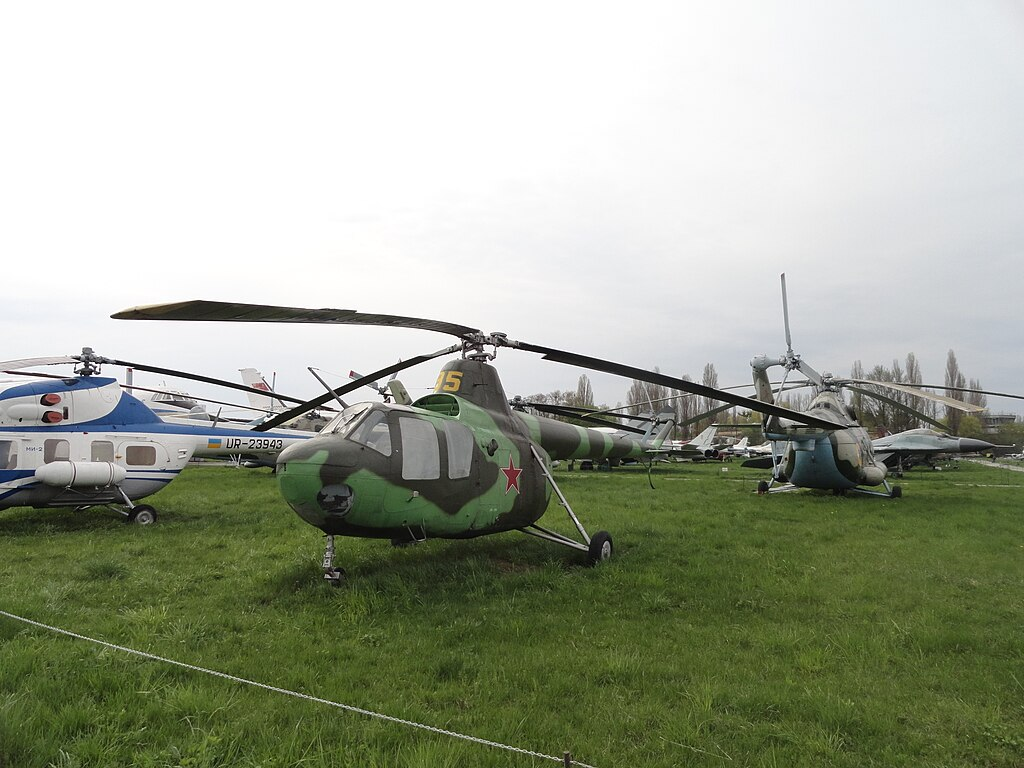
During the tests of the rotorcraft, a flight speed of 175 km/h and a dynamic ceiling of 5200 meters were reached. Starting in 1949, the helicopter underwent state tests, which did not reveal any particular complaints about the machine, with the exception of the amount of vibration and the level of piloting.
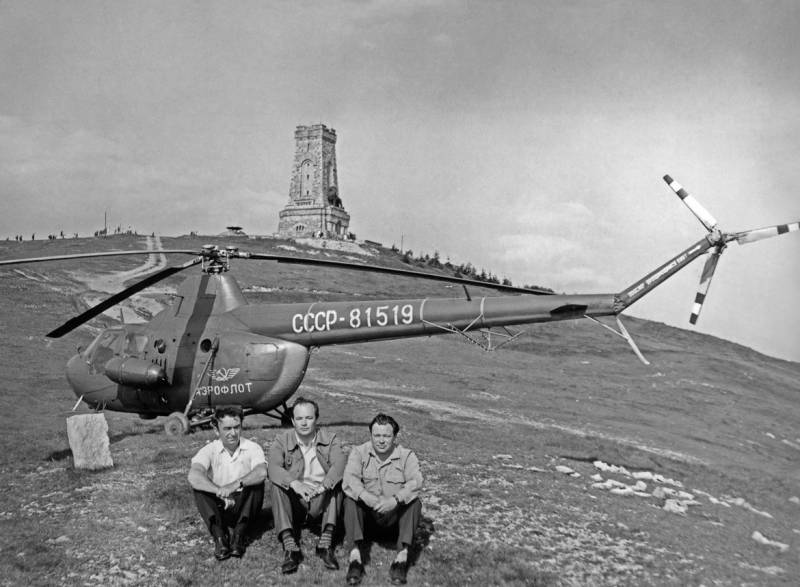
In total, about 20 modifications of the Mi-1 helicopter were developed during its serial production.
Serial production of the helicopter continued from 1952 to 1960 at aircraft factories in Moscow, Kazan, Rostov-on-Don and Orenburg. Between 1956 and 1965, the helicopter was also produced in Poland in the city of Swidnik. In total, 2680 helicopters were assembled during serial production.
Mi-1 flight performance characteristics: overall dimensions: length - 12.09 m, height - 3.30 m, main rotor diameter - 14.35 m, tail rotor - 2.50 m. Empty helicopter weight - 1700 kg. Normal take-off weight - 2140 kg. Maximum take-off weight - 2330 kg. Power plant - PD Progress AI-26GRF with a capacity of 575 hp. Maximum flight speed - 185 km/h. Cruising speed - 130 km/h. Practical range - 430 km. Practical ceiling - 3500 m. Crew - 1 person, payload - 2 passengers or 255 kg of various cargo in the cabin, on an external sling up to 500 kg.
Read more materials:
- What to watch on the weekend: "First Technical" recommends a masterpiece of Soviet cinema - "They Fought for Their Country"
- The frigate "Admiral Golovko" of project 22350 launched the Poliment-Redut air defense system, destroying the RM-24 cruise missile
- Export Su-34s: Will Algeria receive a batch of six aircraft?
Now on home

Start of deliveries scheduled for 2027

Over 51,000 new motorcycles were sold in Russia in 2025

The car will take at least a year to assemble

The application's audience has reached 20 million users

The model will be included in the list of cars for taxis, price - from 2.25 million rubles

All parking lots of the "Administrator of the Moscow Parking Space" are connected to the service

The cars will be supplied to the Moscow Transport Service Directorate
Deliveries to India may begin in 2028

The technology provides automated search for all types of defects in power units
The plane flew 500 km, accelerating to 425 km/h

The plant stated that the information about the termination of purchases for models 6 and 8 is not true

Scientists are using the "Ekran-M" installation
Articles
-
Russian An-124 "Ruslan" Stuck in Canada for 4 Years and Accrues Millions in Fines
26 Jan 2026
-
Coaxial Propellers: How Counter-Rotation Increases Turboprop Engine Efficiency
25 Jan 2026
-
Kazan Aviation Plant Breaks Old System: Tu-214 to be Assembled Like Cars
25 Jan 2026
-
How Engineers and Technicians Are Paid Today in the Russian Aviation Industry: An Overview with Figures
24 Jan 2026