Russia has begun creating a low-orbit satellite constellation for Starlink-type broadband satellite communication. With its help, it is also possible to control drones in real time. This is written by military expert Vijayner K. Thakur in the article "Russia's Answer to Starlink: Moscow Plans to Deploy 2,600 Satellites by the Mid-2030s. Ambition or Illusion?" for the Eurasian Times.
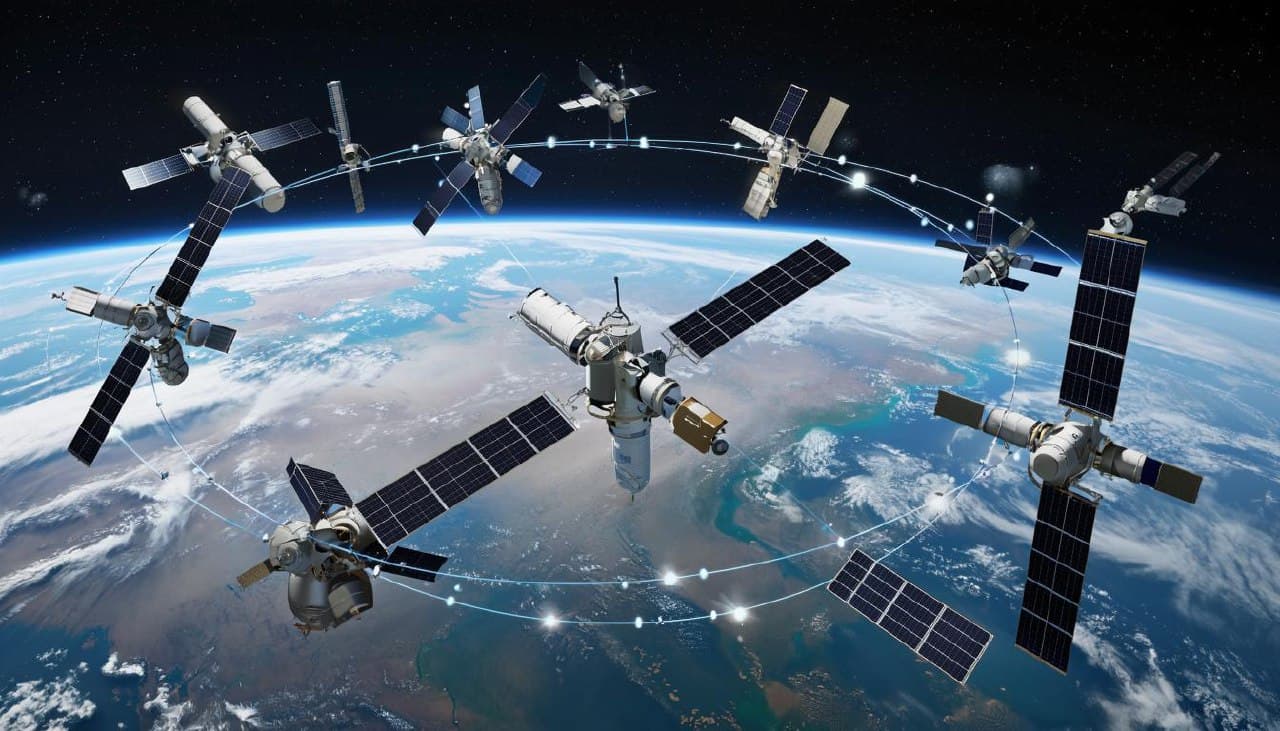
Starlink's competitor is the private Russian aerospace company "Bureau 1440". The effective range of inter-satellite communication will be up to 5000 km.
The Russian network will consist of 2,600 satellites by the mid-2030s. For comparison, Starlink includes about 8,000 active satellites. The American company's management plans to increase their number to 42,000.
Thakur doubted Russia's ability to deploy such a large number of satellites. In his opinion, the country has advanced space technologies, but its access to orbital space is limited by insufficient funding.
The expert recalled the words of Nathan Eismont, a leading researcher at the Space Research Institute of the Russian Academy of Sciences, spoken in the summer of 2024 in an interview with the Sputnik agency. The scientist claimed that Russia has the technical potential to create and manage a network of 2,600 satellites.
About the work of "Bureau 1440"
In May 2025, the head of Roscosmos, Dmitry Bakanov, stated that "Bureau 1440" is implementing the " рассвет " project. By 2035, the system will consist of 900 " рассвет -1" and " рассвет -2" satellites (supporting 5G).
Three satellites will be able to provide a communication speed of 12 Mbps with a delay of 41 ms. When all 900 devices start working, the speed will increase to 100 Mbps.
It is expected that the " рассвет " satellites will communicate with moving objects in the atmosphere. Each of the devices will be able to serve up to 144 thousand subscribers simultaneously.
Read more on the topic:
- Analogue of the American Starlink: the рассвет satellite system will be introduced in December 2025
- The launch of the рассвет communication satellites will start in December 2025
- Details of the implementation of the ambitious project to create the рассвет satellite network were revealed in Roscosmos
Now on home

Start of deliveries scheduled for 2027

Over 51,000 new motorcycles were sold in Russia in 2025

The car will take at least a year to assemble

The application's audience has reached 20 million users

The model will be included in the list of cars for taxis, price - from 2.25 million rubles
All parking lots of the "Administrator of the Moscow Parking Space" are connected to the service

The cars will be supplied to the Moscow Transport Service Directorate
Deliveries to India may begin in 2028
The technology provides automated search for all types of defects in power units
The plane flew 500 km, accelerating to 425 km/h

The plant stated that the information about the termination of purchases for models 6 and 8 is not true
Scientists are using the "Ekran-M" installation