On August 12, 2000, a tragedy occurred during Northern Fleet exercises in the Barents Sea: the nuclear submarine "Kursk" sank. The catastrophe, caused by a chain of fatal technical errors, disregard for regulations, and human incompetence, led to the death of all 118 sailors on board.
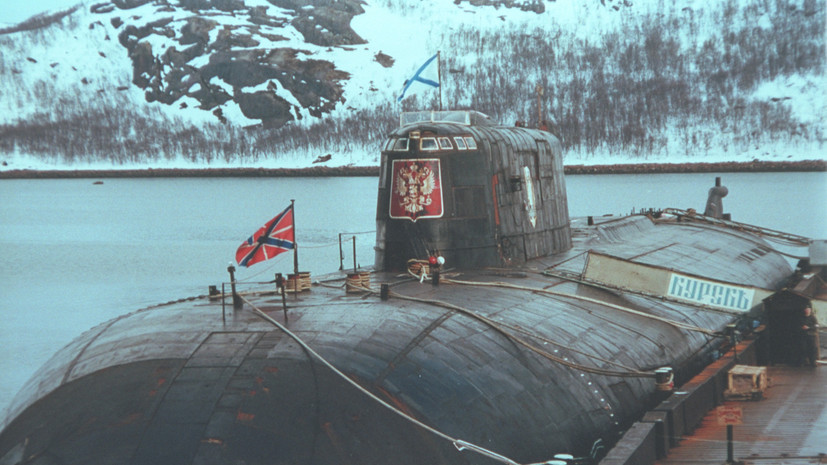
The construction of the K-141 "Kursk" nuclear-powered missile submarine cruiser was carried out at the "Northern Machine-Building Enterprise" (Sevmash plant) in the city of Severodvinsk, located in the Arkhangelsk region. The keel was laid under factory number 662 on March 22, 1990. After being launched in May 1994, the submarine was commissioned on December 30, 1994. From 1995 to 2000, its service took place within the 7th Submarine Division of the Northern Fleet of Russia.
Training and combat missions and missile launches
On August 10, 2000, the nuclear submarine "Kursk" set out to sea to perform a training and combat mission in the Kola Bay area. As part of the Northern Fleet exercises, the crew was to launch a cruise missile and conduct torpedo firing at a group of warships. On board were 24 P-700 "Granit" missiles and 24 torpedoes. The commander of the submarine was Captain 1st Rank Gennady Lyachin, and the senior officer on board was the Chief of Staff of the 7th Submarine Division, Captain 1st Rank Vladimir Tikhonovich Bagryantsev. According to the plan, on the morning of August 12, "Kursk" was to simulate an attack with a "Granit" cruise missile on a squadron led by the heavy aircraft-carrying cruiser "Admiral Kuznetsov" and the fleet flagship, the nuclear cruiser "Peter the Great".
At noon on August 12, at 11:28, the cruiser "Peter the Great" registered an explosion in the sea, which did not arouse any suspicion from the command. By the appointed time, torpedo attacks were not detected, and the expected surfacing of the "Kursk" submarine did not occur. By 14:50, searches in the supposed location of "Kursk" had yielded no results. The situation worsened at 17:30 when communication with the submarine was lost. By night, after it became clear at 23:00 that communication was still absent, at 23:30 a decision was made to declare the "Kursk" submarine in distress.
Catastrophe
Let's not hide the fact that we know the state the armed forces were in at that time. Frankly, there's nothing surprising. But the tragedy is colossal, so many people died... And of course, this cannot be forgotten
According to the official version, the catastrophe occurred due to a series of violations in the procedures for handling the 65-76A torpedo, which began as early as the preparation stage on shore. These violations led to an explosion of an oxygen-kerosene mixture in the first compartment, which caused a fire. As a result of the fire and explosion, the crew of the first three compartments, including the main command post, was disabled. The uncontrolled submarine sank, and the subsequent impact on the bottom caused the explosion of the entire torpedo ammunition, which led to the death of all 118 people on board.
It sank.
The causes of the sinking of the nuclear submarine "Kursk" remained unclear to the authorities for a long time. In September 2000, in a conversation with American journalist Larry King, Russian President Vladimir Putin, answering a question about the causes of the tragedy, limited himself to a brief statement: "It sank."
Memory
On June 15, 2009, a fragment of the conning tower of the nuclear submarine "Kursk" was placed on the observation deck at the Church of the Savior on Waters in Murmansk.
The solemn opening of the monument, which became part of the memorial "To the Sailors Who Died in Peacetime", took place on July 26 of the same year.
Read related materials:
The first crossover from KamAZ? Images of the "Caspian 2026" car have appeared
The TFK Avtodvor company presented a new semi-trailer dump truck of its own design
Russian scientists have created an innovative installation for diamond mining
Now on home

Start of deliveries scheduled for 2027

Over 51,000 new motorcycles were sold in Russia in 2025

The car will take at least a year to assemble

The application's audience has reached 20 million users

The model will be included in the list of cars for taxis, price - from 2.25 million rubles

All parking lots of the "Administrator of the Moscow Parking Space" are connected to the service

The cars will be supplied to the Moscow Transport Service Directorate

Deliveries to India may begin in 2028

The technology provides automated search for all types of defects in power units

The plane flew 500 km, accelerating to 425 km/h

The plant stated that the information about the termination of purchases for models 6 and 8 is not true

Scientists are using the "Ekran-M" installation
Articles
-
Russian An-124 "Ruslan" Stuck in Canada for 4 Years and Accrues Millions in Fines
26 Jan 2026
-
Coaxial Propellers: How Counter-Rotation Increases Turboprop Engine Efficiency
25 Jan 2026
-
Kazan Aviation Plant Breaks Old System: Tu-214 to be Assembled Like Cars
25 Jan 2026
-
How Engineers and Technicians Are Paid Today in the Russian Aviation Industry: An Overview with Figures
24 Jan 2026