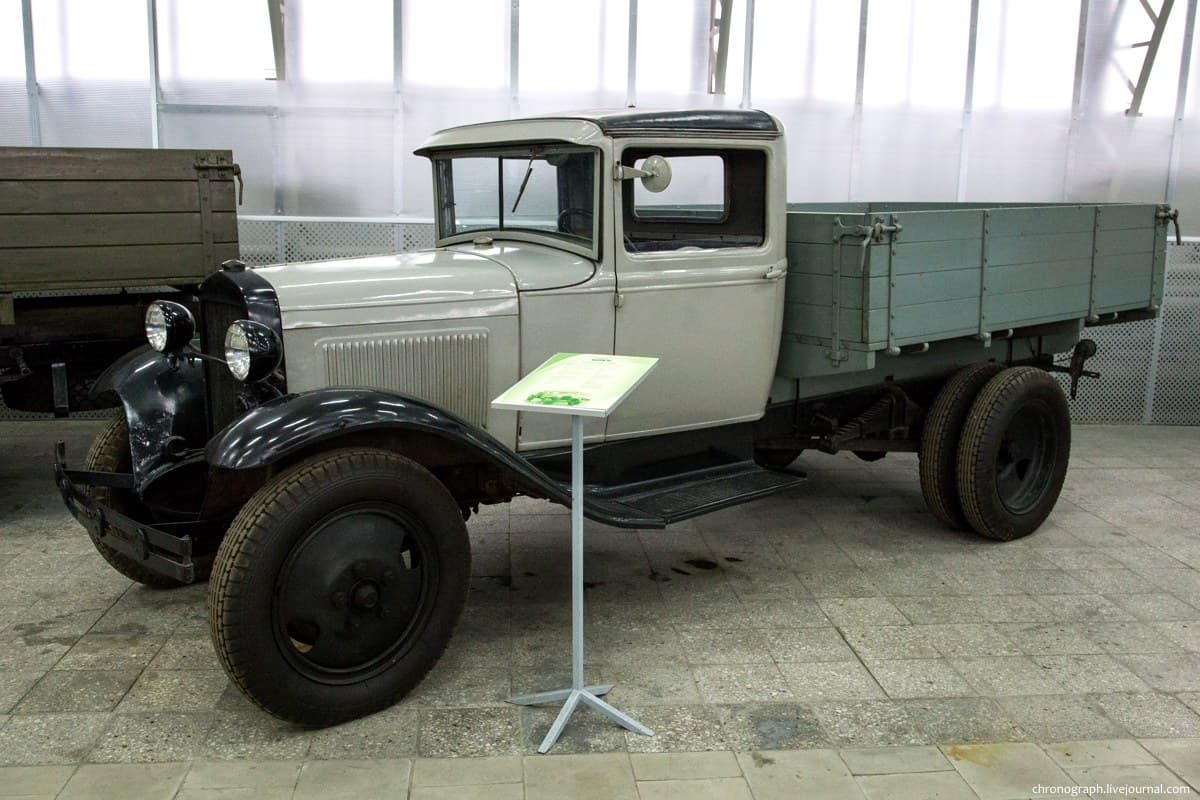
In 1932, the first GAZ-AA truck, which later became a symbol of the Soviet era, appeared on the assembly line of the Gorky Automobile Plant. This car, known as the "one-and-a-half tonner", got its nickname for a reason. It could carry one and a half tons of cargo, which was quite a lot for that time. The "one-and-a-half tonner" became a real "hard worker" and a reliable assistant during the Great Patriotic War.
History of the legendary "one-and-a-half tonner"
In the 1930s, the Soviet Union was experiencing an industrial boom, and automobile construction became one of its main components. Special attention was paid to trucks, which were necessary for the development of the economy and the strengthening of the country.
In May 1929, the authorities signed an agreement with the American company Ford Motor Company on technical support for the production of trucks. This cooperation was an important step in the development of the Soviet automotive industry.
The "one-and-a-half tonner" was first produced at the factory on January 29, 1932. Initially, the car was called NAZ, and after the city was renamed to Gorky, it was called GAZ. By 1933, the plant had already reached an impressive figure - 60 trucks per day.
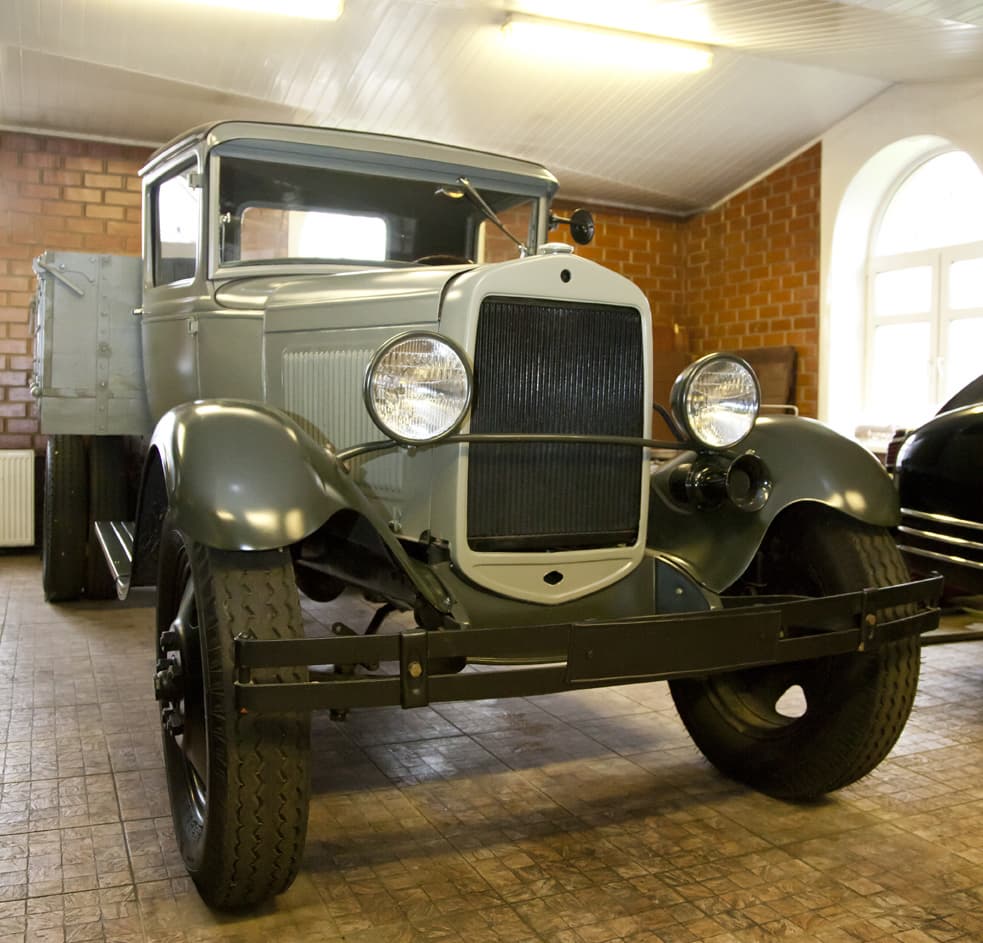
Despite the fact that the GAZ-AA was created on the basis of the American Ford-AA, the Soviet truck had a number of significant differences. It was adapted to harsh operating conditions, equipped with a reinforced clutch housing and steering mechanism, a metal body and cab. The simplicity of design, high cross-country ability, reliability and maintainability made the "one-and-a-half tonner" indispensable.
The GAZ-AA engine was unpretentious - it ran on low-octane gasoline and even kerosene. The car was cheap and manufactured using advanced conveyor technology.
Since 1933, GAZ-AA cars have been assembled exclusively from Soviet parts. Until 1934, the cabs were made of wood and pressed cardboard, but then it was replaced with a metal one with a leather roof.
"Why are you so slow, one-and-a-half tonner?"
In 1938, the truck was modernized. It acquired a more powerful engine, a reliable cardan shaft, an improved steering mechanism and a new designation - GAZ-MM. There were no external differences between GAZ-AA and GAZ-MM.
On June 22, 1941, GAZ-AA and GAZ-MM trucks accounted for almost 60% of the Red Army's vehicle fleet. The main advantage of the pre-war "one-and-a-half tonner" was its simplicity. During the war, these cars were simplified as much as possible: a military version of the GAZ-MM-V was produced, which did not have bumpers, mufflers, front brakes, or folding sides. The cab had no doors, and there was only one headlight.
The "one-and-a-half tonners" are real "workhorses" of the front and rear. They delivered reinforcements and shells to the front line, towed guns, served as ambulances, and were also indispensable for transporting bread to besieged Leningrad along the "Road of Life". These cars went through all the trials and tribulations of the war, steadfastly enduring all the hardships.
The "one-and-a-half tonner" became one of the symbols of victory in the Great Patriotic War, along with the T-34 tank and the Katyusha.
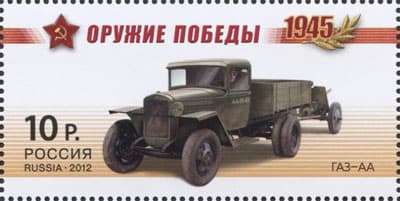
The history of the "one-and-a-half tonners" did not end with the end of the war. The last GAZ-MM rolled off the assembly line of the Gorky Automobile Plant on October 10, 1949. Over the years of production, the GAZ, KIM, UlZIS and Rostov assembly plants produced 985,000 trucks, of which 102,000 were assembled during the war.
The "one-and-a-half tonner" is a car that has become a symbol of the Great Patriotic War. It is captured in films and immortalized in songs, such as in Alexander Rosenbaum's famous composition "On the Road of Life":
Can't turn the steering wheel,
Something's bothering me...
The ground is so close,
Why are you so slow, one-and-a-half tonner?..
Read more on the topic:
"Combat bird": the first flight of the MiG-29KUB was 18 years ago
Anniversary of the Su-15TM: 50 years marks the main interceptor of the USSR Air Defense
Now on home

Start of deliveries scheduled for 2027

Over 51,000 new motorcycles were sold in Russia in 2025

The car will take at least a year to assemble

The application's audience has reached 20 million users

The model will be included in the list of cars for taxis, price - from 2.25 million rubles

All parking lots of the "Administrator of the Moscow Parking Space" are connected to the service

The cars will be supplied to the Moscow Transport Service Directorate
Deliveries to India may begin in 2028
The technology provides automated search for all types of defects in power units

The plane flew 500 km, accelerating to 425 km/h

The plant stated that the information about the termination of purchases for models 6 and 8 is not true

Scientists are using the "Ekran-M" installation