Employees of the Trofimuk Institute of Petroleum Geology and Geophysics SB RAS (IPGG SB RAS), Novosibirsk State University and T8 LLC conducted fiber optic seismic observations at the test site using a curved cable, the press service of IPGG SB RAS reports.
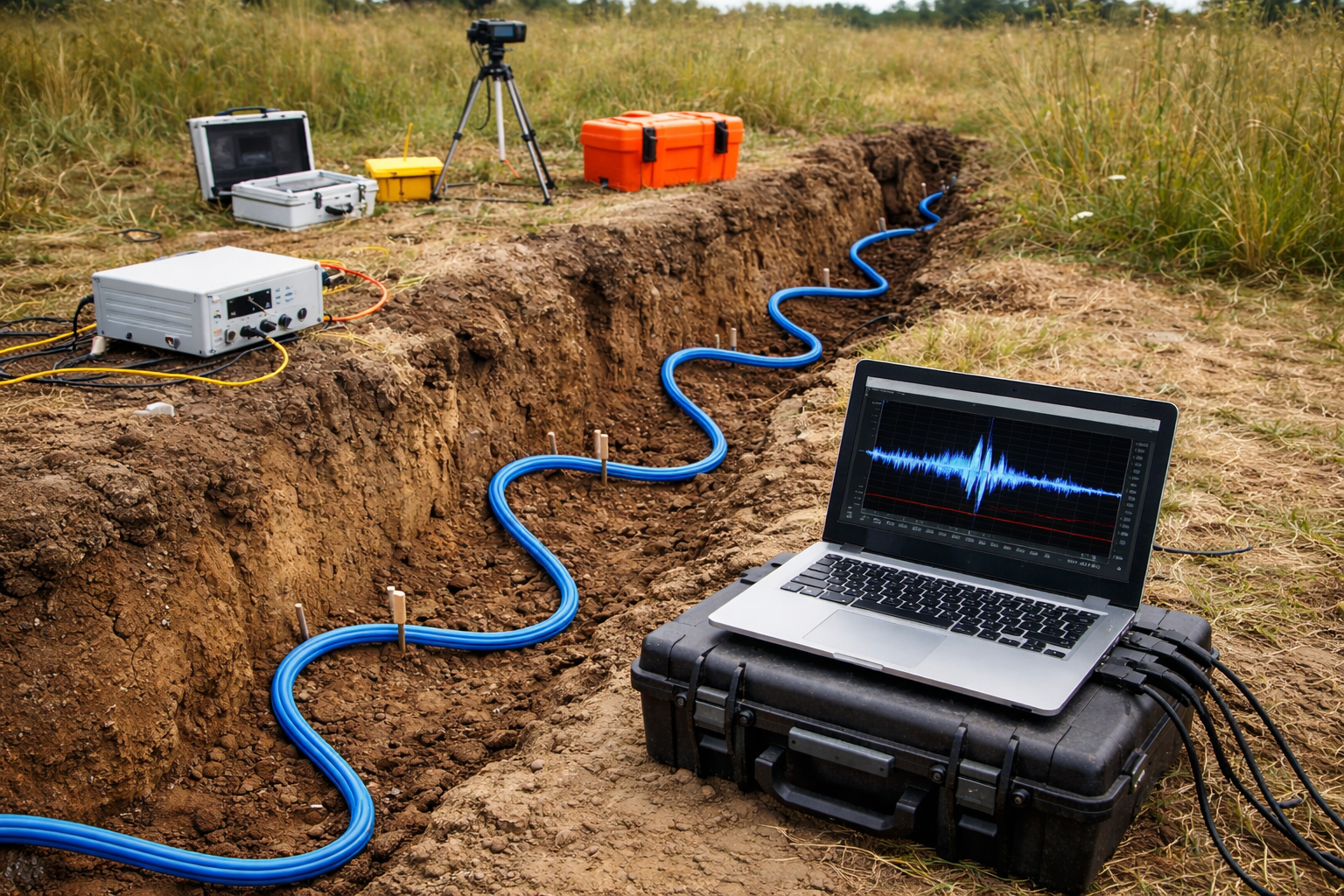
As Sergey Yaskevich, a senior researcher at the Laboratory of Dynamic Problems of Seismics at IPGG SB RAS, explained, the researchers proposed and tested a new method for installing fiber optic cable. It allows you to record waves with polarization close to vertical.
The experiment took place at the "Klyuchi" test site. There, the cable was laid in a trench and attached to the wall in two ways: winding in loops and laying in the form of a sinusoid. This geometry, according to the scientists, should be more sensitive to waves with predominantly vertical polarization.
Many seismic exploration methods are based on recording vibrations with sensors on the Earth's surface. In recent years, fiber optic systems have been actively developing, which record changes in cable length — that is, its deformation.
However, a straight linear cable has a limitation: it is sensitive mainly along its axis. Therefore, such systems work best where waves directed along the cable are important — for example, in vertical seismic profiling.
This is not enough for ground shooting: here it is required to record displacements that are usually perpendicular to the Earth's surface.
One solution was to wind the cable spirally around the core — this is how HWC (helically wound cable) appeared. But Novosibirsk scientists have proposed an alternative.
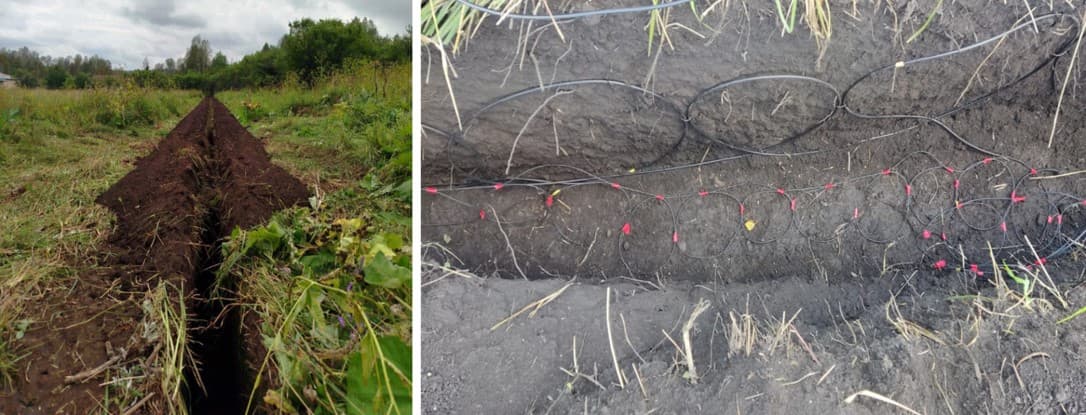
Modeling showed that the "sinusoidal" geometry has a higher sensitivity. And field observations confirmed that the amplitude of the recorded signals changes noticeably when switching from one type of installation to another.
Read more on the topic:
Never miss our newsAdd this site to your preferred sources to see us more oftenAdd on Google

















