Translated with AI from the Russian original.
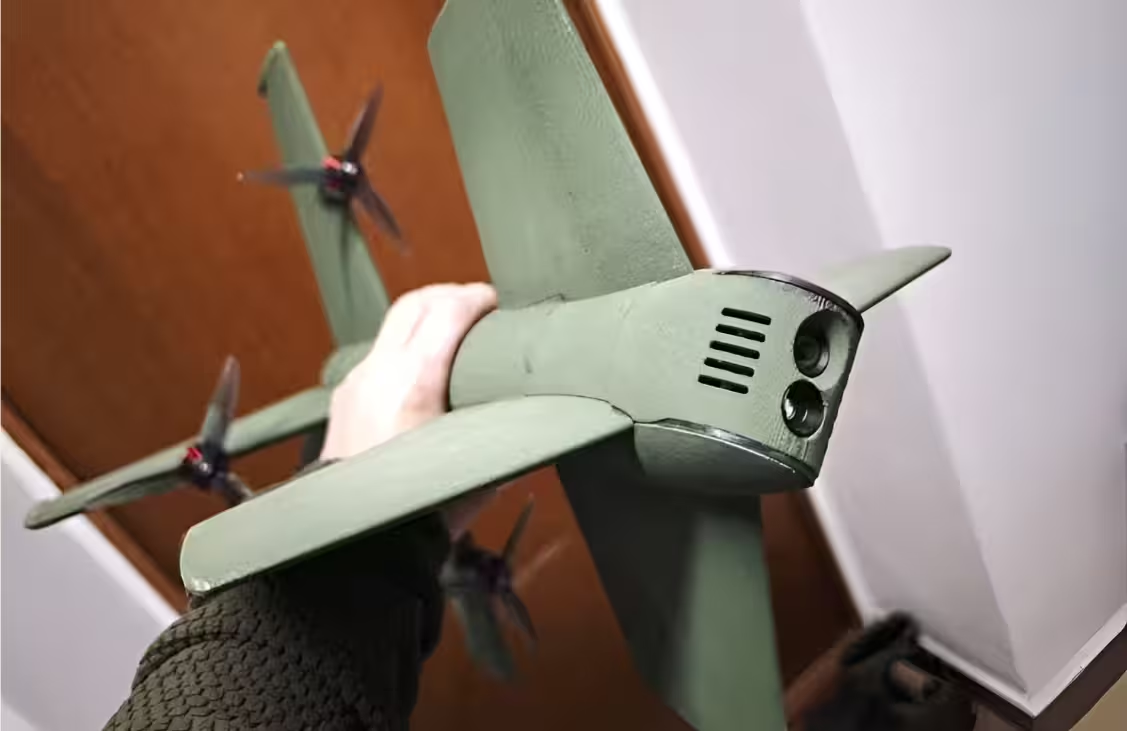
The Russian "Yolka" interceptor drone strikes high-speed airplane-type unmanned aerial vehicles (UAVs), reaching speeds of up to 200 km/h and independently calculating the interception trajectory. A source in the Russian security structures told TASS about this. According to the source, crews use the "Yolka" every day in the armed conflict zone against targets flying at high altitudes, significantly higher than heavy strike drones of the "Baba Yaga" type. The specific area of deployment and the affiliation of the units have not been officially disclosed. The crew consists of two people and is mobile, quickly changing position after completing its mission. There are no official technical specifications of the system in the public domain; all data are based solely on the words of an anonymous TASS source.
What the "Yolka" can do and what targets it is used against
The source describes the main difficulty of the task: hitting an airplane-type UAV with a six-meter wingspan flying at a speed of 120–200 km/h at high altitude. Conventional quadcopter interceptors cannot handle this task, as they lose to the target in both speed and ceiling. According to the agency's interlocutor, the "Yolka" closes this gap.
Shooting down an airplane-type drone with a 6 m wingspan is a whole science. The "Yolka" accelerates to high speeds, up to 200 km/h, independently calculates the interception trajectory, and destroys enemy UAVs
Autonomous trajectory calculation is a fundamental detail. The operator does not manually fly the drone to the point of impact: after target lock, the system independently solves the guidance task. This reduces reaction time and lowers the qualification requirements for the crew.
Specifications of the "Yolka" interceptor drone
- Maximum speed: up to 200 km/h
- Target type: airplane-type UAVs with speeds of 120–200 km/h
- Wingspan of target engaged: up to 6 m (according to the source)
- Operating altitude: high altitudes (specific values have not been officially disclosed)
- Guidance: autonomous calculation of interception trajectory
- Crew: 2 people, mobile deployment
- Data source: anonymous source in Russian security structures, TASS; there is no official confirmation of the specifications
Added value. The task of intercepting a high-speed airplane-type UAV is fundamentally different from destroying a multicopter.
A kamikaze quadcopter flies at 60–80 km/h and is easily caught by a similar interceptor. An airplane-type UAV at 200 km/h requires either a missile interceptor or a drone with comparable speed and a lead-pursuit algorithm; judging by the description, this is exactly what has been implemented in the "Yolka". In the West, a similar niche is filled by systems such as the Coyote Block 3 (Raytheon), but they are significantly more expensive and require a ground-based tracking radar.
High-speed airplane-type UAVs, both reconnaissance platforms and munition carriers, remain among the most difficult targets for short-range military air defense.
Read more materials on the topic:
- Yolka drone interceptors invulnerable to EW have entered mass production in Moscow
- The "Yolka" interceptor drone, unfazed by EW, is being refined after battlefield use
- The EW-invulnerable "Yolka" drone interceptor has been integrated with Pantsir systems for the first time
Never miss our newsAdd this site to your preferred sources to see us more oftenAdd on Google

















