Translated with AI from the Russian original.
Specialists from Moscow Polytech and the Ilyichev Pacific Oceanological Institute of the Far Eastern Branch of the Russian Academy of Sciences have created a robotic complex for marine research — "Smart Fish." The device is towed behind a vessel on a cable-rope and transmits hydrological data to the ship in real time, allowing for quick route adjustments. In 12 hours of operation, it conducts about half a million measurements — compared to 60 using the classic method.
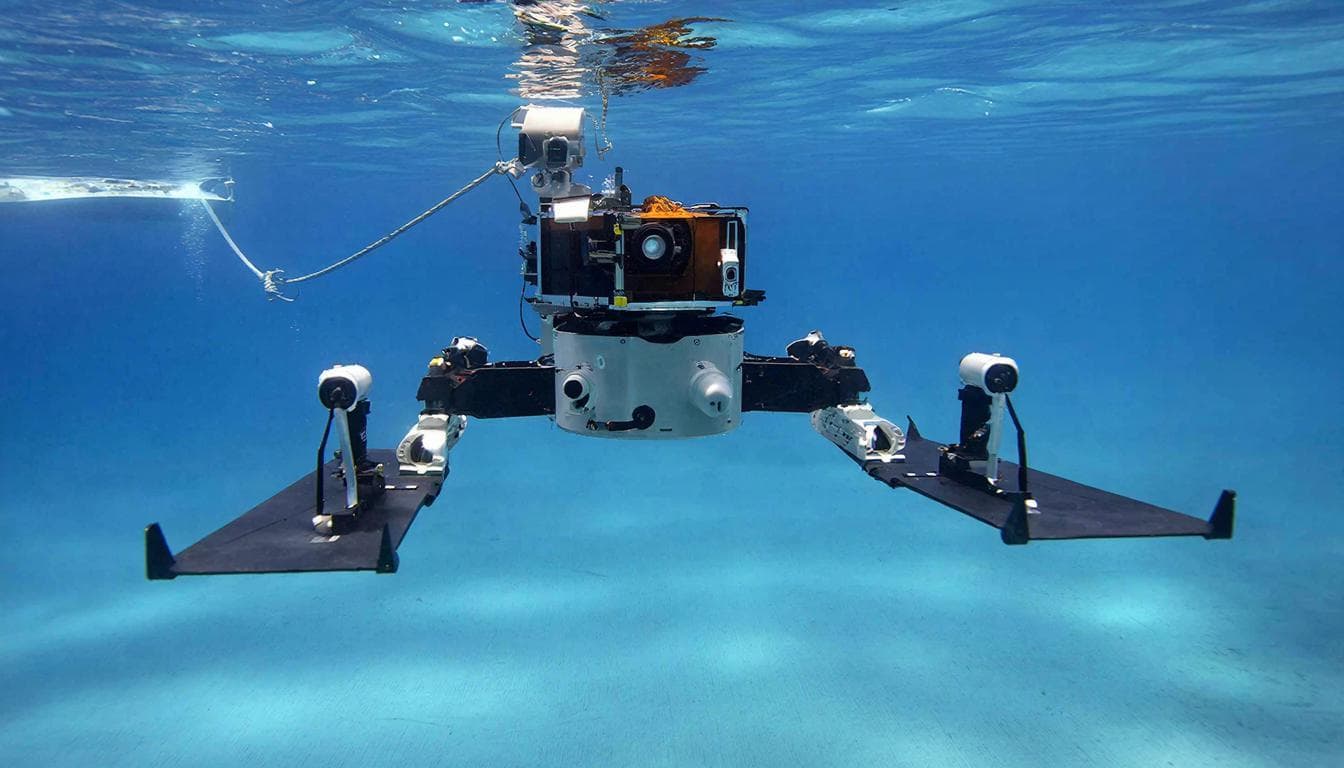
The first serious test was the long-standing mystery of the Chaun Bay in Chukotka. In the harsh Arctic climate, scientists found thermophilic biocenoses that should not have been there. Several institutes could not understand for years why they existed.
"Smart Fish" coped in one expedition. It discovered hydrological and geochemical anomalies in two areas of the bay, which turned out to be discharge sites of hydrothermal groundwater. They were the ones supplying heat and biogenic elements to the bay, supporting the life of atypical inhabitants.
Later, the device was used to monitor the waters near the Japanese Fukushima nuclear power plant — no abnormal concentrations of radionuclides were found. In the Sea of Japan, it was used to study the migration of the Kamchatka crab. Now the team is developing a machine vision system: a neural network trained on a video stream from an underwater camera already recognizes and counts crabs, fish, starfish, and mollusks in real time. This opens the way to commercial application in the fishing industry — negotiations are already underway.
Read more on the topic:
Never miss our newsAdd this site to your preferred sources to see us more oftenAdd on Google

















