Specialists from the Baltic Shipyard, which is part of the United Shipbuilding Corporation (USC), have completed the installation of high-pressure air compressors on the under-construction universal nuclear icebreaker "Leningrad" of Project 22220. According to the company's press service, the installed piston units are equipped with a double-circuit water cooling system and are designed to supply dry compressed air to ship consumers.

First of all, the compressors provide the start-up of backup diesel generators, which are put into operation in the event of nuclear reactors being decommissioned, guaranteeing uninterrupted power supply to critical ship systems.
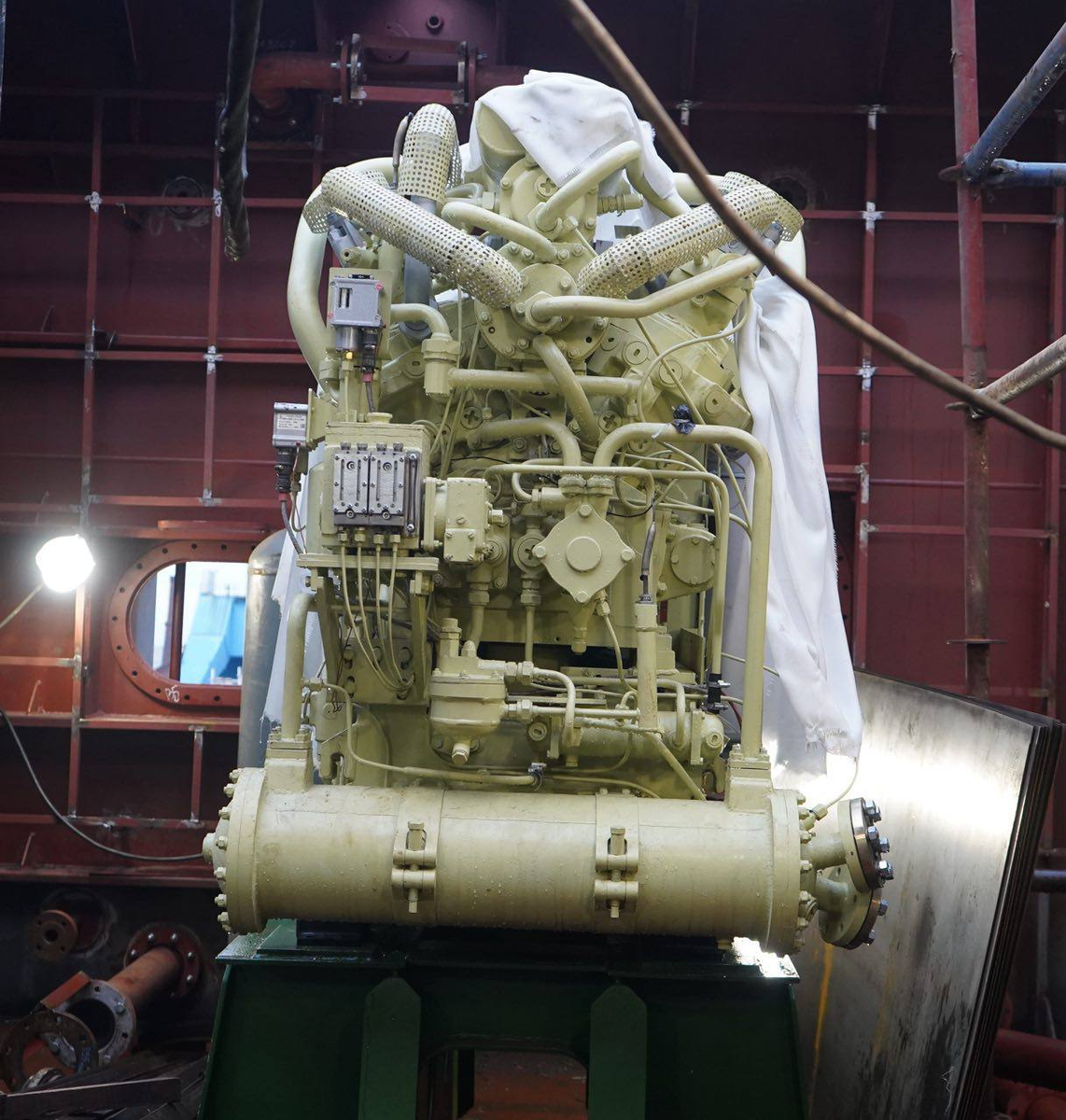
There are three such compressors on board the icebreaker, each weighing almost 3.8 tons and with a capacity of 144 normal cubic meters of air per hour. The declared service life of the equipment is 40 years, which corresponds to the duration of active operation of the nuclear icebreaker fleet.
Read more materials on the topic:
- Auxiliary boiler plant units installed on the nuclear icebreaker "Leningrad" of Project 22220
- Nuclear fuel for the under-construction nuclear icebreaker "Chukotka" was manufactured at Rosatom
- Giant of steel and atom: how the sixth nuclear icebreaker, "Leningrad", is being built at the Baltic Shipyard
Never miss our newsAdd this site to your preferred sources to see us more oftenAdd on Google

















