Translated with AI from the Russian original.
Researchers from the Laboratory of Technical Vision of the South Ural State University (SUSU), in collaboration with the regional youth laboratory of electromechanical, electronic, and electrochemical systems, have developed and patented an import-substituting module for simulating autonomous transport. This was announced by the project author, head of the Laboratory of Technical Vision, Vladimir Surin.
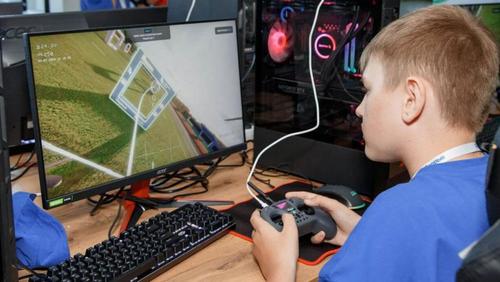
Unlike foreign "closed systems," the module proposed by SUSU scientists allows developers to freely prescribe any conditions and parameters. This is critical, for example, for testing electric vehicles, special equipment, and adapting algorithms to Russian realities.
The module was developed on the Unity engine, with Python scripts for video data processing and control. It is designed for electric machines and will be tested on cars with unmanned control. The immediate plans include adapting the module for simulating unmanned aerial vehicles (drones) and ground robots.
According to Vladimir Surin, the developers plan to introduce large language models (LLM), which will allow generating unpredictable events and scenarios on a virtual road.
The system makes it possible to practice recognizing road surfaces in difficult weather conditions and other complex technical models.
It is also planned to create multi-agent simulations in which many autonomous objects can interact with each other and increase the realism of testing.
Earlierwww1.ru reported that the "ANTI UAV" mode waslaunched in the "Quadrosim" simulator.
Read more materials on the topic:
- From theory to practice instantly: Navio has developed a simulator for training unmanned trucks
- Geoscan to start testing new FPV drone simulator
- Has no analogues in Russia: Kalashnikov has developed a simulator for operators of the SKAT 350M drone
Never miss our newsAdd this site to your preferred sources to see us more oftenAdd on Google

















