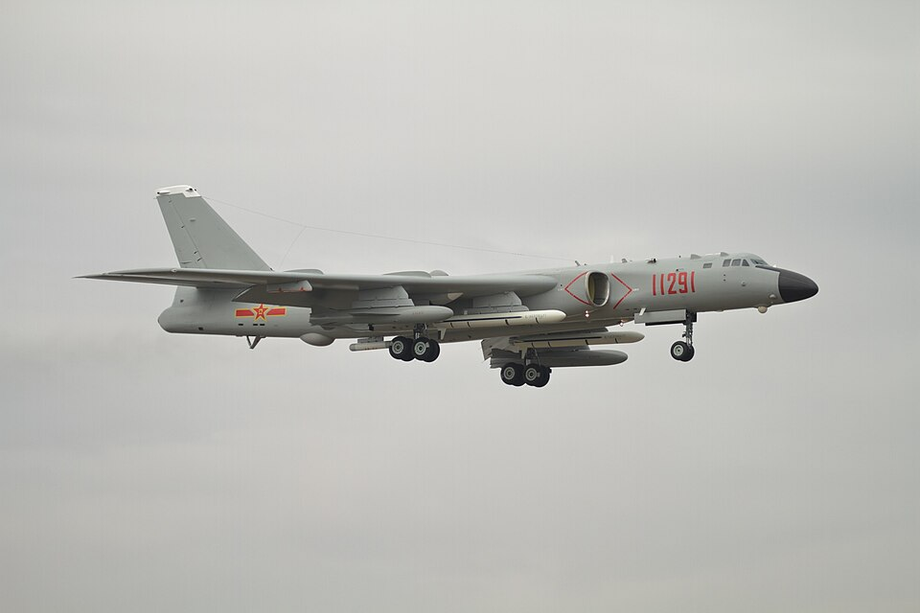
As part of deepening strategic cooperation in the field of defense, the Russian Aerospace Forces and the Air Force of the People's Liberation Army of China conducted another joint air patrol. The Russian side in the mission was represented by the Tu-95MS strategic missile carrier, one of the key elements of the long-range aviation of the Russian Aerospace Forces. Its Chinese counterpart is the H-6K bomber from the 22nd Bomber Regiment of the 8th Division of the Southern Theater Command of the PLA.

Long-range aviation flights were accompanied by fighter cover: from the Russian side - Su-30МК2, from the Chinese side - multi-purpose J-16 and J-11BS fighters. The air group was also supported by the Chinese KJ-500A airborne early warning and control aircraft (Kun Jing-500A), providing reconnaissance and command support for the mission.
Special attention during the patrol was paid to demonstrating the compatibility of Russian and Chinese aviation equipment in complex combat use.
The Tu-95MS, despite its "age", remains in service thanks to deep modernization: modern NK-12MP engines, digital avionics, the ability to carry long-range cruise missiles such as the Kh-101/102, as well as electronic warfare equipment make it a formidable adversary even against the background of the latest air defense systems.
According to the Russian Ministry of Defense, joint air patrols are aimed at strengthening strategic stability in the Asia-Pacific region.
It should be recalled that the H-6K is a deeply modernized family of strategic bombers - a Chinese licensed copy of the Soviet Tu-16 jet bomber.
Read more on the topic:
Now on home

Start of deliveries scheduled for 2027

Over 51,000 new motorcycles were sold in Russia in 2025

The car will take at least a year to assemble

The application's audience has reached 20 million users

The model will be included in the list of cars for taxis, price - from 2.25 million rubles

All parking lots of the "Administrator of the Moscow Parking Space" are connected to the service

The cars will be supplied to the Moscow Transport Service Directorate

Deliveries to India may begin in 2028

The technology provides automated search for all types of defects in power units

The plane flew 500 km, accelerating to 425 km/h

The plant stated that the information about the termination of purchases for models 6 and 8 is not true

Scientists are using the "Ekran-M" installation