The civilian version of the Russian Molniya FPV drones will be presented abroad for the first time at the Dubai Airshow 2025 International Aviation and Space Exhibition in the UAE, the developer company said.
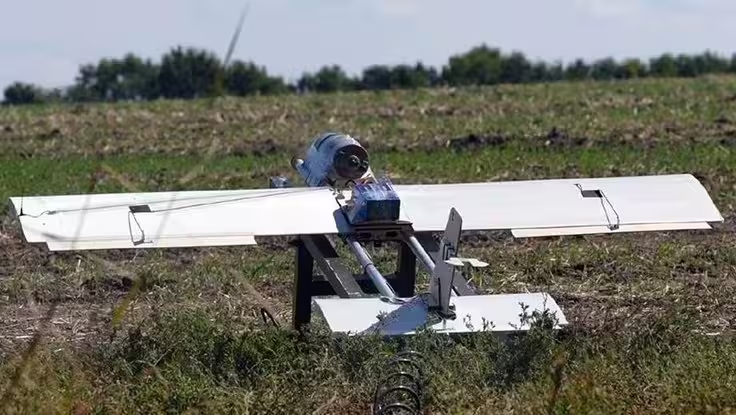
Civilian versions of Molniya fixed-wing FPV drones can be used for practical training of UAV operators.
They are also well suited for express reconnaissance and monitoring in various industries, in search and rescue operations, for rapid assessment of the situation in emergency situations, and for rapid delivery of goods and medicines (weighing up to 6 kg).
For example, in the countries of the Middle East, Molniya could be used to monitor mining facilities. Unmanned aerial systems have characteristics comparable to their counterparts, while they have a low cost and the possibility of production in large volumes.
The developer company added that the versatility of the platform allows for quick and efficient modernization for specific tasks and application conditions.
The improved firmware made it possible to significantly increase the effectiveness of combat missions of the Molniya-2 UAV. Nine out of ten drones successfully reach the target, the percentage of destruction is above 90%.
Read also materials:
Now on home

Start of deliveries scheduled for 2027
Over 51,000 new motorcycles were sold in Russia in 2025

The car will take at least a year to assemble

The application's audience has reached 20 million users

The model will be included in the list of cars for taxis, price - from 2.25 million rubles

All parking lots of the "Administrator of the Moscow Parking Space" are connected to the service

The cars will be supplied to the Moscow Transport Service Directorate
Deliveries to India may begin in 2028
The technology provides automated search for all types of defects in power units
The plane flew 500 km, accelerating to 425 km/h

The plant stated that the information about the termination of purchases for models 6 and 8 is not true

Scientists are using the "Ekran-M" installation