The Russian company "Motorica" has presented the world's first bionic hand prosthesis with optical control Omni Hand. Its main feature is the use of optical sensors (OMG), which record signals not from muscles, as in traditional models, but from the tendons of the wrist. This approach allows the prosthesis to be installed for people with weakened muscles after injuries, burns or frostbite and provides more natural and accurate movement control.
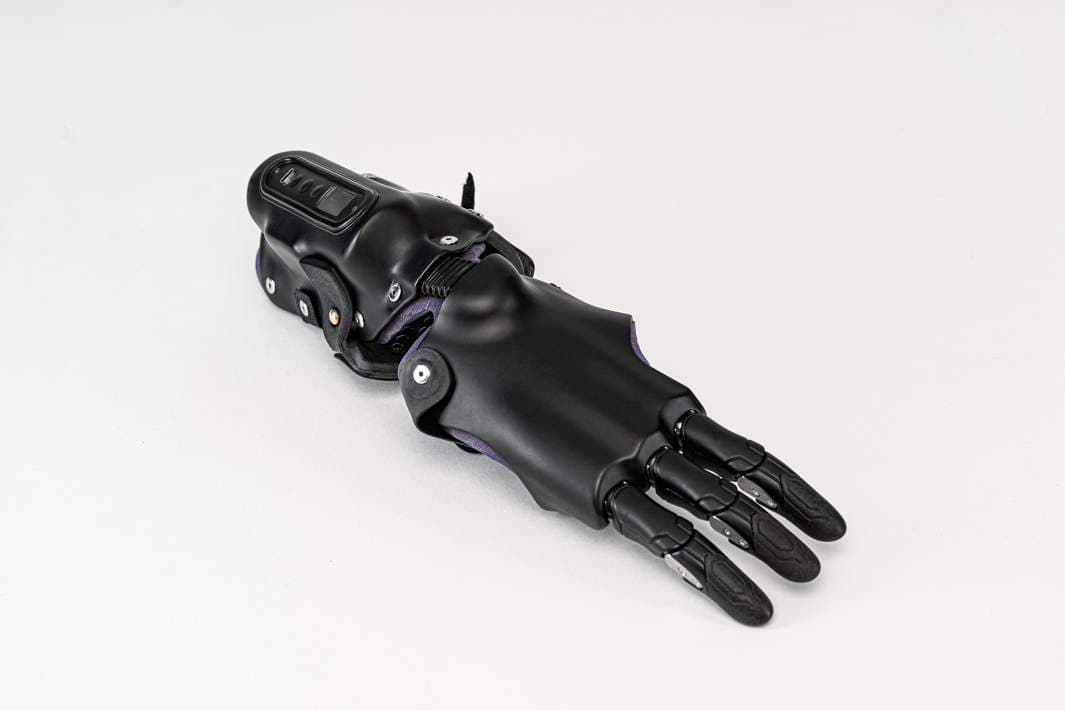
When the user mentally performs a familiar gesture - clenches his fist, makes a "pinch" or shows a "gun" - the prosthesis instantly recognizes this intention and repeats it in real time. Unlike most modern prostheses, where movements are switched sequentially, Omni Hand reacts to any action without delay, which makes control intuitive, and movements smooth and lively.
This is a new level of interaction between man and technology: the device does not just respond to signals, but understands the user's intention. This is a step towards natural control of bionic prostheses
The development is the result of many years of research in the field of neurointerfaces and biomechanics. Optical sensors integrated into the prosthesis register the slightest changes in the shape of the tendons and transmit data to a built-in microcomputer, which converts them into commands for finger movements. This method of control was previously used only in experimental laboratories, but was implemented for the first time in a serial product.
Mass production of Omni Hand will begin in January 2026. The first eight users have already received prostheses as part of pilot tests and continue to use them in everyday life. According to the company, the device will be provided to Russian citizens free of charge at the expense of the federal budget.
Read more materials on the topic:
- Russian bionic prosthesis "Cometa" with domestic hydraulics: from dancing to skiing - without restrictions
- "Life without barriers": "Ortokosmos" showed modern prostheses at the exhibition "Hope for Technology"
- From titanium to carbon composites: AO CITO (Rostec) presented innovative prostheses for arms and legs for extreme loads