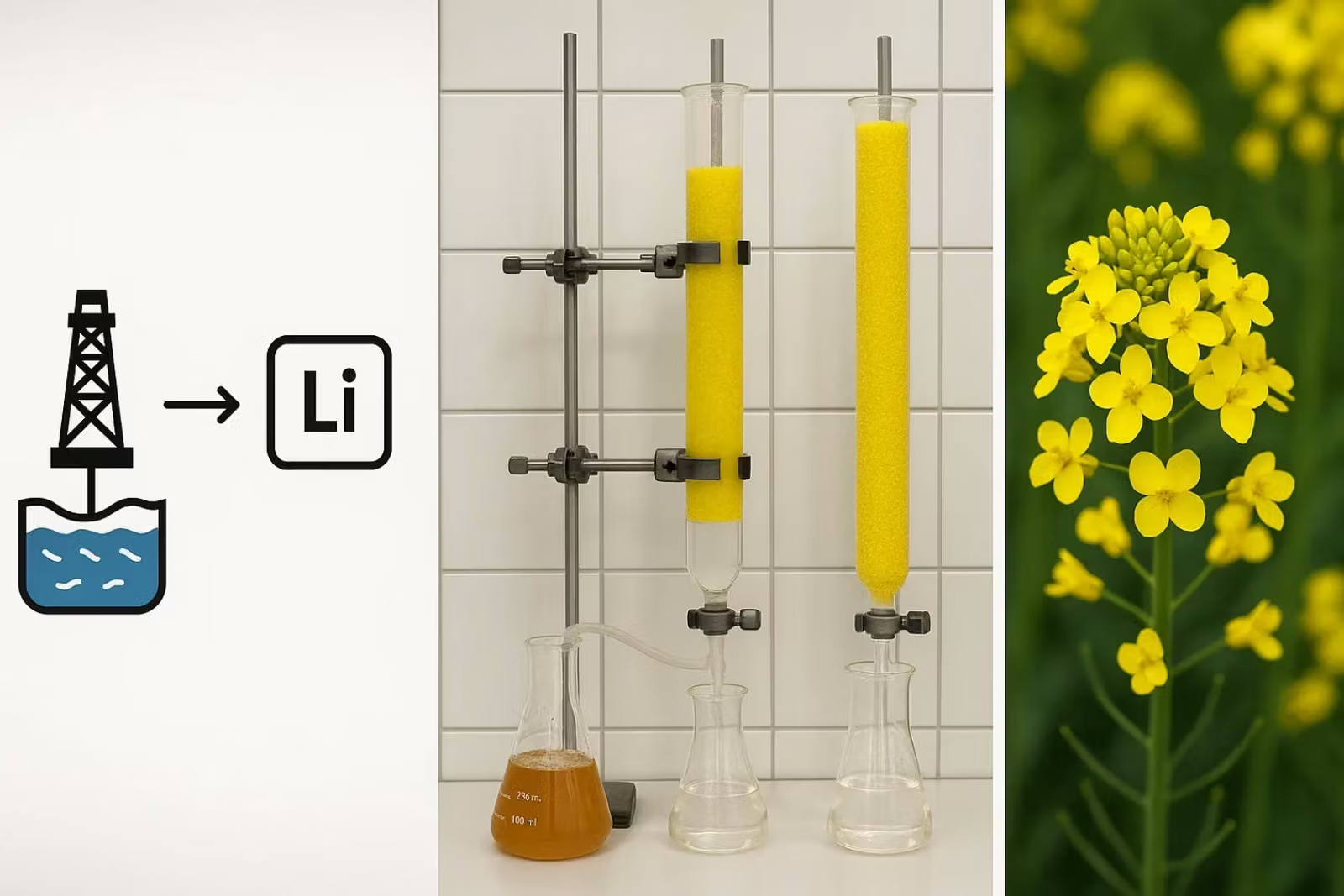
At the Russian State University of Oil and Gas (NIU) named after I.M. Gubkin, a unique biotechnological method for extracting lithium from water sources using vegetation has been developed.
In Russia, the creation of domestic lithium production facilities will reduce serious dependence on imports and meet the growing demand for this metal in the domestic market. Already today, the production of lithium-ion batteries used in smartphones, laptops, cars and other devices requires more than 80% of the total lithium produced.
Formation waters are contained in the pores and cracks of rocks. During the development of oil and gas fields, water accounts for 20% to 98% of the extracted liquid. Usually, excess water is pumped back into the formation, but its processing has hardly been studied so far.
Researchers at the university tested the ability of various plants to absorb lithium from salt solutions and found that rapeseed is the most promising option.
Plants were grown on a mixture of formation water and nutrient solutions. Lithium accumulated in the leaves and stem.
Russia buys lithium exclusively abroad, which creates risks for the development of domestic industry. The biotechnological method of lithium extraction using plants will allow using the existing infrastructure of oil and gas enterprises, without requiring the construction of expensive installations. This direction is promising.
Scientists plan to refine the technological scheme of lithium extraction and begin pilot industrial tests.
Earlier www1.ru reported that the first Russian gigafactory of batteries will open near Kaliningrad by the end of 2025.
Read more materials on the topic:
- Lithium-ion battery production for UAVs launched in Moscow
- New frost-resistant materials for Russian batteries are being tested in Siberia
- Will cover the need for batteries for BAS: a plant for the production of lithium-ion batteries will be built in New Moscow
Never miss our newsAdd this site to your preferred sources to see us more oftenAdd on Google

















