Specialists from the Ural Federal University have created and patented an innovative approach to foundation waterproofing. This development promises a significant reduction in construction costs and improved protection of buildings from moisture penetration. The essence of the method lies in the use of a special cement composition, which is poured between the reinforcement and the concrete mix before the foundation is poured.
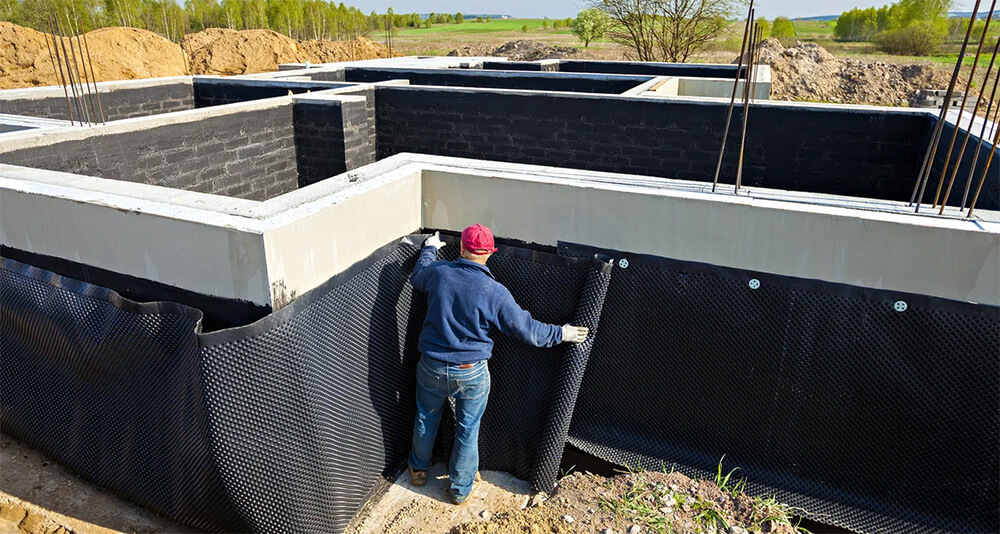
Researchers at the Ural Federal University have proven the effectiveness of foundation waterproofing technology using the dry backfilling method, which increases the water resistance of concrete and reduces the cost of work. To implement this method, scientists have created a special device, protecting it with a patent of the Russian Federation
The university noted that existing methods of waterproofing foundations with rolled bituminous materials are expensive, labor-intensive and have a shorter service life than the foundation itself. In response, scientists have developed a "dry backfilling" technology. This method improves the water resistance of concrete without the use of rolled materials, by pouring a special cement composition between the reinforcement and the concrete mix before pouring.
It has been experimentally proven that a layer of dry backfill 2 mm thick significantly improves the water resistance of concrete, increasing it by more than two times. Initially, the concrete withstood a pressure of 0.8 MPa, and after applying the method with a 2-mm layer of backfill, it became waterproof up to 2 MPa, which corresponds to a high class. The problem of uneven distribution and settling of the mixture on the reinforcement is solved thanks to a metering unit, which provides a uniform layer, eliminating lumps and controlling consumption, even when working with unskilled specialists.
Read more on the topic:
Manure and coal dust are turned into profit by Tomsk scientists from TPU
Putin: Russia has powerful quantum computers of its own production
Now on home

Start of deliveries scheduled for 2027

Over 51,000 new motorcycles were sold in Russia in 2025

The car will take at least a year to assemble

The application's audience has reached 20 million users
The model will be included in the list of cars for taxis, price - from 2.25 million rubles

All parking lots of the "Administrator of the Moscow Parking Space" are connected to the service

The cars will be supplied to the Moscow Transport Service Directorate
Deliveries to India may begin in 2028
The technology provides automated search for all types of defects in power units
The plane flew 500 km, accelerating to 425 km/h

The plant stated that the information about the termination of purchases for models 6 and 8 is not true

Scientists are using the "Ekran-M" installation