Translated with AI from the Russian original.
The Russian Ministry of Emergency Situations will send its specialists to leading enterprises in China to study advanced technologies in the field of unmanned aviation and robotics. This step is aimed at solving the problem of increasing the effectiveness of combating large fires and eliminating the consequences of emergencies using modern technologies.
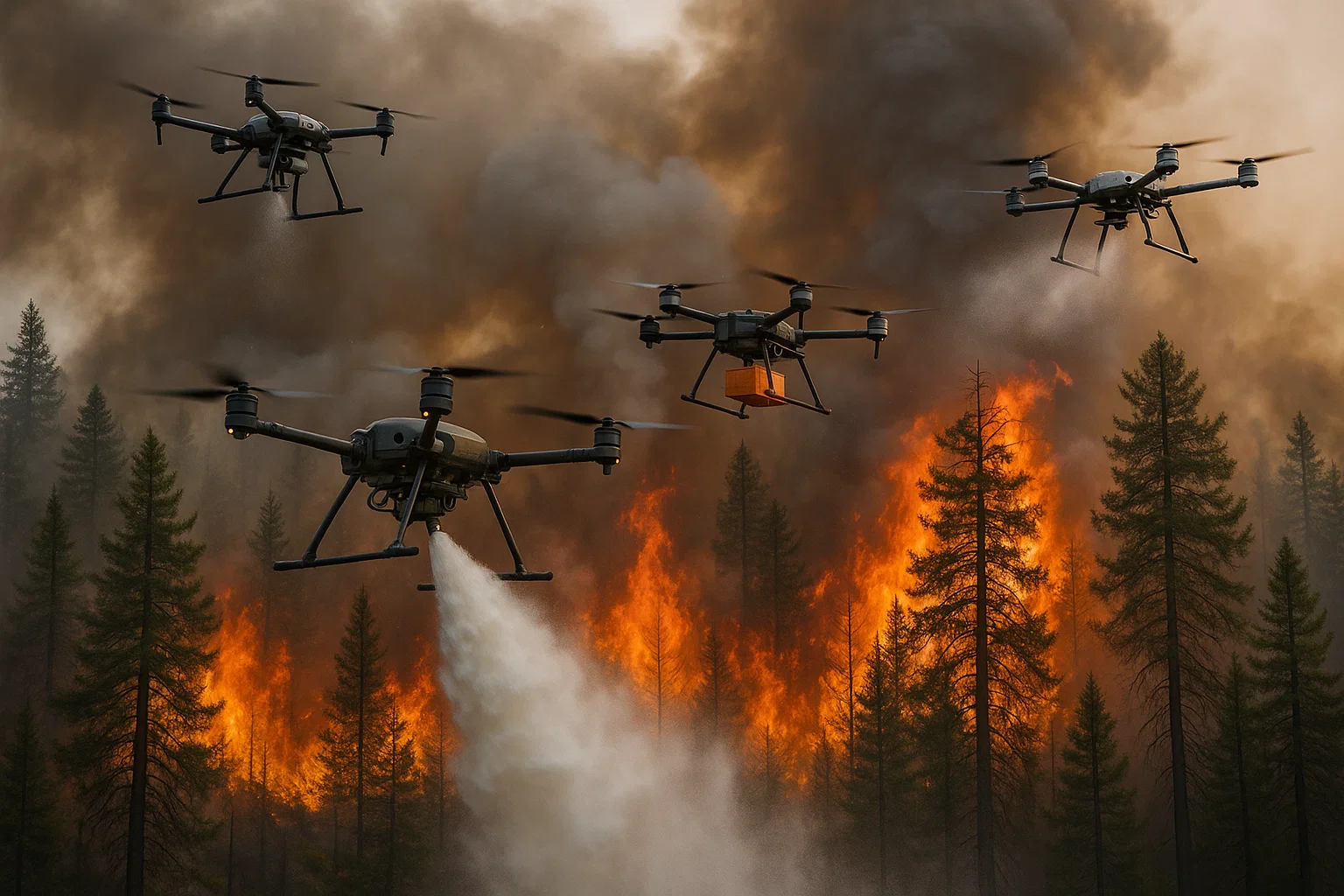
Russian engineers and specialists will be able to study on the spot how the production and use of specialized fire drones are arranged. These devices are capable of extinguishing fires from the air, delivering tons of extinguishing agent directly to the source of ignition, conducting reconnaissance in smoky conditions using thermal imagers, and assessing the scale of the disaster from a height, which is impossible to do from the ground.
As the head of the Russian Ministry of Emergency Situations Alexander Kurenkov emphasized, it was the fire-fighting capabilities of Chinese drones that aroused particular interest from the Russian side:
The issue of robotics was raised, including unmanned aerial vehicles for firefighting, which are developing quite vigorously in China. We see this, we are interested in it, we are joining this experience, adding something of our own. And we also agreed on the exchange of specialists in this work, that is, technical delegations will be sent to the enterprises of the People's Republic of China, where Chinese comrades will share with us the concept and strategy for the development of this direction for free-flying aircraft and robotics.
Until now, combating large-scale fires, especially in remote areas, has remained an extremely dangerous and difficult task. Traditional methods often require vehicles to approach the source, which is not always possible, and are associated with a high risk to the lives of firefighters. Existing domestic developments in the field of drones for the Ministry of Emergency Situations do not yet have such a massive industrial application and variety of solutions as in China.
The signed protocol provides for specific steps: regular joint exercises, exchange of specialists and interaction in the elimination of emergencies in border areas. This is a structured work program that has already begun to be implemented with the formation of the first delegations.
Read more materials on the topic:
Waterfall from the sky: how the aviation of the Russian Ministry of Emergency Situations helps to tame fire
Drones of the Ministry of Emergency Situations will not monitor summer residents frying kebabs
The Ministry of Emergency Situations in Baikal began to monitor boaters using drones
Never miss our newsAdd this site to your preferred sources to see us more oftenAdd on Google

















