The "Aerodin" company from St. Petersburg has launched the production of the "Lider" unmanned aircraft system, which is being developed with the support of the NTI Fund.
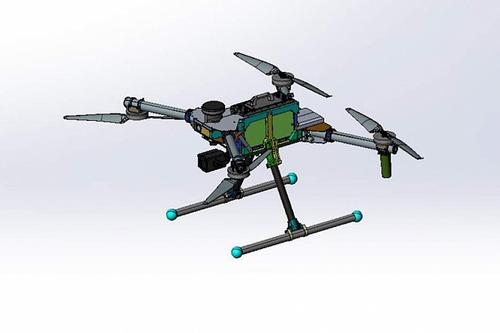
The "Lider" unmanned system is an industrial-grade drone equipped with a jam-resistant "Kontrabas" navigation receiver and a secure "Skripka" communication channel. This allows it to operate effectively in the absence of GPS signals. The system's payload is 12 kg, the maximum flight duration is 80 minutes, and the range is up to 60 km.
It is planned to produce up to 100 units of the "Lider" system in the coming year, with the possibility of rapidly scaling up production to 500 units per year.
The drone is focused on performing geophysical surveys, airborne laser scanning, video monitoring, and cargo delivery. In the "Rescuer" configuration, it can be used for search and rescue and patrol tasks, as it is equipped with a thermal imager, a searchlight, and a loudspeaker. The developer also plans to produce versions suitable for ice reconnaissance and mine clearance.
Earlier, www1.ru reported that the newest ground-based drone with an auto-targeting system was developed in Russia.
Read related materials:
First shots of the Russian combat laser air defense system have appeared
The military has come up with a way to make ammunition for UAVs from an anti-tank mine
The combat equipment of the newest landing ships of Project 11711M has become known
Never miss our newsAdd this site to your preferred sources to see us more oftenAdd on Google













![Growth Point: After 5G Launch, Mobile Internet in Russia Accelerated by 20%","subtitle":"TelecomDaily recorded an upload speed increase of 19.7%, and download speed of almost 14%","announce":""}[]}],](https://media.ixbt.site/fit-in/320x/ixbt-data/1727896/ai-image-nvgq0a0v5cjnyxwoc8xpelva.webp)