Translated with AI from the Russian original.
Researchers from SFedU, DSTU, and SSC RAS have discovered that ceramic composites change their electrical resistance under the influence of a magnetic field. This distinguishes them from traditional metal counterparts. The research results were presented at the conference "Chemical Thermodynamics and Kinetics" in Donetsk.
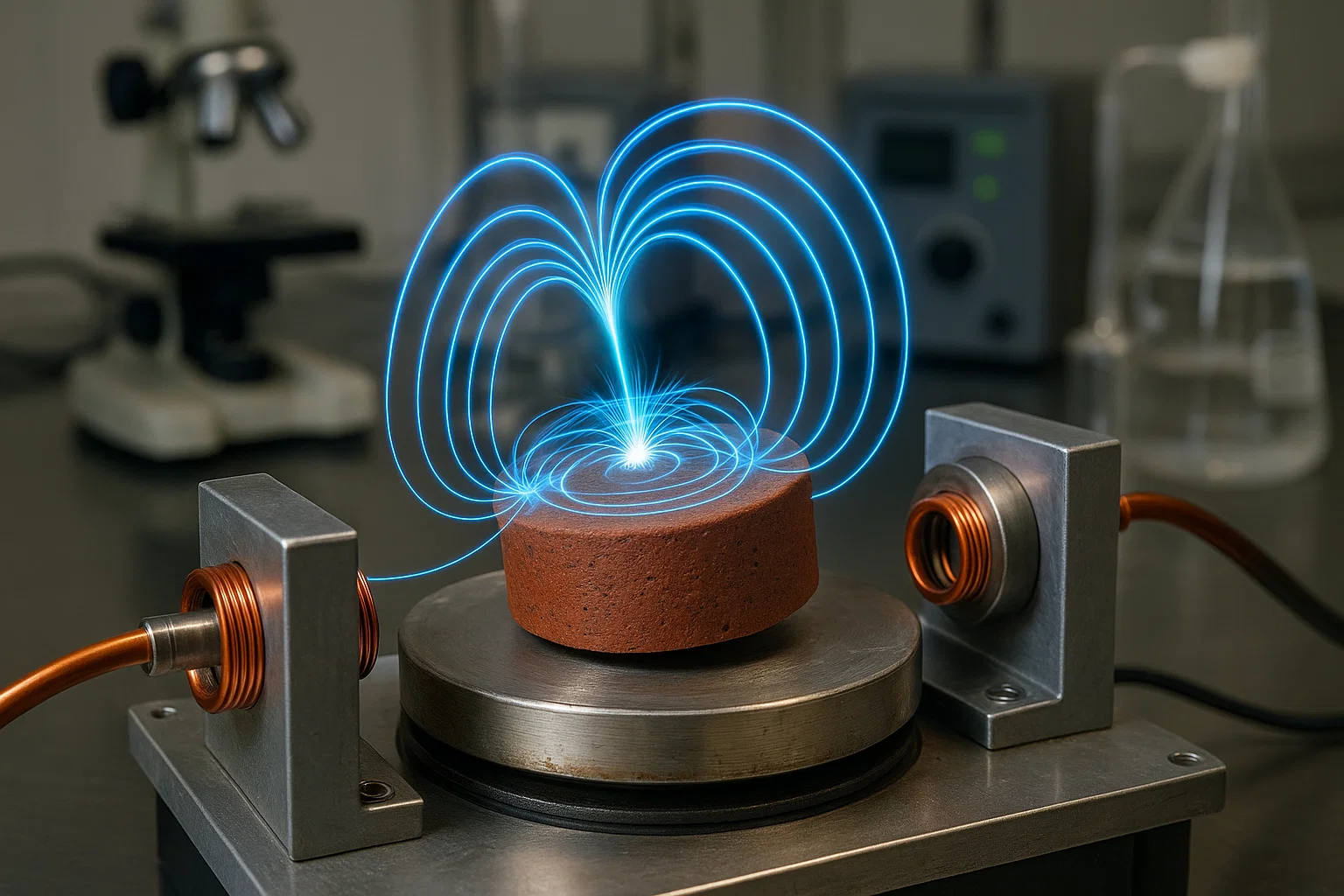
Professor Yuri Kabirov explained that the discovery will help in creating current sensors and new methods of information storage. The ceramic reacts to the magnetic field, which allows controlling its resistance. In the future, scientists will study the mechanisms of this effect.
The relevance of our research is related to the development of new ways to store information, in particular, the possible use of synthesized ceramic composites with electrical resistance controlled by a constant magnetic field. The applied significance of this effect today is direct current sensors, which create a magnetic field around themselves that changes the resistance of our ceramic composites. In the future, we will carefully study the mechanisms of both negative magnetoresistance and positive magnetoresistance, that is, the decrease or increase in electrical resistance in a constant magnetic field.
Alexander Nazarenko noted that the structure of ceramics affects its properties. Differences in the grain sizes of the material open up new opportunities for research, including applications in thin-film technologies.
Read more materials on the topic:
New "Smart" Acid from Perm Polytechnic University Could Increase Oil Production Efficiency in Russia
Quantum Algorithm for Traffic Jam Management Developed in Innopolis
Carbon Nanotube-Based Polymer for Explosion Protection Created by Scientists from Novosibirsk State University
Never miss our newsAdd this site to your preferred sources to see us more oftenAdd on Google

















