Translated with AI from the Russian original.
The Sun recorded the second powerful flare in a day - level M2.1 in active region 4168. This event occurred less than 24 hours after the previous M2.9 flare, recorded yesterday around 17:00 Moscow time. Both phenomena occurred in the same compact center on the solar surface, which makes them local, but noticeable. The current surge in activity is the most significant for July and August 2025, but it does not reach the scale of global solar events.
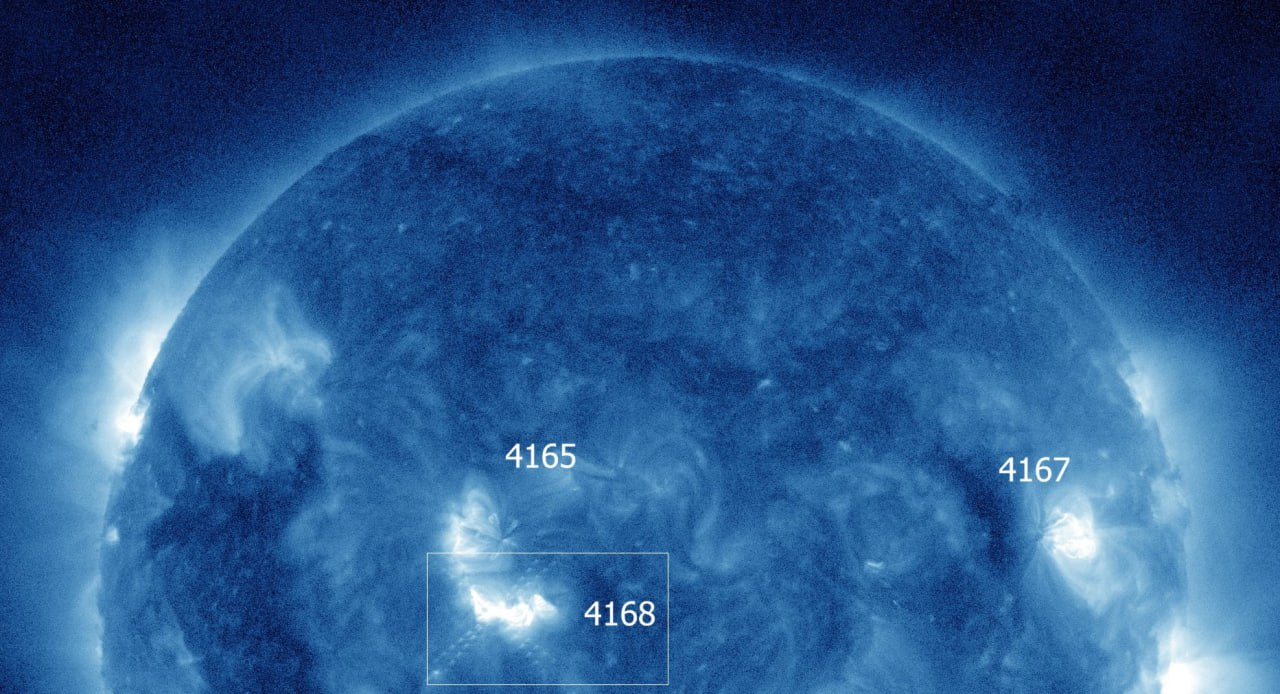
Class M flares are strong, but not extreme. They can affect radio communications and satellite operations if accompanied by coronal mass ejections. However, no such emissions have been recorded at the moment. Active region 4168 is directly opposite Earth, which theoretically increases the likelihood of exposure, but scientists have not yet observed changes in the planet's magnetic field or radiation environment. Data on the new event is being clarified, and experts continue to monitor.
Solar activity is associated with an 11-year cycle, and the Sun is now near the peak of the 25th cycle. Flares like M2.1 occur due to the reconnection of magnetic lines in active regions, releasing energy.
Read more materials on the topic:
15 flares occurred on the Sun over the past day - 2.5 times more than the day before
The Sun is again at the peak of activity: after 17 flares, another one was registered on August 3
Magnetic storms are coming?: A strong class M2.5 flare occurred on the Sun - the first in July
Never miss our newsAdd this site to your preferred sources to see us more oftenAdd on Google

















