At the Southern Federal University campus in Taganrog, a robotic complex (RTC) was developed that mimics the shapes and functions of a human hand. The key difference of the system is the memristive sensor modules implanted in the limbs, which reproduce tactile and nociceptive memory at the hardware level. Along with this project, a new educational program has been launched to train electronic engineers and microelectronics specialists to work with neuromorphic devices.
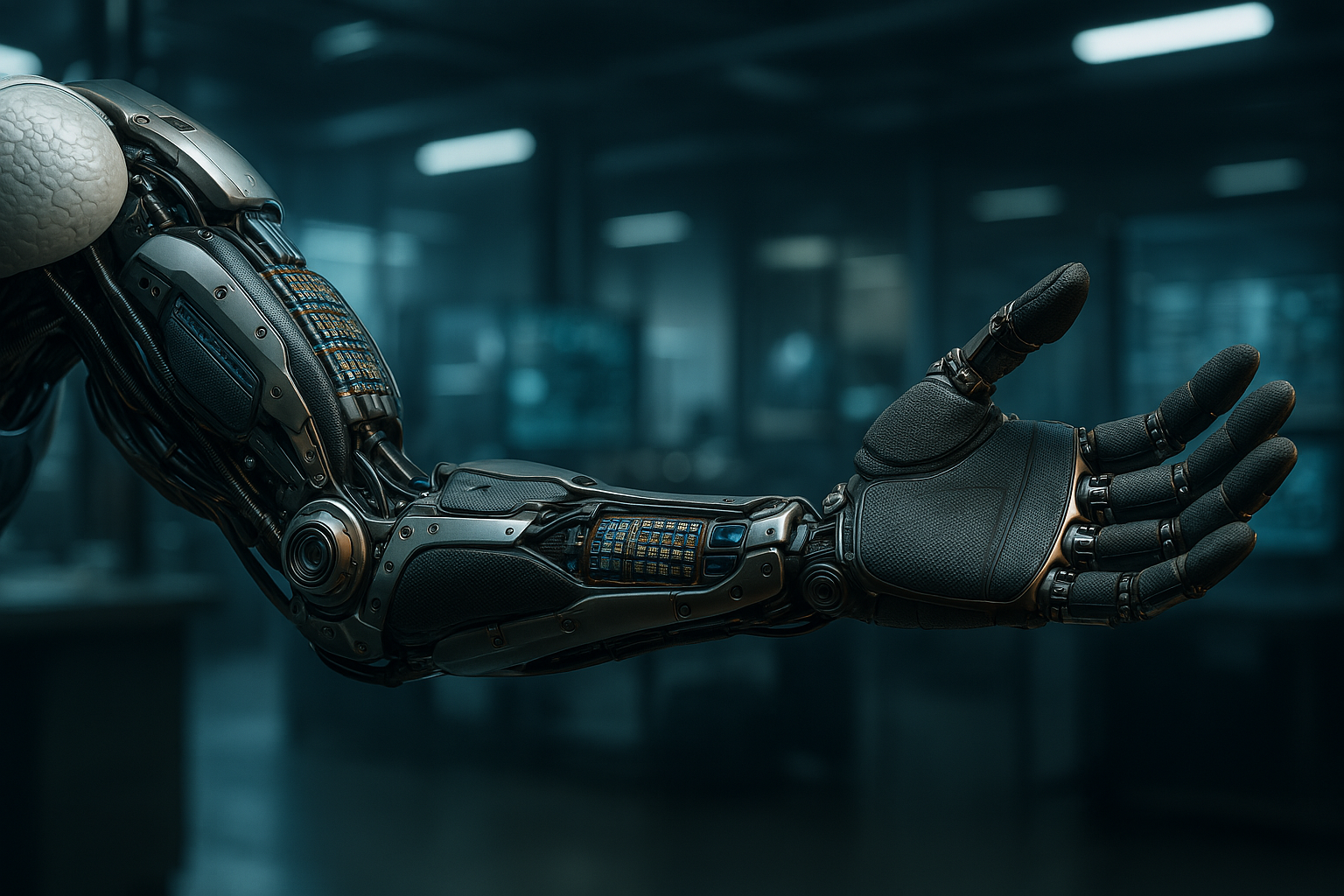
The Laboratory of Neuroelectronics and Memristive Nanomaterials (Neuromena) at SFedU has been developing in this area for over a decade. Memristors - elements whose resistance depends on the previous history of currents and voltages - are used here as a "hardware" neural network. Thanks to these devices, the robot "feels" the rigidity, temperature, and consistency of the surface, just like a human does thanks to neurotransmitters in the skin.
Our scientific group has been developing memristive nanomaterials and their use to create a wide range of promising electronic devices for over 10 years: from designing a modern computer platform and the architecture of the future to the neuromorphic structures themselves for various applications.
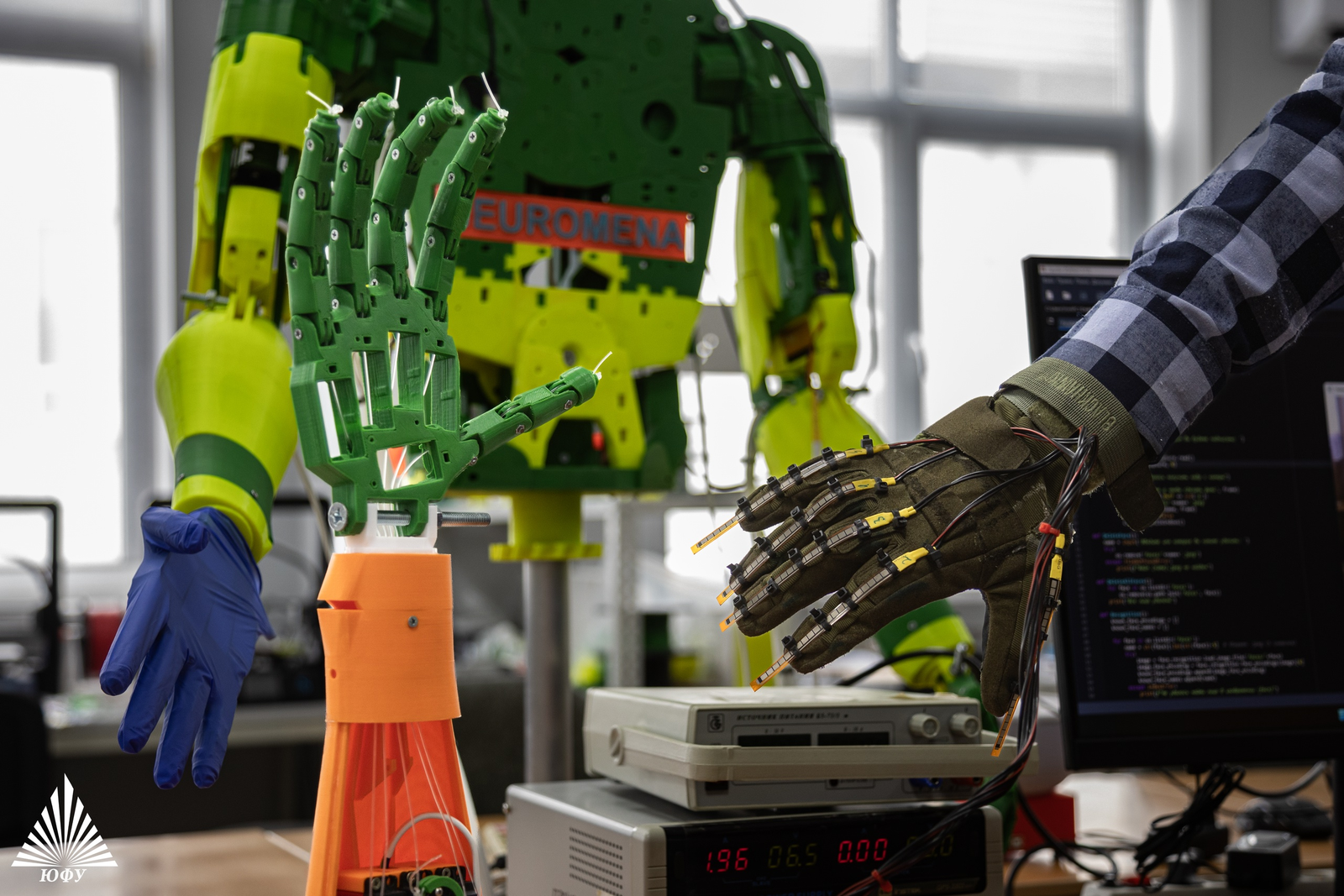
The first sample was a "glove - robotic arm" tandem in "shadow" mode: the operator's finger movements are accurately copied by the model. The system combines sensors and a memristive processor, minimized in size and energy consumption.
Our task is to miniaturize devices, a balanced and lightweight system that consumes very little energy and retains human-likeness in terms of shape.
The mega-grant project brought together over 30 participants: graduate students, candidates, and doctors of science. Among the supervisors are Professor Park Bae Ho from South Korea and an expert in nonlinear dynamics, Professor Viktor Kazantsev from Lobachevsky State University of Nizhny Novgorod.
The immediate plans include expanding the robotic complex to a full "anatomical" set with sensory limbs, as well as applying the developments in rescue operations and in the manufacture of bioprostheses.
Read more materials on the topic:
Every third Russian dreams of an AI-powered robot assistant
A unique reconnaissance robot with an unusual principle of movement has been developed in Russia
Never miss our newsAdd this site to your preferred sources to see us more oftenAdd on Google