Russian researchers from TUSUR have developed an innovative system capable of accurately determining the distance to objects even in conditions of fog, smoke, and underwater. This was reported by the university's press service.

The patented technology can become the basis for navigation systems for unmanned aerial vehicles. It can be used to help drivers in difficult weather conditions, as well as rescuers in extinguishing fires. The system provides high detail and speed of building depth maps, even when visibility leaves much to be desired.
Depth maps in this case should be understood as an image, each element (pixel) of which carries information about the distance to the observed object.
According to him, existing devices for creating depth maps often work only in good visibility conditions. Some systems can improve visibility in fog, but either cannot build depth maps or do so with low detail. The uniqueness of the new development lies in the fact that it allows you to create depth maps with high clarity and speed, even in poor visibility conditions, such as fog or smoke.
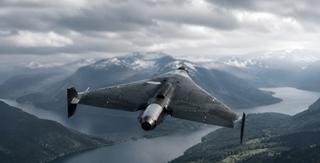
Kapustin emphasizes that the system can become the "eyes" of drones, allowing them to navigate in space with limited visibility. This can be especially useful for the Ministry of Emergency Situations during firefighting, ensuring the safety of people. After refinement, the system can also be installed on manned transport to help drivers in difficult conditions.
Work on the technology began several years ago as part of an RNF grant and is based on the principle of active-pulse observation. The main problem in difficult visibility conditions is backscattering (reflection of waves or particles back to the source), which makes it difficult to detect objects. The new system uses powerful short bursts of light, which allows you to "filter out" interference and accurately determine the distance to objects.
In the course of experiments conducted in the aerosol chamber of the Institute of Atmospheric Optics, the effectiveness of the new method was confirmed. Creating one depth map requires only two frames with different characteristics, which allows the system to operate at a frequency of 50 frames per second. This is enough to timely detect obstacles when moving at speeds up to 40 km/h in poor visibility conditions.
In the future, the developers plan to adapt the system using software to use it as a high-precision 3D scanner.
Read more on the topic:
AI taught to recognize human intoxication: the study was conducted at TUSUR
Testing of technologies to improve the efficiency of 6G will begin in Russia
Never miss our newsAdd this site to your preferred sources to see us more oftenAdd on Google