Researchers from the Chemistry Department of Moscow State University and the P.N. Lebedev Physical Institute of the Russian Academy of Sciences have developed a unique hybrid phosphor that combines organic and inorganic components. This compound demonstrates an unusually wide luminescence spectrum, including both visible light and the near-infrared range. The research results arepublished in the journal Dalton Transactions.
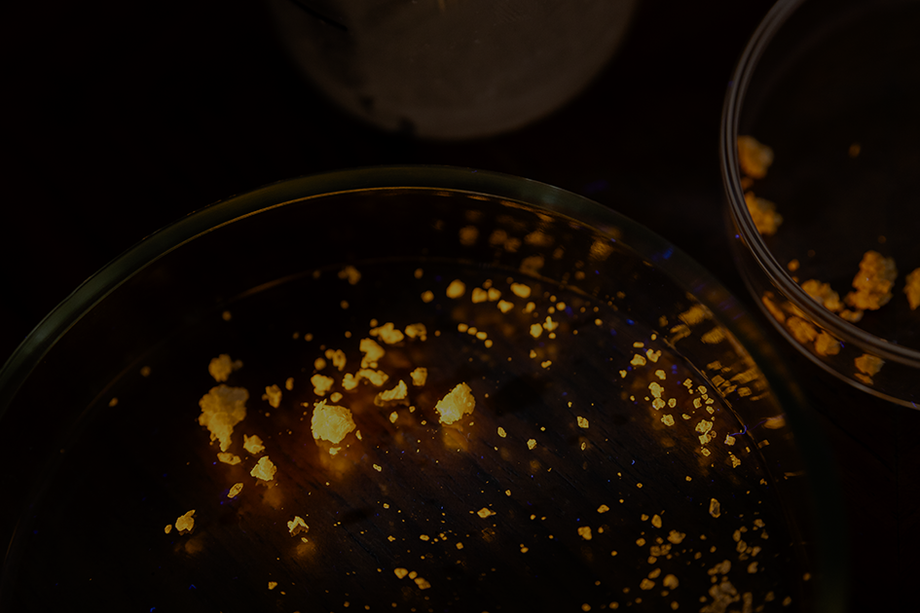
Modern light-emitting diodes (LEDs) are not able to fully reproduce the solar spectrum. Most white LEDs create light by combining a narrow blue peak with a broad yellow emission, which creates a dip in the green region. This affects color rendering and can have a negative impact on vision with prolonged use, as the human eye has evolutionarily adapted to the full solar spectrum.
The new hybrid material solves this problem. As MSU graduate student Andrei Bykov explains:
Organo-inorganic hybrids, as a rule, have broadband luminescence with long lifetimes. They can become the basis for creating white LEDs, acting both as single-component yellow phosphors and as single-component emitters in electroluminescence-based LEDs. Modern white LEDs do not provide a full emission spectrum - there is a superposition of a narrow blue peak and a broad yellow one. And in the green range, there is no luminescence, and a dip becomes visible in the spectrum. This is a serious difference from natural sunlight. In addition, many yellow phosphors have low color rendering, which forces the combination of several phosphors in real devices, which increases the cost of such LEDs.
In addition, the material emits in the near-IR range, which opens up opportunities for applications in medicine, for example, in diagnostic devices, as infrared light penetrates through tissues.
Another key advantage is the synthesis method:
Moreover, we managed to develop a very simple and inexpensive method for synthesizing such a crystalline structure. Very simple and easily scalable. We will be able to achieve the same efficiency in luminescence for much less money than for existing phosphors.
This means that the technology can be quickly implemented in production, reducing costs compared to existing analogues.
Potential areas of use for the new phosphor:
- LED lighting - more natural and safer light for the eyes.
- Medical diagnostics - near-IR radiation for tissue visualization.
- Hyperspectral sensors - improved material analysis systems.
The work is just beginning, but the first results are very optimistic.
Luminescence is widely used in various fields. It is used in the production of LEDs, displays, lasers, as well as in the development of photodetectors and sensors. Its study is not only of practical importance, but also allows us to obtain valuable information about the electronic structure of solids.
Read more materials on the topic:
Phase input and hyperspectral analysis: Samara scientists have improved the photon computer
Aerosol printer for printing microcircuits and neuroimplants developed by Russian scientists
Now on home

Start of deliveries scheduled for 2027

Over 51,000 new motorcycles were sold in Russia in 2025

The car will take at least a year to assemble

The application's audience has reached 20 million users

The model will be included in the list of cars for taxis, price - from 2.25 million rubles

All parking lots of the "Administrator of the Moscow Parking Space" are connected to the service

The cars will be supplied to the Moscow Transport Service Directorate

Deliveries to India may begin in 2028

The technology provides automated search for all types of defects in power units

The plane flew 500 km, accelerating to 425 km/h

The plant stated that the information about the termination of purchases for models 6 and 8 is not true

Scientists are using the "Ekran-M" installation