Russian Minister of Transport Roman Starovoit announced a promising project for underwater LNG carriers being developed by the Kurchatov Institute. These vessels could become part of the infrastructure of the Northern Sea Route (NSR), ensuring the transportation of liquefied natural gas (LNG) under the Arctic ice.
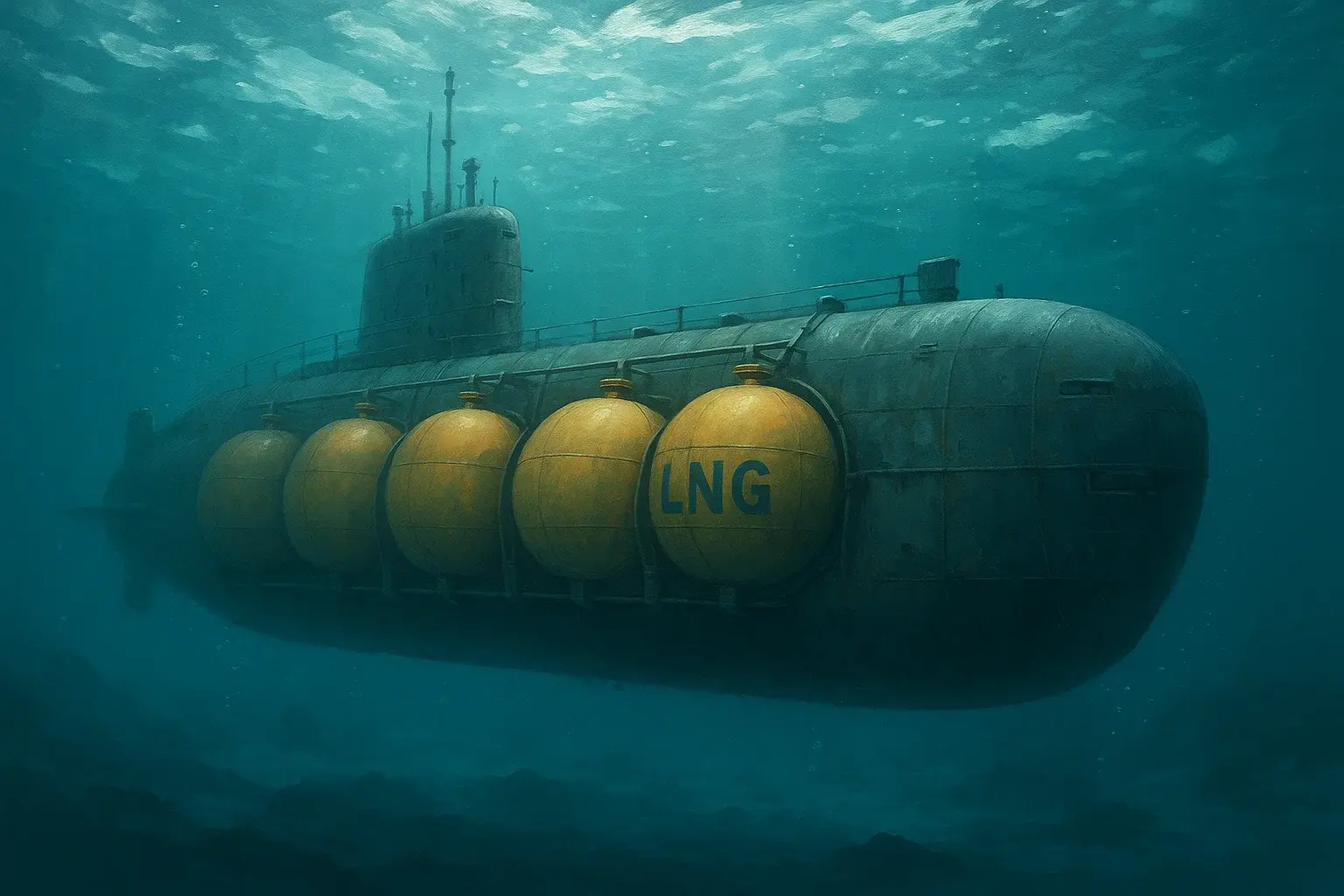
The Kurchatov Institute, known for its developments in the field of nuclear energy and underwater technologies, is likely using its experience in creating nuclear submarines to design these vessels. According to Starovoit, there are already 12 icebreakers operating in the NSR, including 8 nuclear-powered ones, and plans are in place to increase the cargo turnover of Arctic ports by more than 34 million tons by 2030.
Underwater LNG carriers are a fundamentally new type of vessel capable of moving under the ice, which will significantly increase the efficiency of cargo transportation in difficult ice conditions. Unlike traditional icebreakers and tankers, this technology minimizes dependence on ice conditions and reduces delivery times.
The Northern Sea Route is a key transport artery of Russia, connecting European and Far Eastern ports. In 2024, the volume of transportation amounted to 37.9 million tons, including 3.1 million tons of transit cargo.
Read more on this topic:
Proceeds from VTB shares in 2024-2028 will be used to develop shipbuilding capacities of USC
New ice patrol ship of project 22120 for the FSB of Russia launched
Record breakthrough: Tokamak T-15MD of the Kurchatov Institute reached a plasma current of 500 kA