Russian scientists from MIPT and the Federal Research Center of the Russian Academy of Sciences have created a new luminous nanomaterial - hybrid colloidal quantum dots made of indium phosphide, supplemented with manganese ions. Such materials, called phosphors, glow when excited - for example, when exposed to light or other influences.
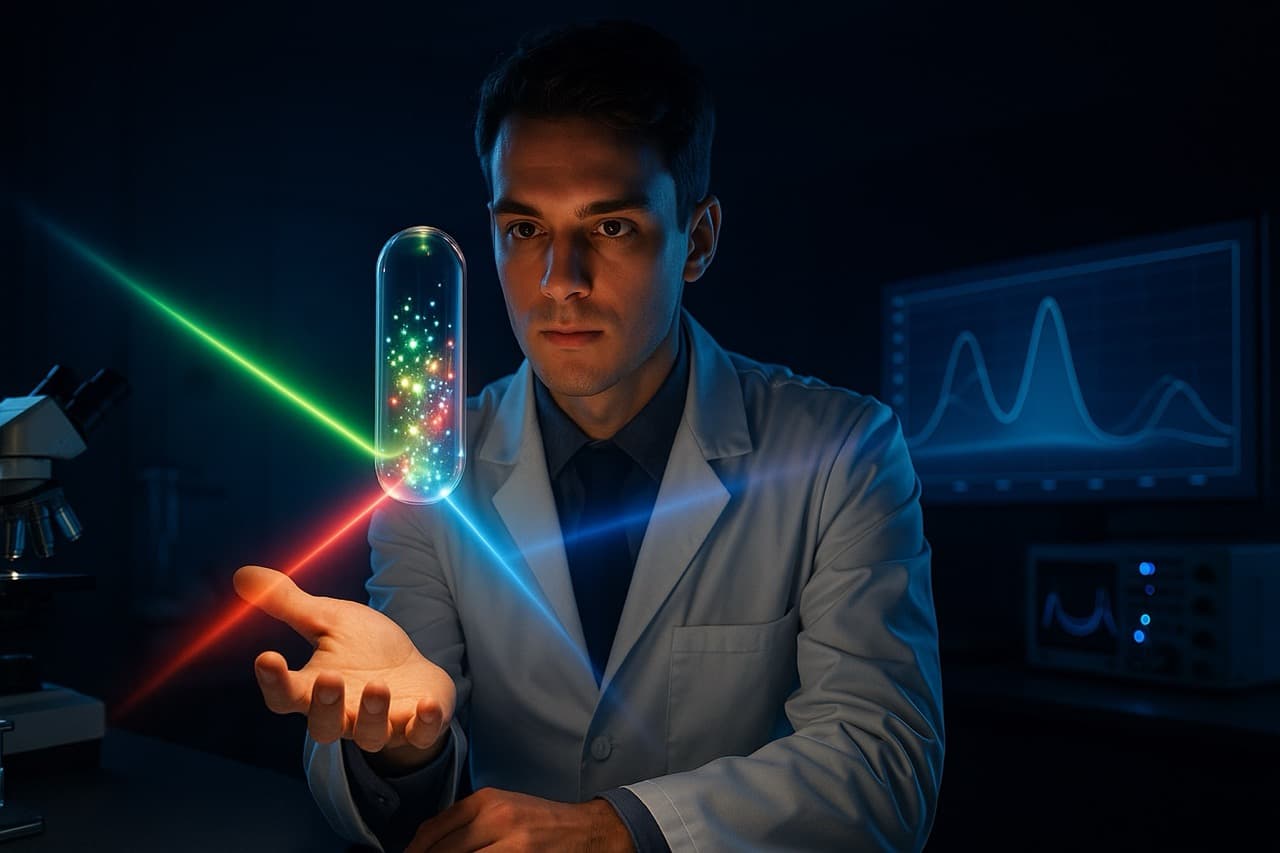
Phosphors are widely used in medicine, energy, and anti-counterfeiting, and now, thanks to quantum dots, their properties can be precisely adjusted. Quantum dots are very small nanocrystals, the size of which affects the color and duration of luminescence. This provides a new approach to creating materials with the desired light characteristics.
In the InP:Mn quantum dots created by the scientists, three types of luminescence are simultaneously manifested: fast fluorescence, slow phosphorescence, and intermediate delayed fluorescence. The peculiarity of manganese is that it gives the effect of "delayed" excitation transfer - the energy of light emission can be transferred longer and over greater distances.
This is especially important for nanophotonics - the science and technology that work with light on the nanoscale. These properties will help create new devices that will work with light faster and more efficiently, as well as be used in biomedicine and information security systems.
Read more on this topic:
Neural implants, subcutaneous sensors: MIPT creates ultra-flexible biocompatible flash drive
Thinking at the speed of light: MIPT scientists are developing a photonic brain using nanolasers