Translated with AI from the Russian original.
Scientists from the Krasnoyarsk Scientific Center of the Siberian Branch of the Russian Academy of Sciences have presented innovative optical filters based on quartz and silver. Unlike traditional counterparts that require 20 or more layers, the new design consists of only seven. This was made possible by the use of silver, which effectively reflects unwanted parts of the spectrum, replacing complex multilayer dielectric mirrors.

As the researchers explained, the quartz layers form a passband for the desired radiation spectrum, while thin silver interlayers block unwanted frequencies. This combination ensures high filtration accuracy in the visible and infrared ranges, which is especially important for telecommunications, satellite communications, and medical diagnostics.
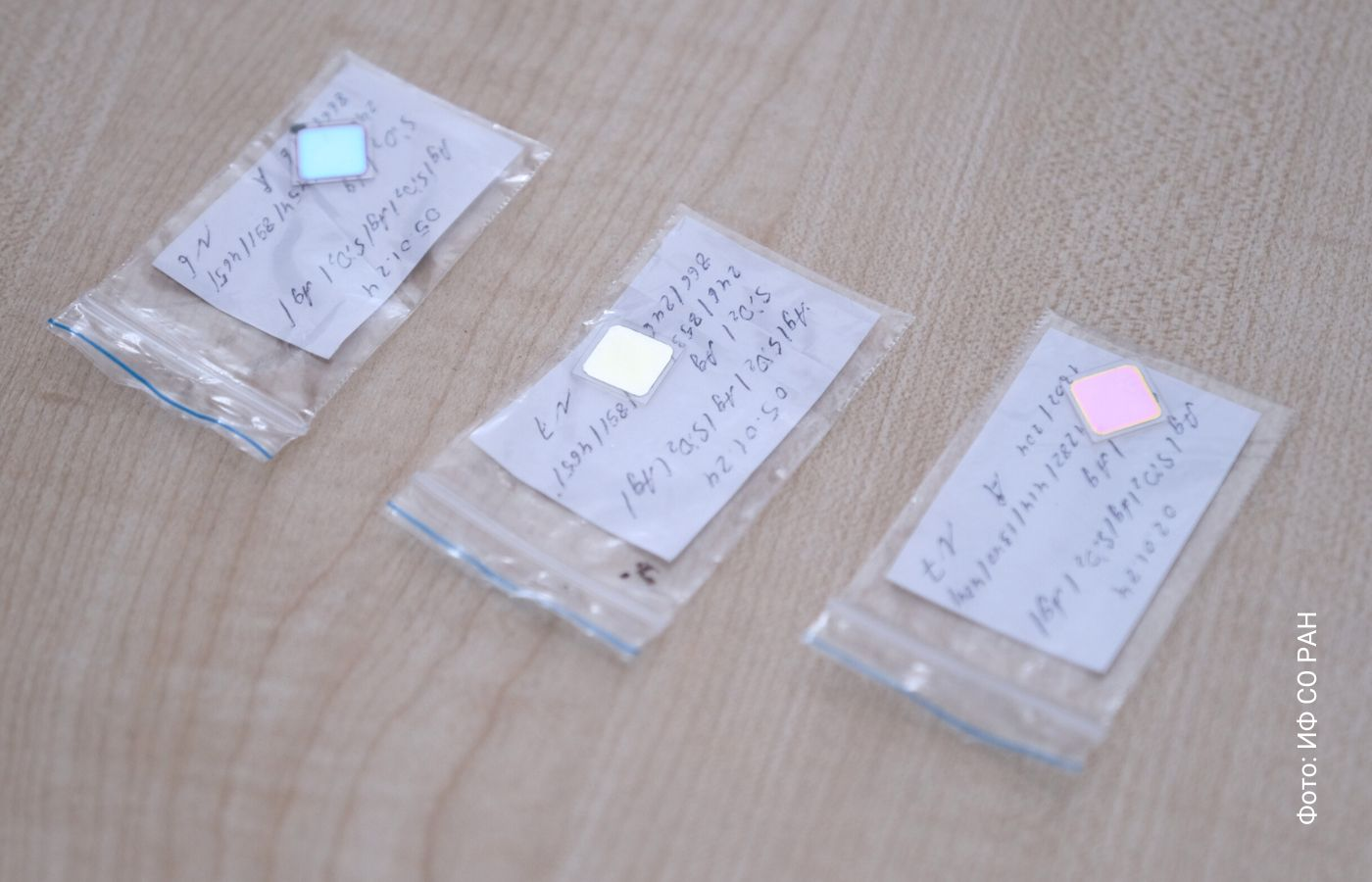
Modern optical communication systems require highly selective filters that effectively transmit the necessary frequency ranges and suppress unnecessary signals. We were able to significantly reduce the number of layers without losing selectivity and filtration quality. It is especially important that the proposed design allows flexible control of the passband parameters, as well as minimizing parasitic signals.
A feature of the filters is their ability to transmit ultraviolet light due to resonant oscillations of electrons in silver. In addition, changing the thickness of the silver layers allows precise tuning of the operating frequencies for specific tasks.
Despite the fact that silver in the optical range has a low Q factor associated with absorption losses and creates an additional transmission peak in the ultraviolet region, the designs of the developed filters have relatively high characteristics. This indicates their prospects in creating filters for the infrared and visible frequency ranges with relative passbands from units to tens of percent. The developed filters combine simplicity of design—a minimum of layers—and high efficiency—the absence of parasitic bands—but require optimization to reduce losses. Their key advantage is the ability to fine-tune for infrared and visible range tasks.
The development can be implemented within the framework of a scientific and production campus in Krasnoyarsk, accelerating the transition from laboratory samples to industrial solutions.
The results of the research work are published in the journal "Izvestiya Vysshikh Uchebnykh Zavedenii. Physics."
Read also materials on the topic:
Irradiated the resin: scientists of Perm Polytechnic University found out how radiation improves the properties of polyester resins
Never miss our newsAdd this site to your preferred sources to see us more oftenAdd on Google

















