The company "Rosel" has launched mass production of the medical robot "CardioRobot" — an automated system for performing indirect heart massage. The development is intended for resuscitation departments, ambulance services and transplantology, where every second is critical to saving the patient.
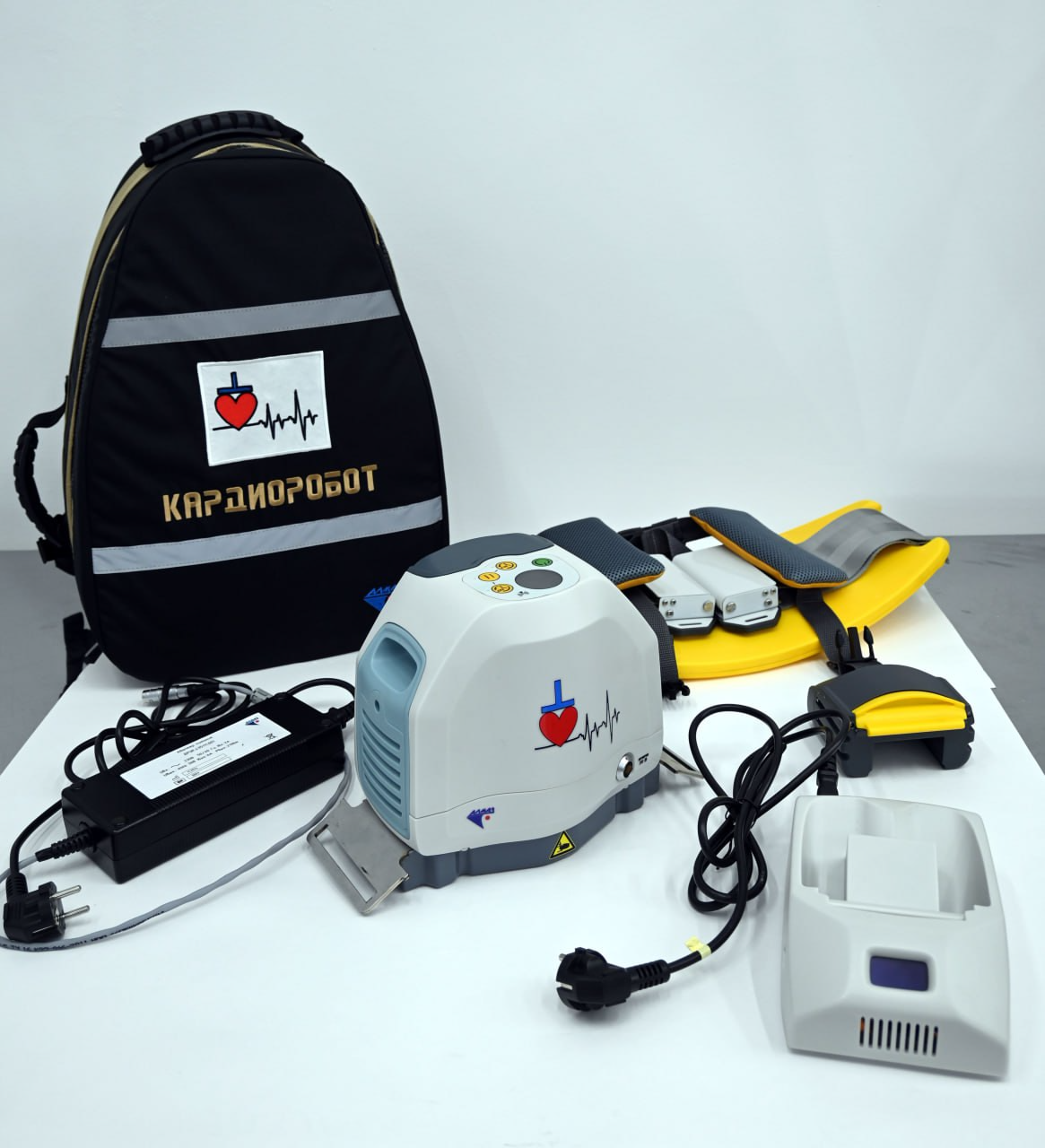
Cardiopulmonary resuscitation (CPR) requires high endurance: even a trained specialist can effectively perform heart massage for only 2-3 minutes. "CardioRobot" is capable of working up to 45 minutes without interruption, maintaining optimal depth and frequency of compressions. This is especially important in situations where doctors need to perform other resuscitation measures simultaneously. The device is equipped with sensors that analyze the patient's condition. If the heart stops, it automatically begins resuscitation, which reduces reaction time and increases the chances of successful restoration of blood circulation.
The device will find application in resuscitation departments, where long-term circulatory support is required, as well as in ambulances to stabilize patients during transportation. In addition, "CardioRobot" can be used in transplantology departments, where it is critical to maintain the vital functions of donor organs.
The development belongs to NPP "Almaz" (part of Rosel) and was created with the participation of the Ministry of Industry and Trade and practicing resuscitators. The device is already included in the state register of medical devices of Roszdravnadzor.
Read more materials on the topic: