On Sunday, May 25, at 04:52 Moscow time, Russian scientists recorded a powerful class X solar flare. The cosmic event occurred in the active region of sunspot group 4098 (coordinates S05W22) and lasted 17 minutes. The data was obtained through X-ray monitoring conducted by the Institute of Applied Geophysics (IPG).
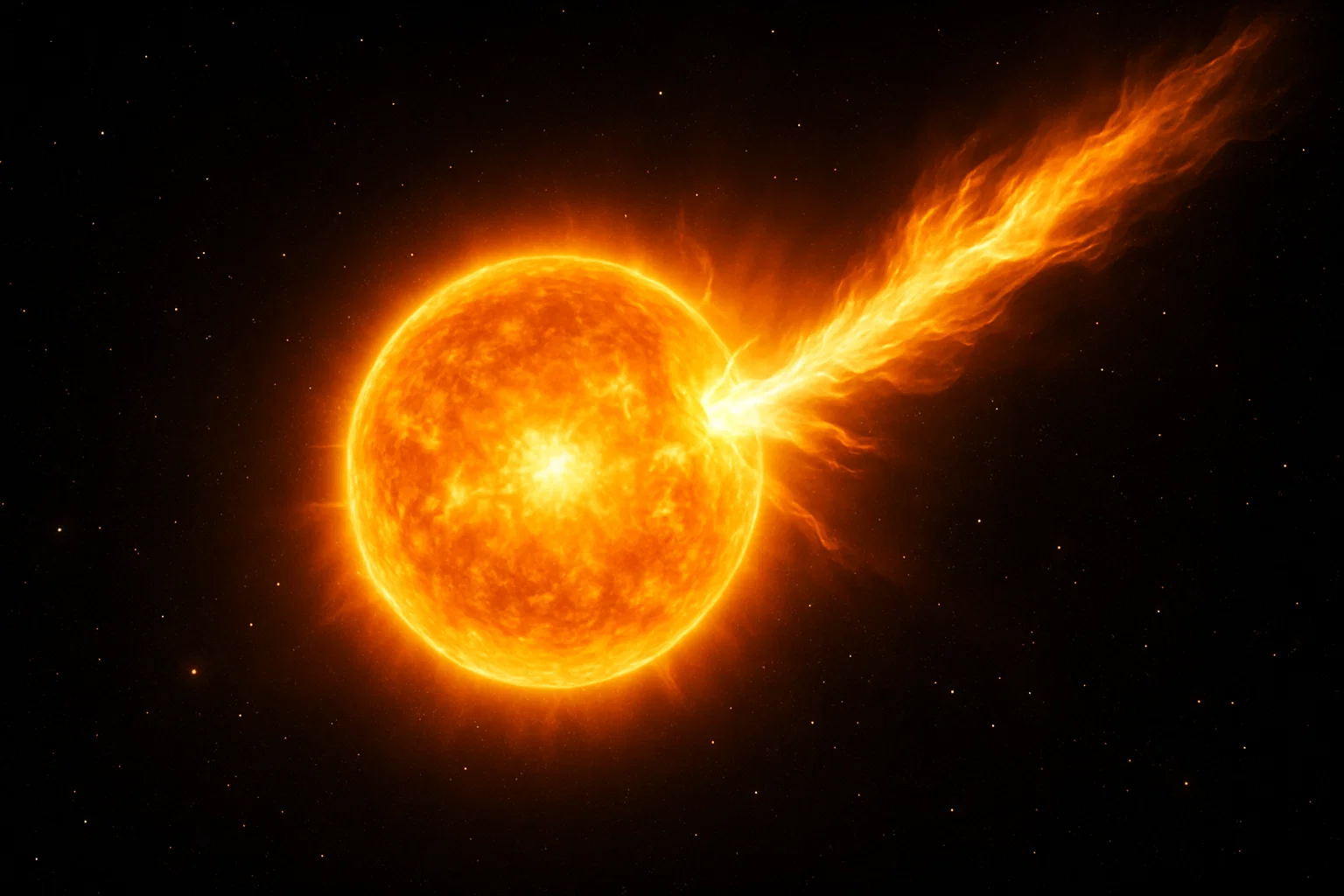
Solar flares are classified by radiation power: A, B, C, M, and X, where X is the most intense. Each subsequent class is 10 times stronger than the previous one. The X1.1 flare is considered a high level of activity and may be accompanied by a coronal mass ejection (CME). If the plasma cloud reaches Earth, it can cause a magnetic storm, affecting satellite communications, navigation systems, and power grids.
Solar activity has been increasing in recent months, which corresponds to the expected increase in activity within the 11-year solar cycle. Scientists predict anincrease in the number of such flares in the coming years.
Class X solar flares can cause geomagnetic storms, which can affect:
- Satellite communications (GPS, GLONASS disruptions)
- Aviation (risks for crews at high latitudes)
- Power systems (possible voltage surges)
On May 24, at 23:23 Moscow time, another flare was recorded - M2.2 (S14E89) lasting 26 minutes.
Read more on this topic:
The Sun staged a fireworks display of 39 flares, almost half of them class M
Five powerful flares occurred on the Sun in the past 24 hours: four class M and one class X
April will be "hot": solar flares and magnetic storms will begin today