The Supreme Court clarified that the absence of electronic signatures of the chairman and secretary of the election commission on the protocol of дистанционного электронного голосования (ДЭГ) is not a reason for its cancellation. The law on electronic digital signatures (ЭЦП) does not apply to elections.

The Administrative Collegium of the Supreme Court rejected the cassation appeal of Ilya Свиридов, a former candidate for deputy of the Moscow City Duma. Свиридов challenged the results of дистанционного голосования, citing the absence of signatures. However, the court pointed out that this does not violate the law.
In addition, according to the court, no violations were revealed during the consideration of the case that could have a significant impact on the expression of the will of voters, and this is what could serve as a basis for annulling the election results. The absence of electronic signatures of the chairman and secretary of the Moscow City Election Commission in the data on the results of дистанционного электронного голосования is not a significant violation, the Supreme Court emphasized.
Earlier www1.ru wrote about how in Russia, with the help of ДЭГ, voted in the presidential elections.
Читать материалы по теме:
Выборы президента России — как зарегистрироваться и проголосовать через ДЭГ
Выборы в России с 6 по 8 сентября: список технических возможностей для избирателей
Сотни избирателей за пять минут — в России заработало ДЭГ на выборах президента страны
Now on home

Start of deliveries scheduled for 2027

Over 51,000 new motorcycles were sold in Russia in 2025

The car will take at least a year to assemble

The application's audience has reached 20 million users

The model will be included in the list of cars for taxis, price - from 2.25 million rubles

All parking lots of the "Administrator of the Moscow Parking Space" are connected to the service

The cars will be supplied to the Moscow Transport Service Directorate

Deliveries to India may begin in 2028
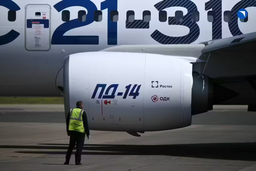
The technology provides automated search for all types of defects in power units

The plane flew 500 km, accelerating to 425 km/h

The plant stated that the information about the termination of purchases for models 6 and 8 is not true
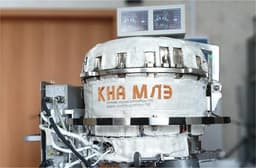
Scientists are using the "Ekran-M" installation