Military engineers of the Russian Armed Forces destroyed an American MaxxPro armored vehicle on a mine barrier using a homemade remote-controlled robotic complex on a tracked chassis. This was reported by the Russian Ministry of Defense.
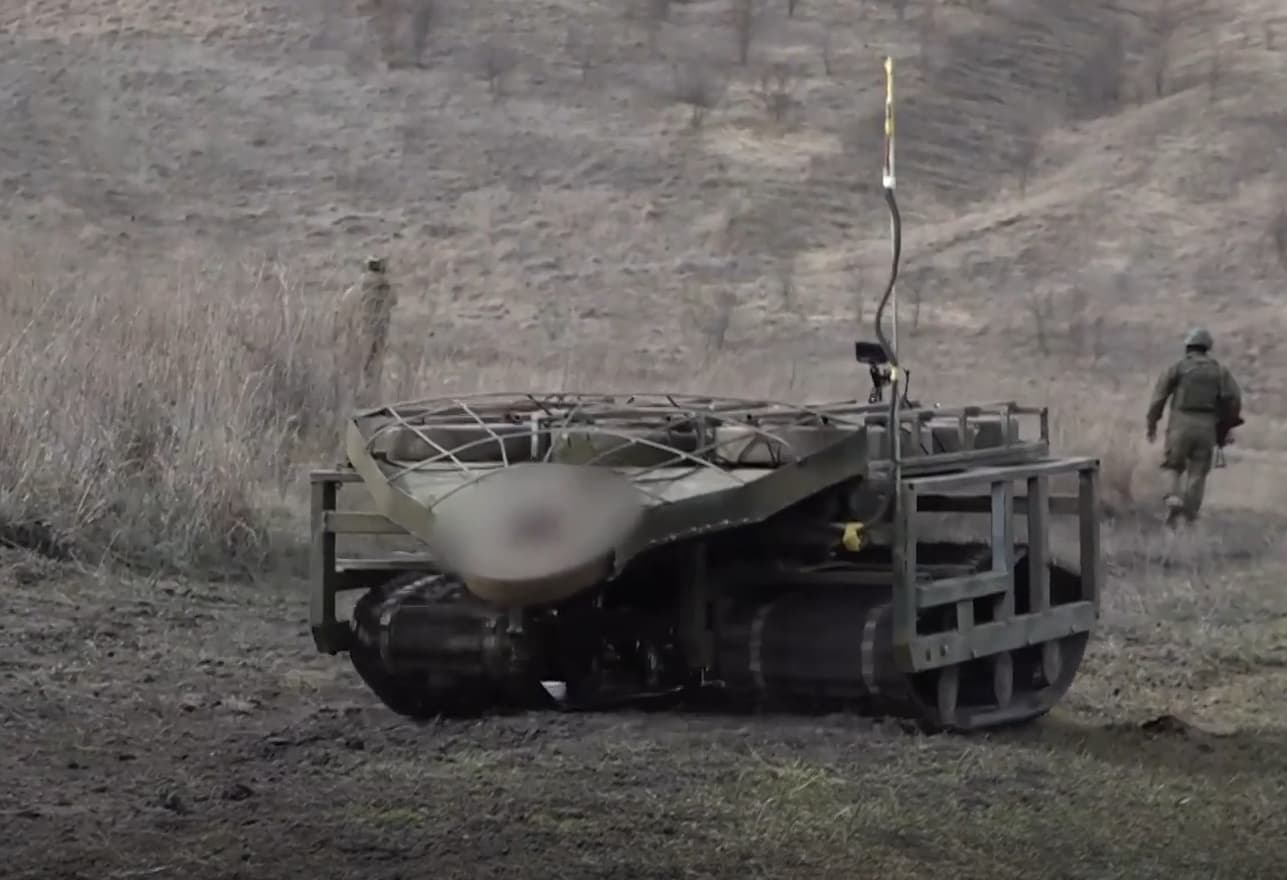
According to the ministry, engineering units are using robotic systems to destroy shelters with manpower and camouflaged bunkers.
Also, with their help, military personnel install mine barriers on the supply routes of enemy supplies and ammunition.

Electrician-operator with the call sign Shurup, speaking about the development, noted that the robotic complex was developed and assembled over six months - they wanted to make something that would work on the ground. The result was a tricky system that independently places anti-tank mines in important locations.
Earlier www1.ru reported that the characteristics of the ZA-SpN Titan armored vehicle shown at the parade in Moscow became known.
Read more materials on the topic:
The full configuration of weapons and protection of the T-90M "Proryv" tank has been revealed
"The whole world is shuddering": the President of Burkina Faso praised the Russian Oreshnik missile
The newest submarine "Krasnoyarsk" returned to base after successful launches of "Caliber"
Now on home

Start of deliveries scheduled for 2027

Over 51,000 new motorcycles were sold in Russia in 2025

The car will take at least a year to assemble

The application's audience has reached 20 million users

The model will be included in the list of cars for taxis, price - from 2.25 million rubles

All parking lots of the "Administrator of the Moscow Parking Space" are connected to the service

The cars will be supplied to the Moscow Transport Service Directorate

Deliveries to India may begin in 2028

The technology provides automated search for all types of defects in power units

The plane flew 500 km, accelerating to 425 km/h

The plant stated that the information about the termination of purchases for models 6 and 8 is not true

Scientists are using the "Ekran-M" installation