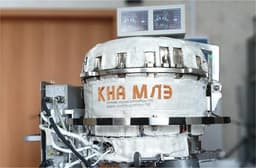
Physicists from Lobachevsky University of Nizhny Novgorod (UNN) have developed a unique type of qubits based on artificial atoms that can maintain a quantum state longer than usual. This discovery paves the way for creating more stable and manageable quantum devices in Russia.
Researchers in Russia have, for the first time, learned to control two qubit parameters simultaneously - charge and rotational moment (spin). This dual control allows for the construction of more complex but compact quantum systems.
Using an electric field, we control both the charge and the rotation vector of the qubit, which makes it possible to create more complex, but miniature quantum systems.
Scientists have discovered an unexpected effect - spin memory in hybrid qubits. They have learned to "lock" a qubit at a specific energy level, which allows the quantum state of the particle to be maintained longer than usual. This is a breakthrough in creating non-volatile, electrically controlled quantum memory elements.
Any system strives for minimum energy, particles transition to ever lower levels, so fixing the required qubit values for a long time is almost impossible, but we succeeded. In a variable electric field, we held the qubit in the state we needed.
The system is based on gallium arsenide - a common semiconductor material with well-studied properties. This will allow for future scaling of the development and its integration into various types of quantum devices.
The scientists' immediate plans include studying the spin memory effect, optimizing quantum operations in hybrid spin-charge qubit registers, and developing methods for correcting quantum errors. All of this is necessary to create full-fledged quantum processors.
Read more materials on the topic:
Russian astrophysicists have proven various ways of forming spiral galaxies