Translated with AI from the Russian original.
Russian scientists from the Budker Institute of Nuclear Physics SB RAS (BINP SB RAS) in Novosibirsk have created a superconducting magnet that will help create a new VEPP-6 collider. The magnet will be able to improve the beam luminosity at the electron-positron collider, a device where electrons and positrons (antiparticles of the electron) collide, creating micro-explosions and new elementary particles.
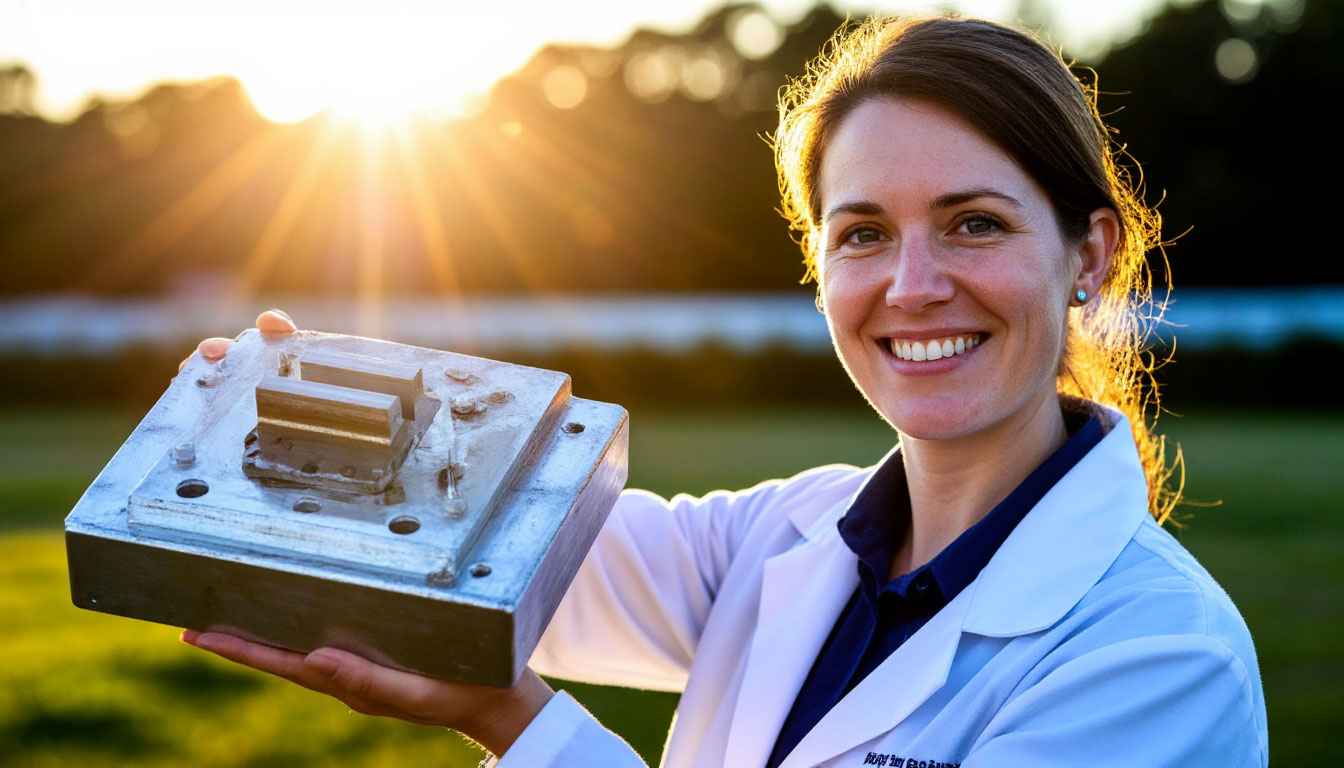
After the magnet compresses the particle beams, it will increase their density and, as a result, the number of collisions. Micro-explosions occur during particle collisions, in which even smaller particles are formed. These particles are studied to understand the fundamentals of matter. The described method, known as Crab Waist, allows beams to collide at a large angle and can theoretically increase the luminosity by 10-100 times. This opens the way for the creation of a new VEPP-6 collider, the cost of which is estimated at 23 billion rubles.
We decided to master the technology of superconducting magnets, which no one in Russia has yet been involved in. There are several laboratories in the world where such magnets are made. We were the first in Russia to make such a magnet, it showed the design parameters, and it is now in a cryostat.
According to Ivan Logashenko, Deputy Director of BINP SB RAS, the new collider will allow the discovery of exotic forms of matter, such as light quarks and particles consisting of gluons. These studies could lead to revolutionary discoveries in the field of physics and understanding the structure of the Universe.
Read more on this topic:
Russian scientists have created a material for ultra-fast optical chips
Never miss our newsAdd this site to your preferred sources to see us more oftenAdd on Google

















