The Moscow Institute of Physics and Technology (MIPT) has developed the world's first dry aerosol printing printer for the production of micro-sized structures, the university's press service reported.
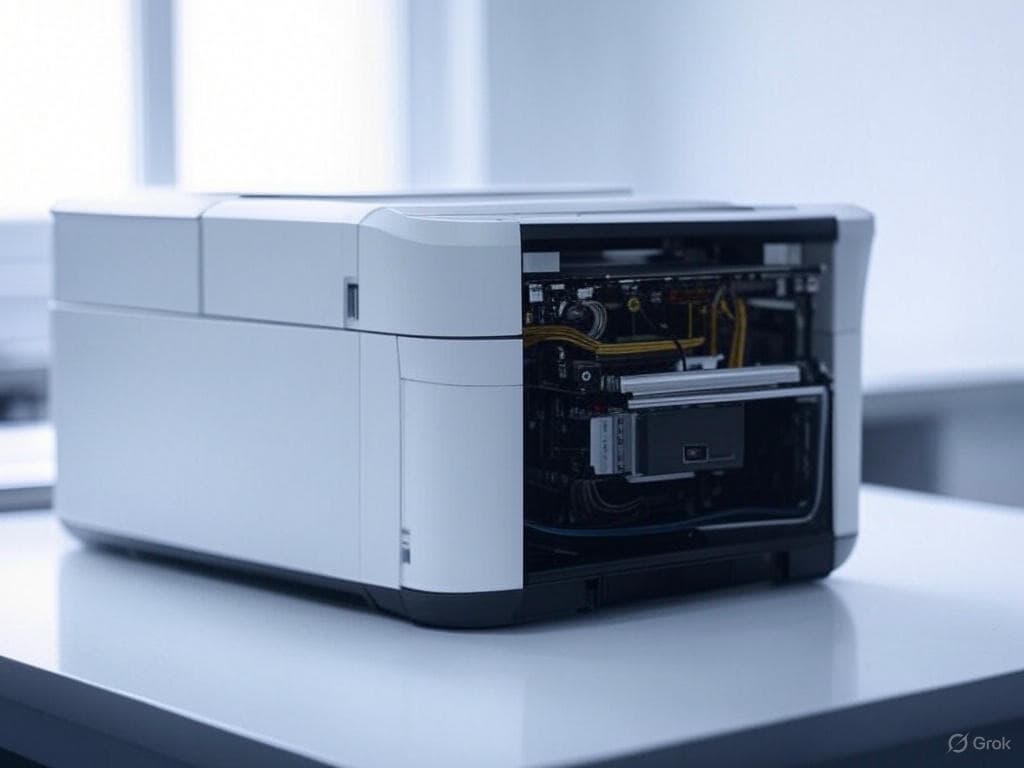
With this printer, it is possible to print plasmon "amplifiers" of light, which allow detecting even the smallest traces of substances when examining samples using Raman spectroscopy. This is important for forensic scientists, in the analysis of art objects and archaeological finds.
The analysis of the composition of samples is carried out by Raman spectroscopy. It determines the substance by the effects of light, which can be enhanced using the plasmon structures printed by us. That is, we are, in fact, making a signal amplifier. Without it, a small amount of substance is not visible, but with our structure it is visible.
The printer has no analogues on the world market and can be used to print boards for microelectronics with a track width comparable to a human hair. When creating photodetectors, the device allows applying additional quantum dots. This increases the sensitivity of the elements.
Earlierwww1.ru reported that the new 3D printer SandMax 1200 from the company "Robotex" waslaunched at KFU.
Read materials on the topic:
Russian 3D printer for printing houses in Siberia has started working
St. Petersburg has come up with a way to defeat icicles on multi-story buildings
Building material from water: expensive anhydrite from waste created in Moscow











