A new anti-drone gun "Pars Stupor-D" has been developed for the Russian military. The weapon allows you to quickly activate the self-rescue modes of unmanned aerial vehicles.
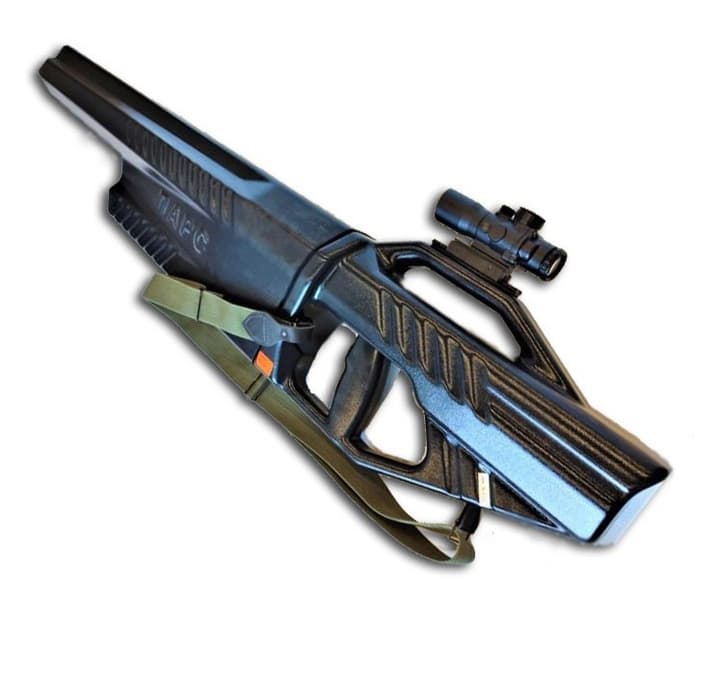
The device is highly effective against remotely controlled drones that are in the air, on the water, or on the ground.
"Pars" initially uses the internal algorithms of drones. When aiming at a drone, the gun creates strong interference that interferes with the functioning of the quadcopter or other aircraft.
After that, the drone automatically stops working in manual control mode and switches to "landing" or "return to launch site" mode.
Characteristics of "Pars Stupor-D":
Range: more than 1500 m, weight - 7.5-8.5 kg, dimensions: 1200x300x140 mm, GPS, GLONASS, GALILEO, BeiDou, WI-FI 2.4 GHz, 5.8 GHz ranges, directivity pattern width - 16 degrees.
Earlierwww1.ru reported thatVysokotochka transferred a new batch of Pantsir-S SAM systems to the Ministry of Defense.
Read also:
Innovative Trident of Retribution fighter drone with tentacles first appeared on video
On guard of the perimeter: the characteristics of the new Fara-VR radar have been revealed
Rostec has developed a unique landing system for light aviation
Now on home

Start of deliveries scheduled for 2027

Over 51,000 new motorcycles were sold in Russia in 2025

The car will take at least a year to assemble

The application's audience has reached 20 million users

The model will be included in the list of cars for taxis, price - from 2.25 million rubles

All parking lots of the "Administrator of the Moscow Parking Space" are connected to the service

The cars will be supplied to the Moscow Transport Service Directorate

Deliveries to India may begin in 2028

The technology provides automated search for all types of defects in power units

The plane flew 500 km, accelerating to 425 km/h

The plant stated that the information about the termination of purchases for models 6 and 8 is not true

Scientists are using the "Ekran-M" installation