Heavy transport unmanned aerial vehicles (UAVs) WingedBull 01XS and WingedBull 01XL are scheduled to begin flight tests in 2026, according to Anton Blik, CEO of the developer company "Flying Trucks."
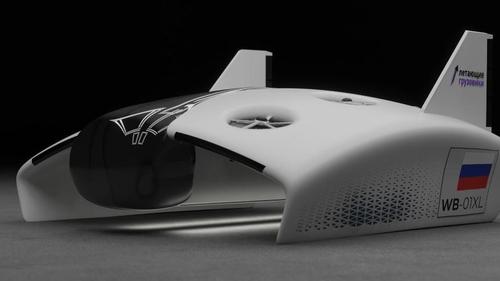
These drones with a payload capacity of 250 and 750 kg are in the final stages of design. Preparations are currently underway for the assembly of prototypes.
The main task of WingedBull is to provide logistical support to remote deposits in the Arctic, Siberia, and the Far East. Flights will be conducted autonomously, using a navigation system (GLONASS/GPS and inertial navigation system). The flight will be tracked via a radio beacon and a satellite communication unit, while the operator will be able to intervene in the drone's control.
We are creating aircraft-type machines based on the VTOL scheme - with vertical takeoff and landing. In fact, WingedBull 01XS and WingedBull 01XL are convertiplanes. In our opinion, this is the most successful aerodynamic solution. In addition, the convertiplane does not require a runway and complex airfield maintenance.
The new cargo UAVs will fly at an altitude of 200-300 meters. This minimizes the risk of exposure to electronic warfare systems. The flight range of both drones is 700 km, and the cruising speed is 400 km/h.
WingedBull 01XL will be equipped with a TV3-117 turboshaft engine and six electric motors. The small "bull" will have two engines, while the large one will have six electric traction modules and one turboshaft generator drive.
The XS model's power plant is a combined internal combustion engine with our original modification in the form of a power module. The module will ensure complete utilization of exhaust gas energy, which significantly increases thermal efficiency. This power plant will create a jet stream for the vertical takeoff of the UAV.
An important aspect of the design of both drones is the "smart pallet" in the cargo compartment, which records the weight and position of the cargo, interacting with the UAV's onboard system to prevent imbalance.
It is assumed that the new cargo drones will replace or supplement the fleet of Mi-8 helicopters.
The drone will cost four to five times less. In addition, using the "eight" to transport a few hundred kilograms is economically unjustified. As a rule, cargo has to be accumulated in warehouses for subsequent delivery by helicopters.
The initial customers of the drones will be oil and gas companies and regional airlines. In the coming years, "winged bulls" will be in demand in regions such as KhMAO, Yamalo-Nenets Autonomous Okrug, Yakutia, Primorsky Krai, Chukotka, and Sakhalin.
Earlierwww1.ru reported that a cargo drone "SARMA" wascreated in Novosibirsk.
Read materials on the topic:
Can carry up to a ton of cargo - new Russian drone "Partizan" tested
New drones from SberAutoTech will enter the high-speed highway between Moscow and St. Petersburg
StarLine drone began transporting goods from St. Petersburg to Moscow
Never miss our newsAdd this site to your preferred sources to see us more oftenAdd on Google

















