The Russian market for medical equipment continues to develop, despite sanctions and restrictions. According to Konstantin Zotov, CEO of MST.Group, adaptation is occurring through the localization of production in partnership with China, government support, and the growth of the private sector. However, serious challenges remain: a shortage of qualified personnel, dependence on imports of consumables, and a lengthy procedure for registering new equipment.

The main driver of growth is government procurement. Authorities are actively modernizing medical institutions, especially in new regions, and developing programs to combat socially significant diseases. Since 2022, Russian companies, as well as manufacturers from Belarus and Kazakhstan, have dominated tenders. Belarusian enterprises are modernizing old Soviet facilities, creating new industrial clusters, such as the plant in Baranovichi. In the private sector, there is consolidation: small clinics are merging into networks, and large corporations, including Gazprom, Russian Railways, and Sber Medicine, are investing in their own medical institutions. At the same time, the premium segment is growing, requiring high-tech equipment. For example, the five-star "Luciana" sanatorium with a modern rehabilitation center recently opened in Sochi.
The departure of Western manufacturers, especially from the USA and Scandinavia, has seriously complicated the supply of medical equipment. China and India have become Russia's main partners, but their products also face sanctions restrictions: banks are reluctant to work with the ruble, and the supply of spare parts and consumables is difficult. In addition, the issue of servicing already purchased equipment is acute, as access to original components is limited.
Import substitution is developing, but cannot yet fully replace Western analogues. Russian manufacturers are increasing their market share by 20% per year, but remain dependent on foreign technologies, especially in the field of medical software. The development of domestic software is not yet profitable due to the narrow market. Despite promising projects with artificial intelligence and telemedicine, their level is still inferior to world analogues.
Systemic reforms are needed for the full development of the industry. First of all, modernization of engineering education, since medical equipment students are still trained on outdated equipment. In addition, offset contracts are required to provide long-term guarantees of government procurement, as has already been implemented in the pharmaceutical sector. It is also necessary to speed up the process of registering medical devices, which in Russia takes 2-3 years, while abroad this period is much shorter.
If we lose touch with the global market, then import substitution must be sustainable. Without a systematic approach, this cannot be achieved
Read more on the topic:
Rostec manufactured a prototype of the import-substituting ventilator "Mobivent"
Import substitution: Russian medical equipment occupies only a quarter of the market
Now on home

Start of deliveries scheduled for 2027
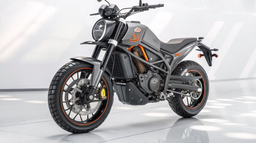
Over 51,000 new motorcycles were sold in Russia in 2025

The car will take at least a year to assemble

The application's audience has reached 20 million users

The model will be included in the list of cars for taxis, price - from 2.25 million rubles

All parking lots of the "Administrator of the Moscow Parking Space" are connected to the service

The cars will be supplied to the Moscow Transport Service Directorate
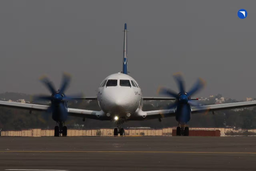
Deliveries to India may begin in 2028
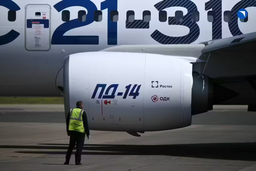
The technology provides automated search for all types of defects in power units
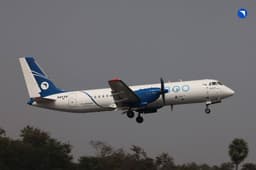
The plane flew 500 km, accelerating to 425 km/h

The plant stated that the information about the termination of purchases for models 6 and 8 is not true
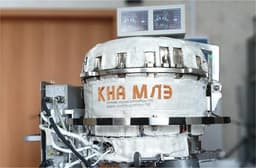
Scientists are using the "Ekran-M" installation