In St. Petersburg, at the XIV International Forum "Arctic: Today and the Future," an autonomous unmanned underwater vehicle equipped with a manipulator complex, artificial intelligence-based software, and a precise technical vision system was presented. It can solve a wide range of tasks in various fields, from industry to science, including in extreme Arctic conditions.
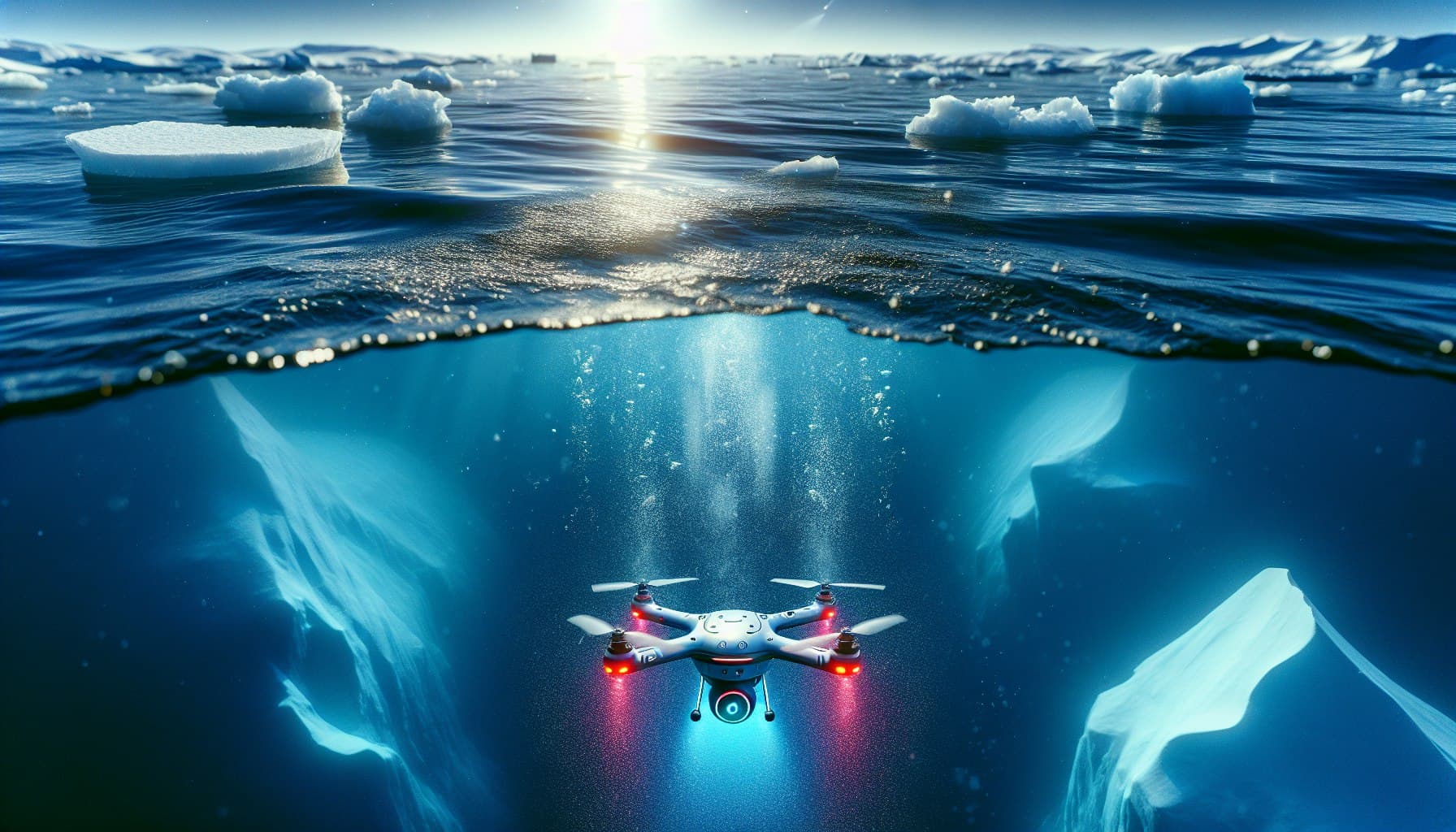
We have developed an underwater manipulator complex with artificial intelligence and technical vision, which allows a wide range of underwater tasks to be performed automatically without the participation of an operator on the surface. The system is capable of independently navigating in space, selecting the necessary tools, and acting according to its flexible algorithms in various fields.
In the process of developing the device, specialists primarily took into account the needs of industry in the Arctic and the Far East. In particular, this concerns the extraction of hydrocarbons from underwater production complexes and solid minerals from the seabed.
Usually, remotely operated vehicles are used to service such complexes and their systems, which require the presence of an operator on the vessel. However, this approach has its limitations due to weather conditions and other dangerous situations.
The use of fully autonomous underwater drones opens up new perspectives in the field of technical maintenance of key industrial facilities. This will significantly increase the time that can be devoted to important tasks, as well as reduce operating costs.
In addition, these devices can be used for scientific research, environmental monitoring (for example, to track potentially dangerous objects underwater), and security at strategically important facilities.
Earlier in Russia, BAS-200 unmanned helicopters were presented, which can accompany icebreakers. They have successfully passed tests in the Arctic Circle. The complexes successfully performed flights with equipment for aerogravimetric and aeromagnetic surveys, as well as takeoffs from the decks of ships. The holding believes that unmanned helicopters can become an important tool in the work of the icebreaker fleet.
Read more on the topic:
A Drone for Working in Space Has Been Developed in Russia
Underwater Research Drone Created in Russia
New Underwater Robot "Scanner" with Metal Detector Tested in the Gulf of Finland
Exploring Underground Rivers and Lakes: Scientists from Bashkiria Create Underwater Drone