The Russian electron-positron collider VEPP-2000, which has been used to measure the mass of almost half of the known elementary particles with high precision, will be modernized. By 2030, Russian specialists plan to improve the characteristics of the device's detector.
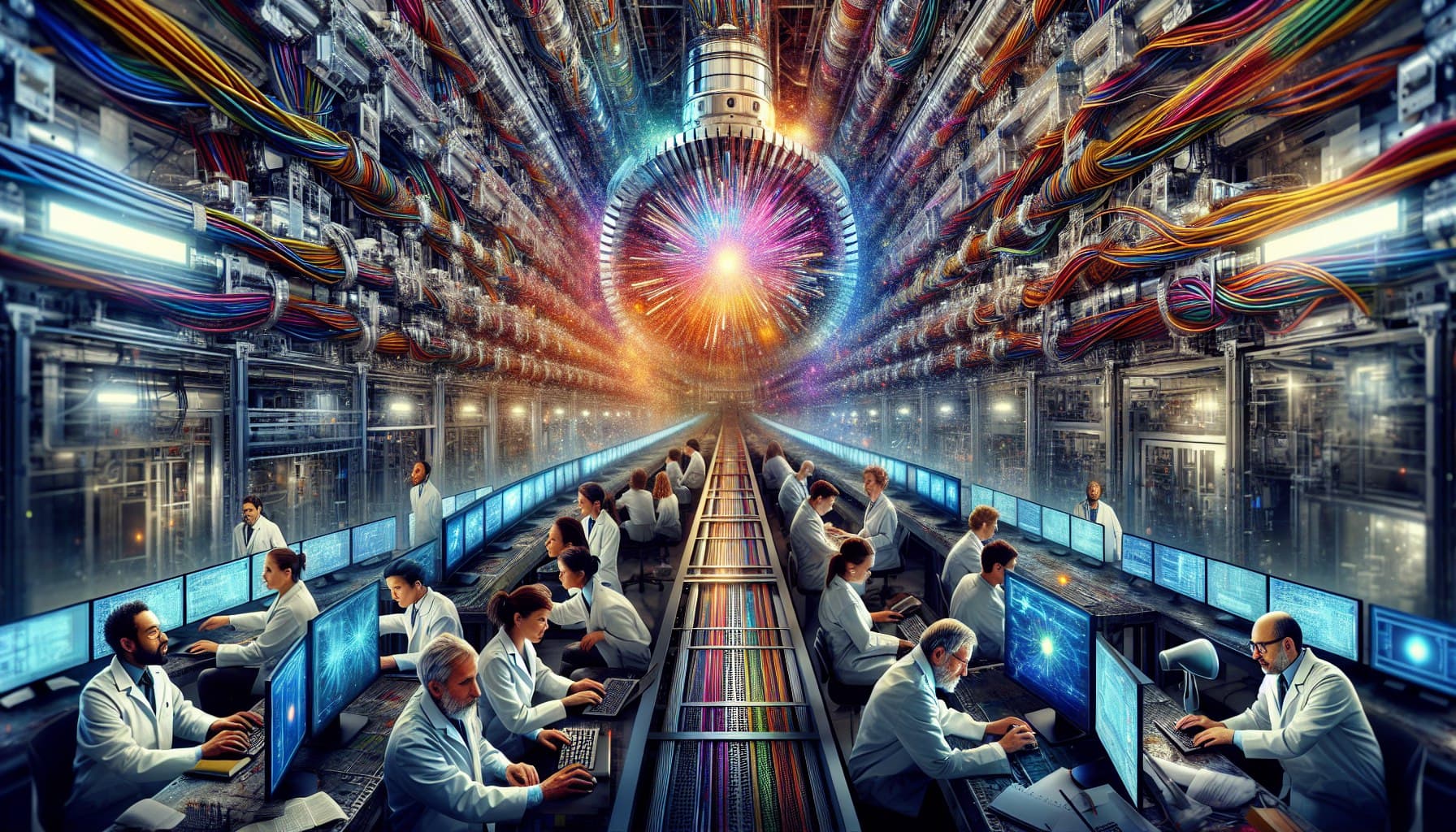
In the particle accelerator, electrons and positrons collide. This results in micro-explosions - annihilations - in which even smaller particles are formed. These particles are then measured, described, and studied.
The peculiarity of the particle accelerator is that it allows studying the properties of light elementary particles.
We assume that we will work for another two years, prepare experiments, then stop for three years, that's how much time it takes to disassemble and assemble everything, and launch a new cycle in about five years. We should be in time by 2030.
Logashenko explained that it is about refining the detector inside the particle accelerator. Specialists plan to install a new drift chamber. This is a device for measuring the coordinates of particles with high accuracy. The principle of the chamber is based on measuring the drift time of electrons.
The new chamber will be larger than the existing one and will improve the accuracy of measurements.
Earlier, the European Organization for Nuclear Research, known as the operator of the Large Hadron Collider (LHC), announcedthe termination of cooperation with Russian scientists. From the beginning of December this year, their access to all facilities of the organization will be limited.
Read more on the topic:
Hadron Collider - All: Russia transferred projects to CERN to institutes in other countries
World-class discoveries: Putin explained the potential of the collider near Moscow
Scientists will teach "smart" glasses to change color in 1.5 seconds











