The "KPB Polet" company has launched serial production of net guns for intercepting large strike drones and reconnaissance drones on the front lines. In the near future, the first batch of products will be sent to the military.
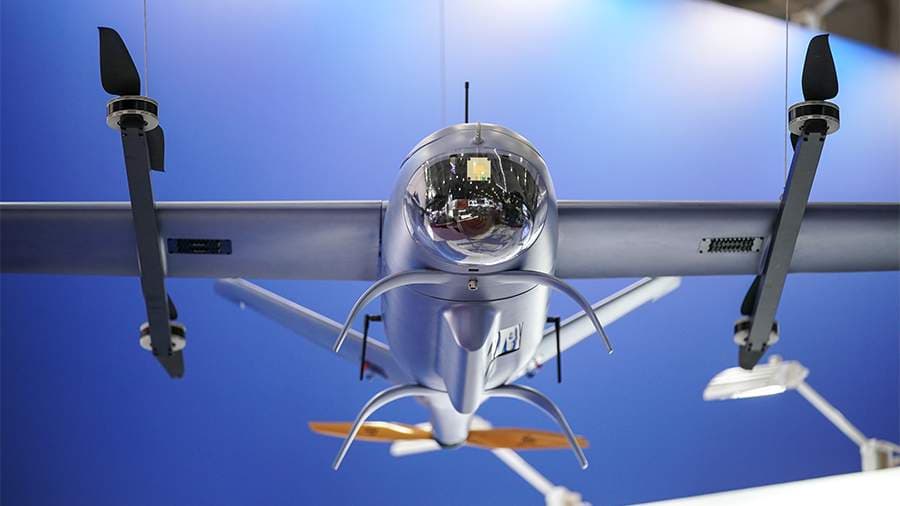
The demand for the product is already quite high. The net gun is used to neutralize any drones, including FPV drones. When approaching the target, the net is fired towards the drone.
The product effectively works at a distance of 4 to 6 m. The opening diameter of the net is 2 m, which provides excellent results when performing the tasks.
The net gun turned out to be quite light and compact, which allows increasing the flight time of drones that will intercept Ukrainian drones.
The net gun is a disposable product. The developers proceeded from the concept that reloading the net in the field so that it opens correctly is not a very pleasant experience.
Earlier www1.ru reported that Russian Armed Forces fighters modified the captured American BMP Bradley.
Read materials on the topic:
ODK revealed the characteristics of the latest AL-31FN engine for Su-27, Su-34 and Su-30MK2 fighters
Caution, mines: The "Minskan" system will become a revolution in the world of demining territories
The "Kinzhal" carrier, the ship "Neustrashimy", returned to Baltiysk after a long voyage
Now on home

Start of deliveries scheduled for 2027

Over 51,000 new motorcycles were sold in Russia in 2025

The car will take at least a year to assemble

The application's audience has reached 20 million users

The model will be included in the list of cars for taxis, price - from 2.25 million rubles

All parking lots of the "Administrator of the Moscow Parking Space" are connected to the service

The cars will be supplied to the Moscow Transport Service Directorate

Deliveries to India may begin in 2028

The technology provides automated search for all types of defects in power units

The plane flew 500 km, accelerating to 425 km/h

The plant stated that the information about the termination of purchases for models 6 and 8 is not true
Scientists are using the "Ekran-M" installation